
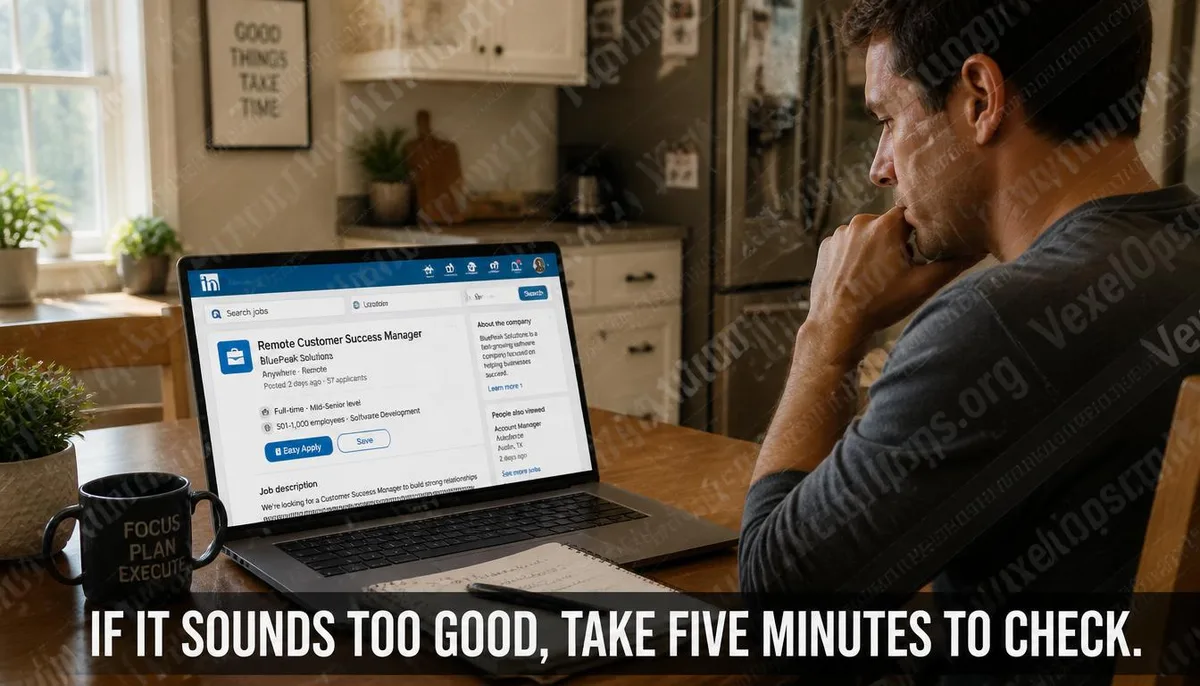
The scams that are easiest to let your guard down start from a job opportunity
Job searching itself creates a distracted state. When you're looking for a job, especially under financial pressure, encountering a seemingly suitable opportunity naturally slows down the brain’s risk assessment. Scammers are very aware of this psychological mechanism. Fake job advertisements are effective not because they are brilliantly designed, but because they appear at moments when people most want to see good news. A high-paying, remote job with no experience required and quick hiring can easily lead even the most cautious individuals to proceed without full verification when it appears at the right time in front of the right person.
Main operational patterns of fake job advertisements
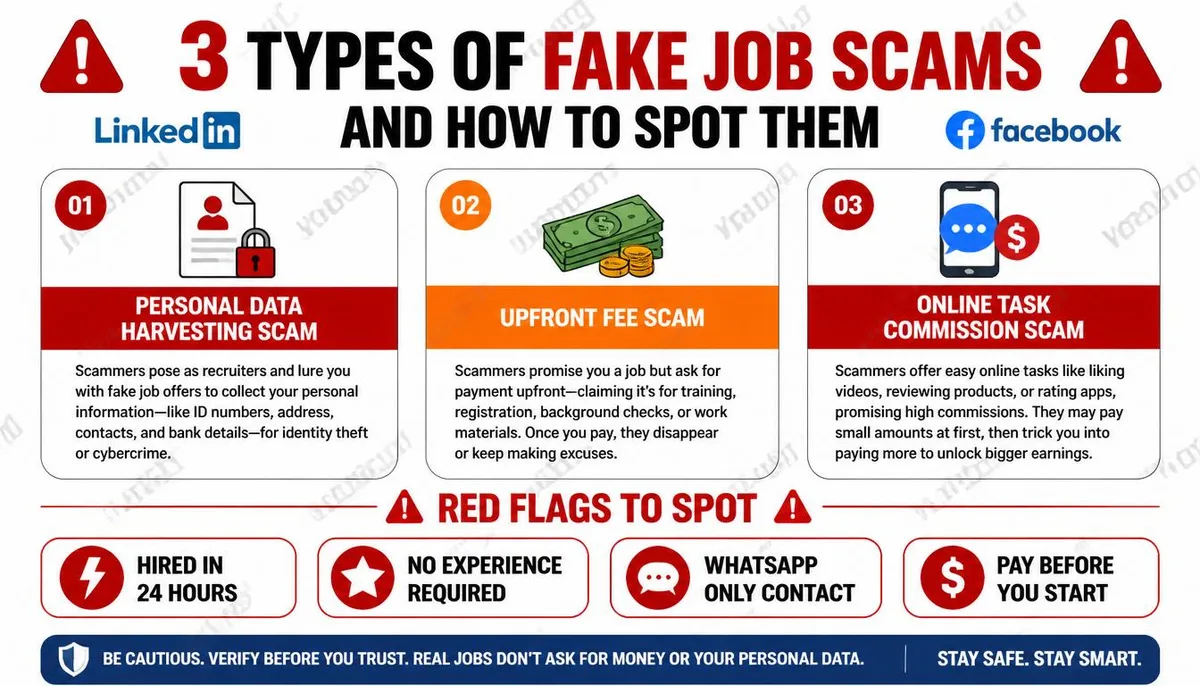
Job fraud is not a single method; it varies according to the target and platform, but several core logics are common. One of the most common is personal data collection. Scammers create a seemingly legitimate job opening and request forms during the application process containing sensitive personal information like ID numbers, bank accounts, or other confidential details, claiming that this information is necessary for background checks or salary determinations. After collecting the data, the job opening disappears, and the scammer vanishes. Another common pattern is advance payment. After applying, candidates quickly receive job offers but must pay for equipment, training fees, license applications, or deposits before officially starting work. The reasons usually sound reasonable, claiming that the company will deduct it from the salary later, or that the fee can be refunded after the probation period. In reality, this money is never returned once transferred. A rapidly increasing pattern in recent years is online part-time fraud. Task-based jobs, such as rating products, liking social media accounts, or completing simple data entry, appear to offer good rewards. After a few
Signals in the language that deserve a pause for verification
Fake job advertisements exhibit several fixed characteristics in their language; while not every individual trait represents fraud, combinations that appear together are worth confirming: Job conditions that are clearly inconsistent with market rates—high salary, no experience required, and no educational restrictions appearing in the same job posting are nearly non-existent in a normal labor market. The recruitment process is unusually fast; applying today and receiving an offer tomorrow completely skips the interview and confirmation steps typically present in legitimate companies. Communication occurs solely via LINE, WhatsApp, or Telegram, with no official company contact method. They may ask for personal account transfers or top-ups during non-working hours, packaged under various pretenses as part of a legitimate work process.
Basic confirmations to make before formally applying
Spending five minutes on confirmation can often determine whether a job posting is worth pursuing. Search for the company name along with keywords like scam or reviews. If it’s a problem company, others have likely reported it on forums or social media. Confirm if the company has searchable registration information; in Taiwan, this can be checked through the Ministry of Economic Affairs’ Commercial Division to ensure it's a legally registered entity. If you saw the job posting on platforms like 104, 518, or LinkedIn, verify if the account that posted it has complete company information and whether the job details align with the company's actual business. Maintain caution regarding requests for full personal identity information prior to entering the company’s system or signing a contract; legitimate recruitment processes typically require such information only after a job offer is confirmed. If you have already provided personal data or had financial transactions during the verification process, VexelOps can help assess the current risk scope and outline priority actions.
Common Questions People Ask About Job Fraud
If I see a job posting on a legitimate platform, should I still verify it?
Yes. Platforms like 104, LinkedIn, and Indeed have certain review mechanisms for job postings, but these processes are not instant and are not foolproof. Occasionally, scammers can gather a significant amount of applicants’ personal data in a short time before platform scrutiny intervenes. While the existence of these platforms provides some level of protection, it doesn’t replace the need for your own verification steps. It's still a good habit to verify companies independently for any job posting seen on any platform.
What should I do if I filled out my personal information and later realized it might be a scam?
First, confirm what information you submitted. If it was merely your name and email, the risk is relatively limited, but this information may be used for subsequent fraudulent contact. Stay highly vigilant regarding any related messages you receive afterward. If you submitted sensitive data, such as an ID number, bank account, or other confidential information, consider contacting relevant institutions for preventive freezes or monitoring. Keep a timeline of the entire incident, relevant screenshots, and communication records to report to consumer protection agencies or law enforcement; these records form the basis for subsequent action.
Should I verify job opportunities introduced by friends?
Yes, and verification in these situations is often more critical. A common pathway for job scams is when victims inadvertently introduce the opportunity to others without realizing they’ve been scammed because they believe it to be genuine. Friend referrals can lower our mental guard, but they cannot replace independent verification of the opportunity itself. Telling a friend, "I'll check this company myself first," is a completely reasonable response that won’t harm the relationship but provides a buffer before potential issues arise.
One Key Takeaway: The most effective aspect of a fake job advertisement is that it appears when people most need good news. In a rush to find a job, taking five minutes to independently verify a company's authenticity is the most practical protection for oneself.