
Social Engineering and Phishing Links: How Scam Groups Steal Your Account
Many victims feel disbelief when they discover their Instagram account has been hacked, as they are confident they haven’t shared their password with anyone. However, modern account theft rarely relies on brute force; instead, it is achieved through sophisticated social engineering and phishing websites. Scam groups often disguise themselves as official security teams, sending emails that warn of suspicious login activity and ask you to click a link to verify. When you click the link and enter a fake webpage that looks identical to Instagram, the username and password you input are directly sent to the attackers. More advanced phishing techniques even request you to enter the two-factor authentication code received on your phone in real-time. If the attackers can input this information into the real Instagram login page quickly, they can successfully take over your account and immediately change your linked email and phone number, making it impossible for you to reset your password through regular means.
- Receive a fraudulent email disguised as an official login alert
- Click the link leading to a highly realistic phishing site
- Enter your username, password, and real-time two-factor authentication code
- Attackers log in simultaneously and alter account-linked information
Instagram Hacking Case Study: From Loss of Control to Successful Reclaiming
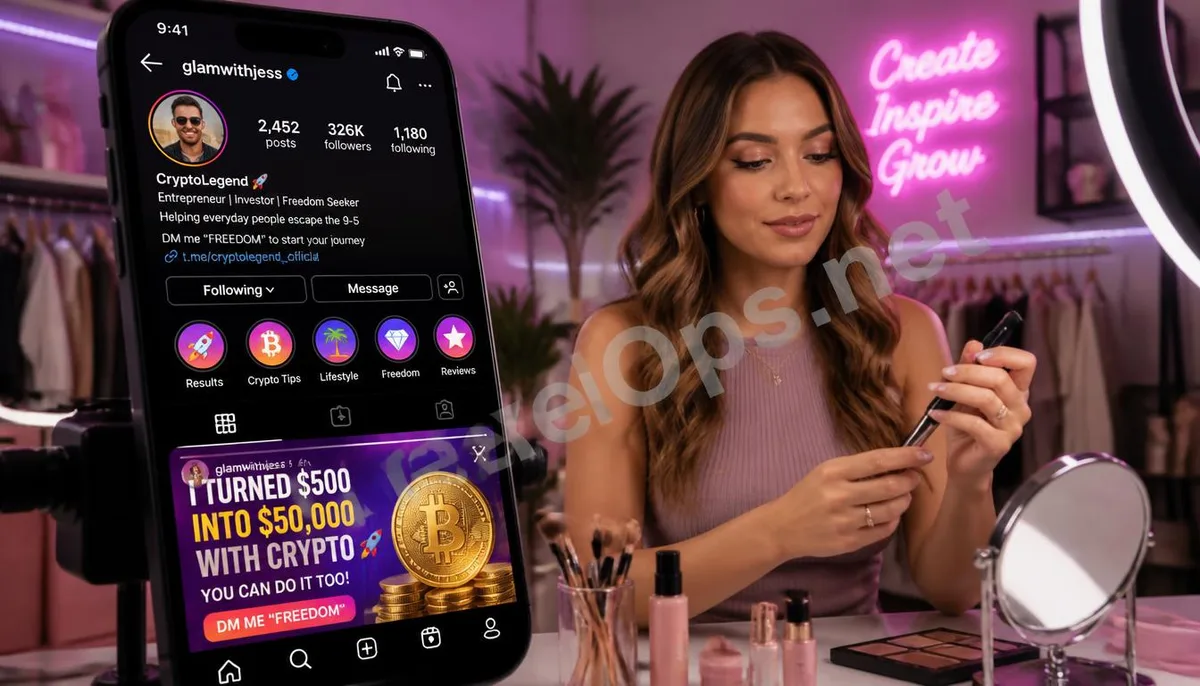
A recent typical case involved a user who runs a clothing brand and received a message from someone claiming to be from the copyright team, accusing them of copyright infringement and including a link to file an appeal. In a moment of panic, the user clicked on the link and logged in, but within five minutes, her account was forcibly logged out. The scam group immediately used her account to post false cryptocurrency investment stories, attempting to defraud her fans and friends. Initially, the user tried to recover her account through Instagram's forgotten password feature but found that the verification email had been sent to an unfamiliar email address. The regular password reset was already ineffective, so she initiated the platform's hacker account recovery process and submitted a facial recognition video to confirm her identity. Since the scam group had enabled new two-factor authentication on her account, she still could not log in even after passing facial recognition. With the assistance of VexelOps, she gathered original registration information, login notifications, device records, and an appeal timeline, resubmitting verifiable identification. After the platform
Key Steps After Reclaiming Your Account: Eliminating Hidden Security Backdoors
Many people believe that simply changing their password is sufficient after successfully recovering their account, yet they overlook the potential security backdoors left by the scammers. If these hidden settings are not thoroughly cleared, the account could be hacked again at any time. Check to see if any unknown third-party applications have been authorized to access your Instagram account. Scammers sometimes link malicious apps to ensure they can still control the account after losing the password. Next, make sure to check the contact information in the Account Center to confirm there are no lingering unfamiliar emails or phone numbers. Then reset your own two-factor authentication and securely save the backup codes, avoiding screenshots in your phone's photo library.
Why Scam Groups Particularly Target Active Social Media Accounts
Scam groups expend effort to steal Instagram accounts because active accounts inherently hold significant social trust value. When a real account with thousands of followers posts about investment profits or urgent loan requests, friends and fans are likely to let their guard down significantly, achieving a much higher success rate than using fake accounts for scams. Additionally, some accounts with special short URLs or high commercial value can even be resold at high prices in underground forums. This creates a complete industry chain: the front end is responsible for phishing credentials, the middle enables quick modification of linked information and takeover of the account, while the backend uses these accounts for scamming monetization or direct sales.
Common Questions About Hacked Instagram Accounts and Recovery
Is the risk of my account being hacked high if I haven't activated two-factor authentication?
Without enabling two-factor authentication, as long as a scam group obtains login credentials through phishing websites, password duplication, or data leaks, they can directly access the account and change linked information. Using different and sufficiently long passwords lowers the risk of password reuse but does not replace the need for additional verification. It is recommended to use an authentication app to generate codes and store the backup codes in a secure location separate from your phone. SMS verification is still better than having no protection at all, but when your phone number is transferred or SMS is intercepted, authentication apps can often provide a more independent layer of protection.
Why was I unable to log into my account even after submitting a facial recognition video?
The facial recognition video is mainly used to confirm that the claimant may be the original account holder and does not represent that the platform has removed unfamiliar emails, phone numbers, or authentication apps. If a scam group takes over the account and changes the two-factor authentication, the victim may still be blocked by unfamiliar verification codes when trying to log in, even if they qualify for a password reset. In such cases, avoid submitting numerous repetitive claims. Retain the case number sent by the platform and supplement it with the old password, original registration email, common devices, account creation time, and any personal photos previously posted to allow the platform to correlate account long-term usage records and remove unauthorized verification settings.
Will the scam posts published during the account's hacking affect my account weight?
It is possible. If the scam group posts a large amount of investment content, sends repeated messages, or links in a short time, the account may be restricted in reach, have certain features suspended, or even undergo review due to user reports. These changes are not necessarily permanent, but it is important to stop abnormal activities as quickly as possible. After regaining your account, delete unauthorized posts and stories, check the advertising account, business management permissions, and previously sent messages, also posting a brief statement reminding followers not to click earlier links. If features remain restricted, you can check the reasons via the account status page and submit a comprehensive appeal again.
One Key Takeaway Account theft primarily arises from phishing links. After regaining control, be sure to thoroughly check contact information and authorized applications, ensuring all hidden backdoors are removed.