
Why Is Cryptocurrency Fraud Increasing?
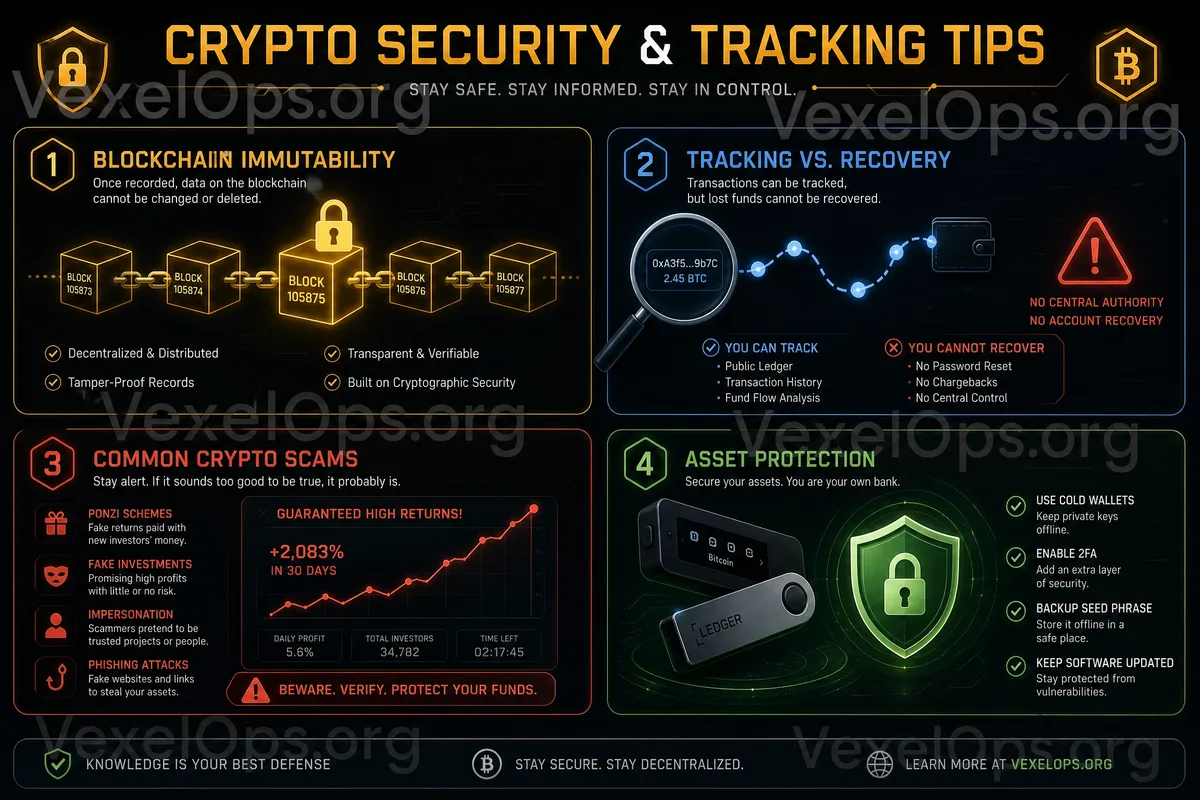
In recent years, many internet scams have been connected to cryptocurrency. Common scenarios include fake investment platforms, bogus exchanges, romance scams, fake airdrops, fake customer service, fake wallet authorizations, fake mining profits, and requests to transfer USDT, Bitcoin, Ethereum, or other tokens. For ordinary users, one of the biggest risks with cryptocurrency is that once a transfer is made, it can be difficult to cancel it directly like a bank transfer. Blockchain transactions, once completed, are typically recorded on-chain and cannot be easily reversed. For this reason, scammers often prefer to request victims to transfer funds using USDT, BTC, ETH, or TRON networks. They promote the transaction as fast, cross-border convenience and simple fees, but in reality, once you transfer funds to the recipient's wallet, follow-up becomes very difficult.
Can Blockchain Transactions Really Be Traced?
Many people have heard that 'blockchains are public and transparent' and therefore think that as long as they have a wallet address, they can recover the funds. This understanding is not entirely correct. For blockchains such as Bitcoin, Ethereum, TRON, and BNB Chain, many transaction records can indeed be queried using block explorers. For example, Ethereum transactions can be checked using Etherscan, USDT transactions on TRON can be found using Tronscan, and Bitcoin has various block explorers for transaction records. These tools allow users to view transaction times, amounts, sending addresses, receiving addresses, transaction hashes, and subsequent fund flows. But the key point is: just because you can see transaction records doesn't mean you know who is behind the wallet, nor does it guarantee the funds can be recovered. Blockchain addresses are typically a string of letters and numbers. They do not directly reveal names, phone numbers, or identification documents. Unless funds flow into a centralized exchange, are flagged by the platform, or law enforcement cooperates with relevant platforms, it is challenging for ordinary users to identify the real identities based
Common Scamming Method 1: Fake Investment Platforms
Fake investment platforms are one of the most common types of cryptocurrency fraud. The scammer may meet you through Facebook, Instagram, Telegram, WhatsApp, LINE, X, or dating apps and then guide you to a seemingly professional trading platform. Initially, the platform may show increasing profits and even allow small withdrawals, making you believe it's legitimate. However, once you invest more USDT, ETH, or BTC, withdrawal issues begin to arise. Common excuses include:
- Needs to pay taxes to withdraw
- Account has been flagged
- Requires a deposit
- Must complete higher-level tasks
- Involves unlocking fees
- Requires manual review by customer service
These statements are usually just reasons to keep you paying. A genuinely trustworthy platform should not suddenly demand repeated payment of extra fees when you try to make a withdrawal.
Common Scamming Method 2: Fake Wallet Authorization and Airdrops
Another risk is wallet authorization fraud. Users may click on fake airdrops, fake NFTs, fake DeFi profits, or fake reward pages in MetaMask, Trust Wallet, or other cryptocurrency wallets, and then connect and authorize their wallets per the page's instructions. Some authorizations may seem like regular confirmations, but they may actually grant the other party the ability to withdraw tokens. Thereafter, USDT, USDC, or other tokens in the user's wallet could be transferred away. This type of risk is especially prevalent among users unfamiliar with on-chain operations. When encountering pages like 'free access', 'airdrop rewards', 'limited time exchanges', or 'wallet verification', always verify the source before connecting your wallet and authorizing.
What Data Should Be Saved If a Transfer Has Already Been Made?
If you have already transferred cryptocurrency to a suspicious platform or address, the first thing is not to continue making payments or trust strangers who claim you can get your funds back immediately, but to save evidence first. You should save:
- Transaction Hash
- Sending Wallet Address
- Receiving Wallet Address
- Transfer Time
- Type of cryptocurrency and network, such as USDT TRC20, USDT ERC20, BTC, ETH
- Scammer Platform URL
- Scammer's Telegram, LINE, WhatsApp, Email, or social account
- Chat records
- Payment screenshots
- Platform backend screenshots
- Messages requesting taxes, unlocking fees, deposits
This data can help you explain the situation later to exchanges, platform customer service, banks, law enforcement, or professional support units. Without transaction hashes and wallet addresses, subsequent tracking will become more difficult.
What Can Cryptocurrency Tracking Do?
Cryptocurrency tracking can usually help organize on-chain fund flows, such as which addresses funds were sent from, which addresses they entered, whether they flowed into exchanges, whether they were split into multiple wallets, or whether they are related to known risky addresses. Block explorers like Etherscan and Tronscan allow users to see basic transaction records. More advanced on-chain analysis tools, like Chainalysis, TRM Labs, and Elliptic, are typically used in settings like exchanges, compliance, law enforcement, and professional investigations. But ordinary users should understand one reality: tracking does not equal recovery. Tracking can help clarify the flow of funds, but actually recovering funds usually requires platform freezes, cooperation from exchanges, law enforcement procedures, or other official channels. If someone claims that "providing just the wallet address guarantees 100% recovery," you should be extremely cautious.
How Can Ordinary Users Reduce the Risk of Cryptocurrency Fraud?
The most important thing is not to consider platforms recommended by strangers as trustworthy exchanges. Regardless of how professional they sound on Telegram, Instagram, LINE, WhatsApp, dating apps, or Facebook, if the platform is not an official channel you have verified, do not deposit funds lightly. Second, do not believe in guaranteed returns. The cryptocurrency market itself is highly volatile; any claims of guaranteed profit, fixed returns daily, expert-led trades, insider information, or AI automated trading should be viewed with strong skepticism. Third, do not connect your wallet casually. When encountering pages about airdrops, NFTs, DeFi, wallet verification, or limited-time rewards, first verify the source, and avoid authorizing arbitrarily. Fourth, double-check the network and address before making a transfer. USDT may flow across different networks like TRON, Ethereum, BNB Chain, and selecting the wrong address and network may also lead to fund loss.
Blockchain Is Transparent, But Risks Are Real
Blockchain transactions indeed leave public records more easily than many traditional transfers, but this does not mean ordinary users can easily recover their lost funds. Transparent records are just the starting point for tracking, not a guarantee for recovery. For ordinary users, the best protection is still in prevention: do not trust strange investment platforms, do not provide wallet private keys and seed phrases, do not authorize casually, do not make further payments to withdraw, and do not believe in guaranteed recovery services. If problems do occur, first save transaction data and chat evidence, then seek help through trusted channels. The sooner you stop additional payments, the more you can reduce potential losses. Cryptocurrency is simply a tool, but scammers exploit its irreversible, cross-border, and anonymous nature to create risks. Understanding this is the most critical step for ordinary users to protect themselves.