

Finding Vulnerabilities for Rewards: Is This Real?
There are many stories circulating in the cybersecurity community about researchers who have found vulnerabilities and received rewards in the six-figure dollar range. These stories often sound like exaggerated urban legends, but in reality, this is a legitimate industry that has been running for over a decade, known as Bug Bounty. In simple terms, companies publicly or semi-publicly invite external security researchers to legally attempt to find security vulnerabilities in their websites, apps, or systems. As long as the researchers follow the prescribed reporting process and the vulnerabilities are verified as valid, they can receive corresponding rewards based on the severity of the vulnerabilities. This mechanism allows companies to utilize a relatively controlled cost to gain insights from numerous independent researchers, which helps in identifying issues that might be overlooked by their internal teams.
What Do Bug Bounty Platforms Actually Do?
Most companies do not directly manage this entire process themselves; instead, they operate through specialized intermediary platforms, the two largest being HackerOne and Bugcrowd. These platforms act as intermediaries and management systems. Companies publish their bug bounty programs on these platforms, detailing which systems are open for testing, which behaviors are prohibited, and how the reward tiers are structured. Researchers explore interested programs on the platform, test according to the rules, and submit detailed reports of suspected vulnerabilities, including steps to reproduce and impact descriptions.
The platform operators arrange for reviewers to preliminarily assess whether the report content adheres to the rules, verify if it is a duplicate report, and upon confirmation, will forward it to the companies for actual validation. If the vulnerability is confirmed and has a real impact, companies will issue rewards according to the pre-announced reward tiers, with the entire process and financial transactions being handled through the platform, so researchers do not need to directly interact with companies for monetary exchanges.
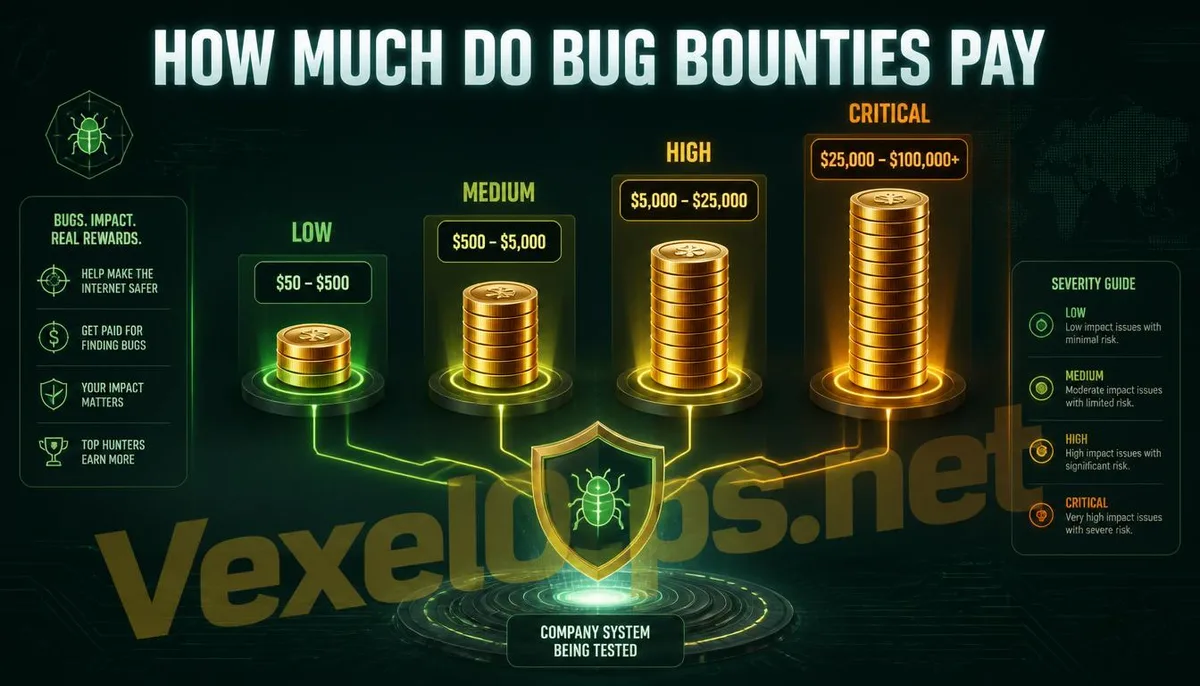
What Does the Reward Landscape for Finding Vulnerabilities Look Like?
The amounts for vulnerability rewards can vary greatly, primarily depending on the severity level of the vulnerabilities and the size of the company issuing the bounty programs. Low-risk vulnerabilities, such as information disclosure issues, usually yield rewards ranging from a few dozen to several hundred dollars. Medium-risk vulnerabilities, like cross-site scripting issues that require specific conditions to trigger, might offer rewards in the hundreds to over a thousand dollars. High-risk or critical vulnerabilities, such as those that allow attackers to gain administrative rights or access significant user data, can see rewards reaching thousands of dollars, with some large tech companies having recorded rewards exceeding $100,000 for particularly severe vulnerabilities. However, it is essential to understand that such high rewards are exceptional cases. Most researchers receive rewards that are concentrated in lower ranges. Moreover, finding a genuinely eligible and valid vulnerability often requires significant time and effort in testing and research, making it unsuitable as a guaranteed income source. It is more appropriate as a means for skill accumulation and
How Can Beginners Prepare to Get Started?
To participate in Bug Bounty, you do not need to have top-notch technical skills right from the start. Most platforms also feature many low-difficulty entry programs suitable for beginners to practice. It is advised to start by accumulating basic website security knowledge to understand common types of vulnerabilities and their causes. Then, look for programs that welcome newcomers or have smaller scopes as practice targets on the platforms. Be sure to read the rules of each program carefully, as different companies have varied requirements regarding the permissible scope of testing and behaviors. Violating these rules to conduct unauthorized testing might lead to account suspension from the platform and could even result in legal liabilities.
Common Questions Users Ask About Bug Bounty
Can Those Without a Cybersecurity Background Participate?
Yes, but some level of self-study preparation is necessary. Most successful researchers in Bug Bounty did not start with formal education; instead, they gradually built their skills through online resources, CTF competitions, and introductory materials provided by the platforms themselves. The knowledge barrier in web security is relatively lower than in other cybersecurity domains, making it a popular entry point for many beginners. As long as you are willing to invest time in systematically learning about common vulnerabilities and their identification methods, even without formal security education, you still have the opportunity to find valid vulnerabilities and earn rewards.
Can I Publicly Disclose Findings After Discovering a Vulnerability?
It is not recommended to disclose without authorization. Most bug bounty programs clearly stipulate that researchers must keep reports of vulnerabilities confidential until the company has patched the vulnerabilities and has formally agreed to disclose them. This rule is known as responsible disclosure. If you violate the confidentiality agreement and disclose prematurely, it could not only lead to account suspension due to platform terms violations but could also expose unpatched vulnerabilities to malicious actors, which might result in legal disputes. Therefore, it is imperative to thoroughly read the disclosure policies of each program before participating.
If a Found Vulnerability is Not Recognized by the Company, Will There Still Be a Reward?
Such situations can occur. During the verification process, companies might sometimes determine that a report does not comply with program rules, is a known issue, or that its actual impact is not as significant as expected by the reporter. In these cases, usually, no rewards are issued. Most platforms have appeal mechanisms in place; if researchers believe the verification result is unreasonable, they can provide further explanations or request intervention from the platform. However, the final decision typically remains with the company issuing the program, which is why reading program rules and scope descriptions carefully beforehand can effectively reduce the chances of a submission being rejected.
One Key Takeaway: Bug Bounty is a legitimate and official vulnerability reward mechanism between companies and cybersecurity researchers, operated through platforms like HackerOne and Bugcrowd, with rewards distributed according to the severity of the vulnerabilities. Beginners can start practicing with entry-level programs, but this is more suitable as a skill accumulation channel rather than a stable source of income.