
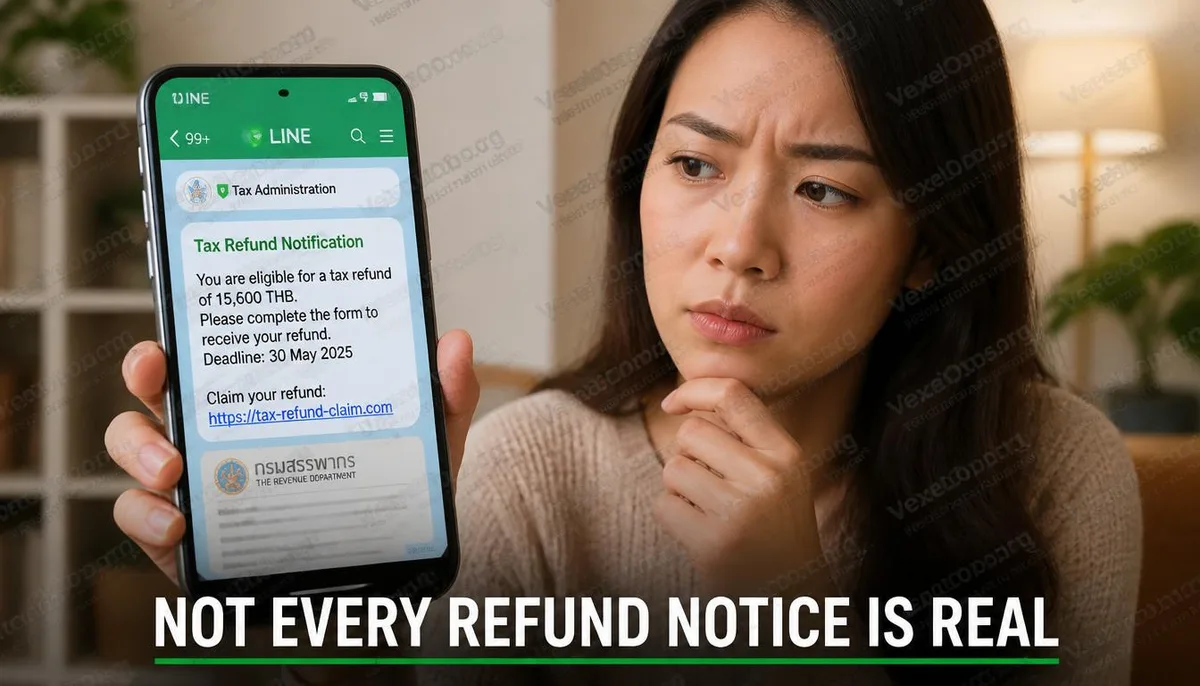
Why Tax Season is Peak Scam Time
Scammers never choose their timing randomly. Around tax season, a lot of people are waiting for refund notifications, confirming winning invoices, or dealing with various tax-related documents, making them particularly vulnerable to receiving messages in official names. Scammers exploit this vulnerability. They do not need to hack any systems; they just need to send a seemingly reasonable message at the right time under the right name. When someone is waiting for a tax refund and suddenly receives a text claiming to be from the Ministry of Finance, stating that the refund is ready and a link needs to be clicked to collect it, the mental alertness threshold often lowers unconsciously.
Common Forms of Fake Tax Refund Scams
The forms of these scams may slightly adjust each year, but the core tactics remain relatively stable:
- Text messages or LINE messages impersonating the Ministry of Finance, the National Tax Bureau, or local tax authorities, claiming refund amounts awaiting collection and asking to click a link to fill in bank account details
- Emails disguised as official tax notifications, formatted similarly to official ones, but links redirect to counterfeit phishing sites
- Impersonating Shopee, PChome, momo, or other e-commerce platforms, claiming invoice winnings or refunds awaiting collection, asking for credit card information to verify identity
- Phone scams involve live callers claiming to be from tax authorities, informing the other party of anomalies in declaration data that require immediate processing, and asking for transfers or account details
Key Details to Confirm When Receiving Such Messages
When receiving such notices, there are several specific judgment points to consider:
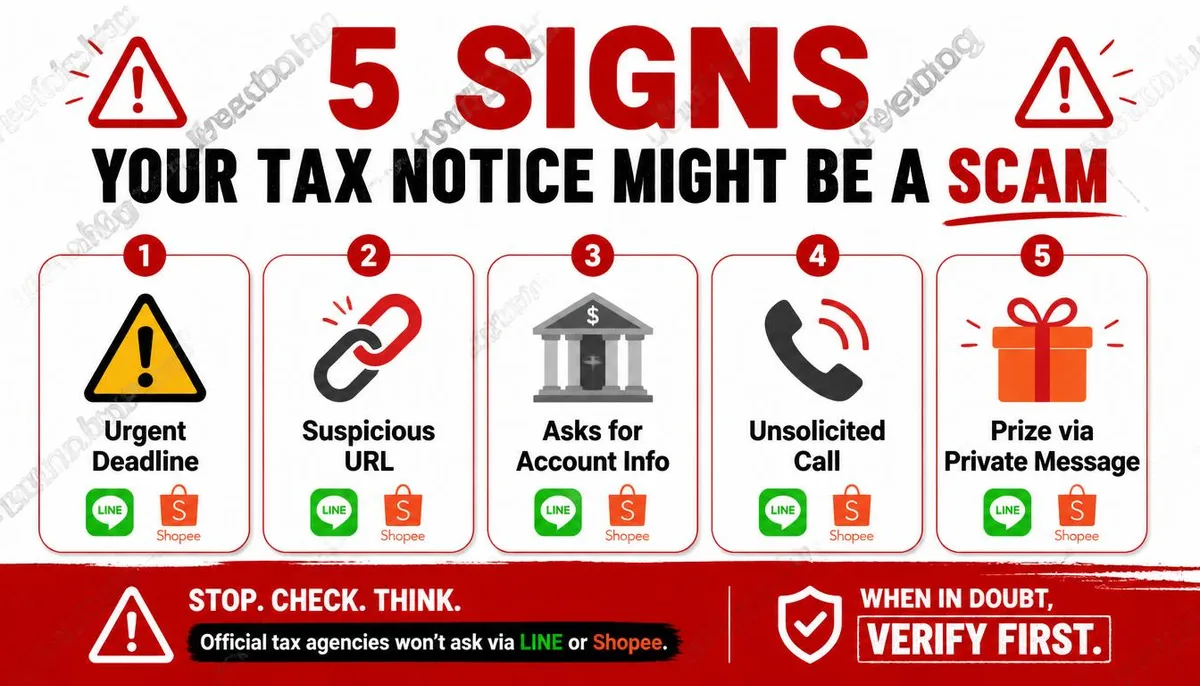
- Official tax refund notifications will not include clickable links in texts or LINE messages; actual refund procedures will directly remit money to the declared account
- Legitimate tax authorities will not proactively ask you to provide your full bank account and password details over the phone or via links
- If the message contains a sense of urgency, such as today’s deadline or cancellation upon expiration, it is usually to prevent you from calmly discerning the situation
- If the domain name of the link does not end in gov.tw or shows any slight differences from the official website, you should be cautious
- Invoice winning notifications should be checked through the official invoice verification app or convenience stores, not through private message links
What to Do if You Clicked a Link or Provided Information
If you clicked a suspicious link but did not fill in any details, the risk is relatively limited; however, it is still advisable to scan your device with antivirus software to confirm that no malicious programs are running in the background. If you have provided bank account or credit card information, it is crucial to contact the issuing bank immediately, informing them of potential data breaches, and asking them to check for any unusual transactions. Evaluate whether it is necessary to suspend your card. Also, document the timeline of the entire incident, including message screenshots and link records, as this information will be needed for subsequent reporting.
If you are unsure what information to retain while sorting through the data or the incident involves multiple platform account discrepancies, VexelOps can assist in clarifying the scope of the incident to facilitate better communication with banks and law enforcement.
Common Questions About Fake Tax Refunds and Invoices
Does the Ministry of Finance or the National Tax Bureau really notify refunds via text?
In Taiwan, the tax refund process typically involves direct transfers to the bank accounts listed at the time of declaration; officials will not ask you to click links or re-enter your account data via text. If you are uncertain about your refund status, you can directly check the Ministry of Finance’s electronic reporting and payment service website or call the National Tax Bureau’s official phone to confirm, avoiding interaction through links in unfamiliar messages.
How to Distinguish Between Authentic and Fake Invoice Winning Notifications from E-commerce Platforms?
Legitimate invoice winning notifications from e-commerce platforms usually appear in the platform’s official app or member center, not through LINE private messages or texts requiring you to click external links. Platforms like Shopee and momo have their official notification channels. If you receive a winning message claiming to be from these platforms, you can log into the official app to confirm without needing to act on links in the messages. The unified invoice redemption can also be checked independently through the Ministry of Finance's unified invoice redemption app, without relying on any text notifications.
How to Help Elderly Family Members Discern Such Messages?
For elderly individuals who are not familiar with scamming methods, the most practical advice is to establish a simple habit: when receiving any official notification requesting account information or asking to click links, first call a family member to confirm before deciding whether to act. There is no need to remember all the details of scams; simply adding a confirmation step when facing such messages can significantly reduce the likelihood of falling victim to scams. One Key Takeaway: Fake tax refund scams exploit the innate trust people have while waiting for official notifications. The most effective defense is not remembering all the scam methods, but rather cultivating the habit of proactively confirming any official notifications requesting you to click links or provide account information through official channels.