
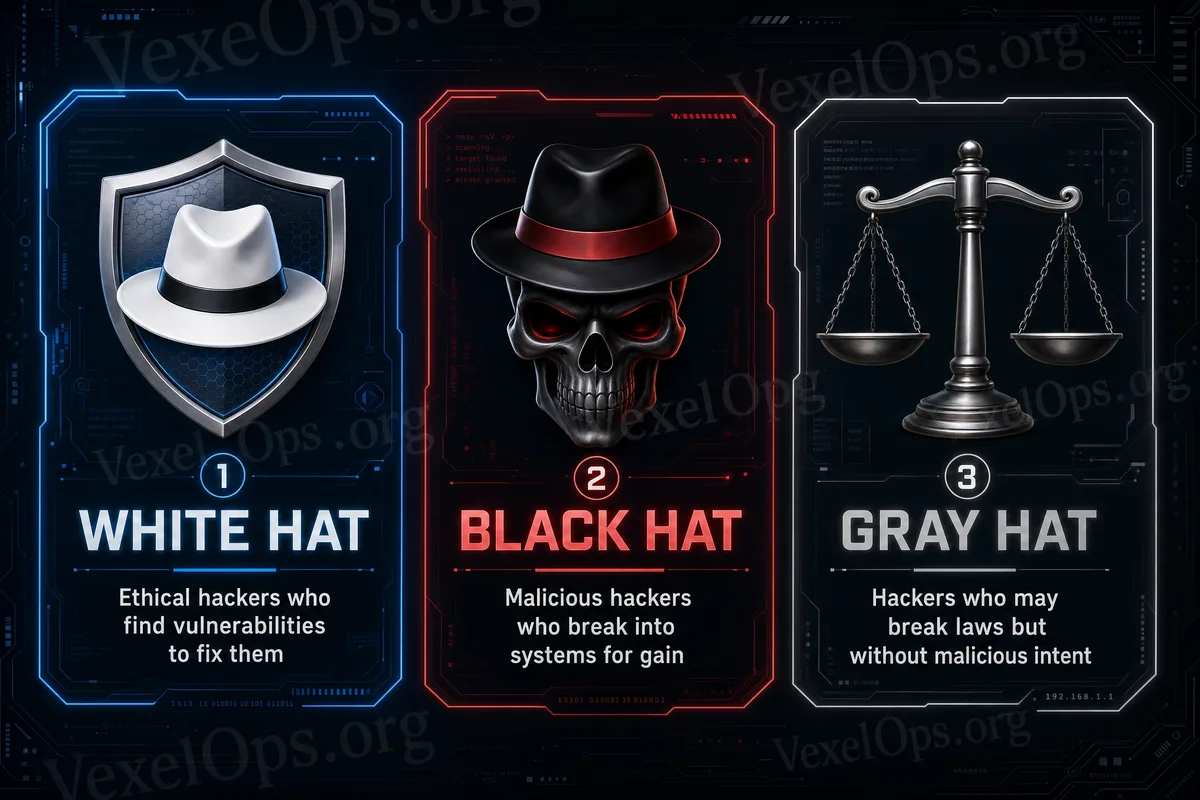
Hacking is not a single image, but a complex group with roles
When it comes to hackers, most people tend to envision a mysterious figure wearing a hood, lurking in the shadows while typing away on their keyboard, specializing in system intrusions and data theft. This image actually reflects just one role within the hacker community. In reality, hackers can be broadly categorized into black hats, white hats, and gray hats based on their motivation, authorization status, and ultimate goals. Some classifications even extend to roles like red hats and blue hats. Understanding the differences between these categories can help the general public more clearly identify the nature of hacking incidents mentioned in the news.
Black Hat Hackers: Unauthorized Intrusions with Malicious Intent
Black hat hackers fit the public's stereotypical view; their core characteristic is that their actions are unauthorized and malicious. Common motivations include stealing personal data, extorting ransom, disrupting system operations, or simply profiting from sold stolen information. The technical abilities of these hackers vary widely—from novice attackers using readily available tools for simple assaults, to advanced specialists capable of discovering system vulnerabilities and writing specific attack scripts. Many of the large data breach incidents and ransomware attacks often reported in the media are typically associated with this category.

White Hat Hackers: Legally Helping to Find Vulnerabilities with Authorization
In contrast to black hat hackers, we have white hat hackers. This group also possesses the technical skills to infiltrate systems, but their actions must always be based on obtaining explicit authorization from the system owner. Their goal is to help identify security vulnerabilities in the system and assist in patching them, rather than causing destruction or theft. The work environments for white hat hackers are quite diverse; some are cybersecurity personnel employed internally by businesses to conduct regular penetration tests on company systems. Others might be independent technicians who discover vulnerabilities legally through public bug bounty programs and report them to help businesses remediate before real attacks occur. This role is a crucial part of a company's cybersecurity defense network.
Gray Hat Hackers: Navigating the Ambiguous Zone Between Legal and Illegal
The motivations of gray hat hackers are typically not as overtly malicious as those of black hats, yet they operate without formal authorization, placing them in a relatively ambiguous gray zone. A common scenario is when a technician discovers a vulnerability in a website or system without authorization, conducting intrusion tests out of curiosity or to prove their abilities, and later contacting the system administrator to inform them of the vulnerability. Even though their intentions may seem benign, the lack of prior authorization still means that their actions could legally be viewed as unauthorized intrusion, regardless of whether any harm was ultimately done. This is the reason gray hat hackers exist as a category; their actions traverse a boundary that appears innocuous ethically, yet is legally contentious. The actual consequences often depend on how the system owner chooses to respond to this "uninvited assistance."
Red Team and Blue Team: Role Distribution in Corporate Cybersecurity Drills
In addition to the black, white, and gray hat classifications, red team and blue team concepts often come into play in corporate cybersecurity drills. The red team acts like authorized attackers, tasked with simulating real hacker attack methods to proactively attempt to breach the company's protective measures; the blue team takes on the defense role, responsible for detecting and responding to the red team's attack attempts in real time. This red-blue opposition drill aims to allow companies to evaluate their defensive capabilities and identify areas for improvement before actual attacks take place.
Understanding Classifications Helps in Accurately Interpreting Cybersecurity News and Events
Knowing the differences between these classifications can provide the general public with a more precise means of understanding the nature of hacking incidents mentioned in news reports. A vulnerability report classified as a white hat hacker's action and a ransomware attack initiated by a black hat hacker may both involve the action of "intruding into systems," but the underlying motivations, authorization levels, and the manner in which they should be perceived are entirely different matters. This categorization also reminds us that hacking techniques themselves are neutral; the key to determining whether an action is helpful or harmful lies in whether authorization was obtained, as well as the motivations and objectives behind the actions. If you manage a website or enterprise system and wish to determine if similar vulnerabilities exist, or if you seek to assess your current cybersecurity protections further, feel free to contact us through our platform to help clarify the next steps you can take.