

Rainbow Table Attacks Target Password Hashes
Modern systems typically do not store plaintext passwords directly, but instead save passwords after hashing them. While hashes cannot be directly reversed to retrieve the original password, if an attacker obtains a hash value, they might still guess the original password through comparison.
The Efficiency of Rainbow Tables Comes from Preparation
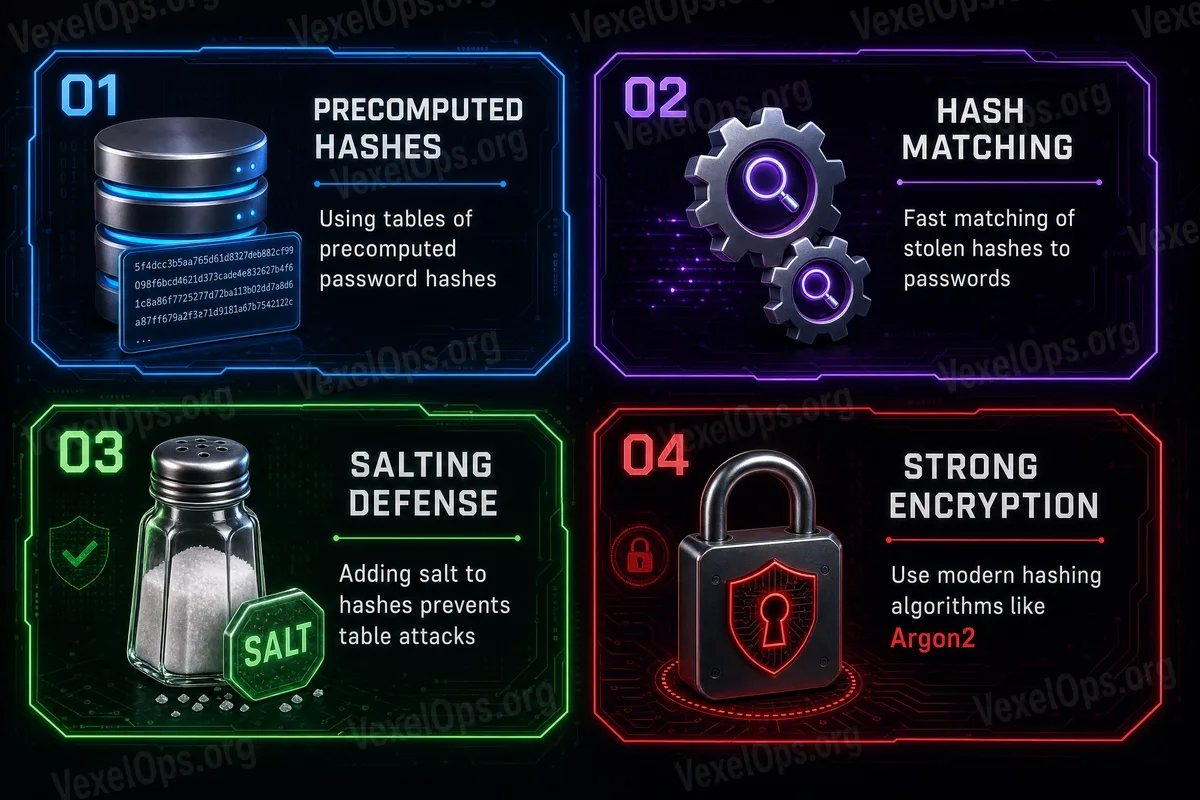
Rainbow tables are not generated on the fly; instead, they involve pre-building a vast collection of common passwords and their corresponding hash values. Once an attacker acquires a target hash, they can look it up in the table, saving the time required for recalculation.
Why Older Systems and Weak Passwords Are More Dangerous
Earlier systems provided weaker protections, and users often relied on birthdays, common numbers, short passwords, or simple words, making hashed results more susceptible to pre-prepared tables. Short, common, and predictable passwords are significantly more disadvantaged in any offline comparison scenario.
Salt Makes Universal Lookup Tables Ineffective
Modern systems incorporate random data, known as salt, before hashing passwords. Even if two users have the same password, they will generate different hashes. This prevents attackers from applying a universal rainbow table across all accounts.
Current Risks Are More Related to User Habits
Large modern platforms have generally adopted stronger hashing and salting mechanisms, significantly reducing the effectiveness of rainbow tables. More prevalent issues include simple passwords, reused passwords, lack of two-factor authentication, phishing login pages, and neglecting security notifications. Older systems or those with weak security designs need special attention.
For users, the most practical defense is to utilize long and unique passwords, avoid predictable combinations, use password managers to store different passwords, and enable multi-factor authentication for important accounts.