

Why Are There Increasing Numbers of Investment Scam Victims?
Investment scams are difficult to prevent because their approach is not intimidation, but rather creating the impression of "this is a rare opportunity." Scammers typically do not ask you to transfer money right away; instead, they spend time building trust through chatting, sharing alleged profit screenshots, and introducing you to seemingly active investment groups, making the entire process feel like genuine social interaction. This gradually accumulated trust causes many individuals to invest significant amounts before realizing the issue. According to statistics from consumer protection agencies in recent years, investment scams have been among the top losses in fraud for many years, with victims spanning diverse age groups and educational backgrounds, rather than being limited to specific demographics.
Common Approaches Used in Fake Investment Scams
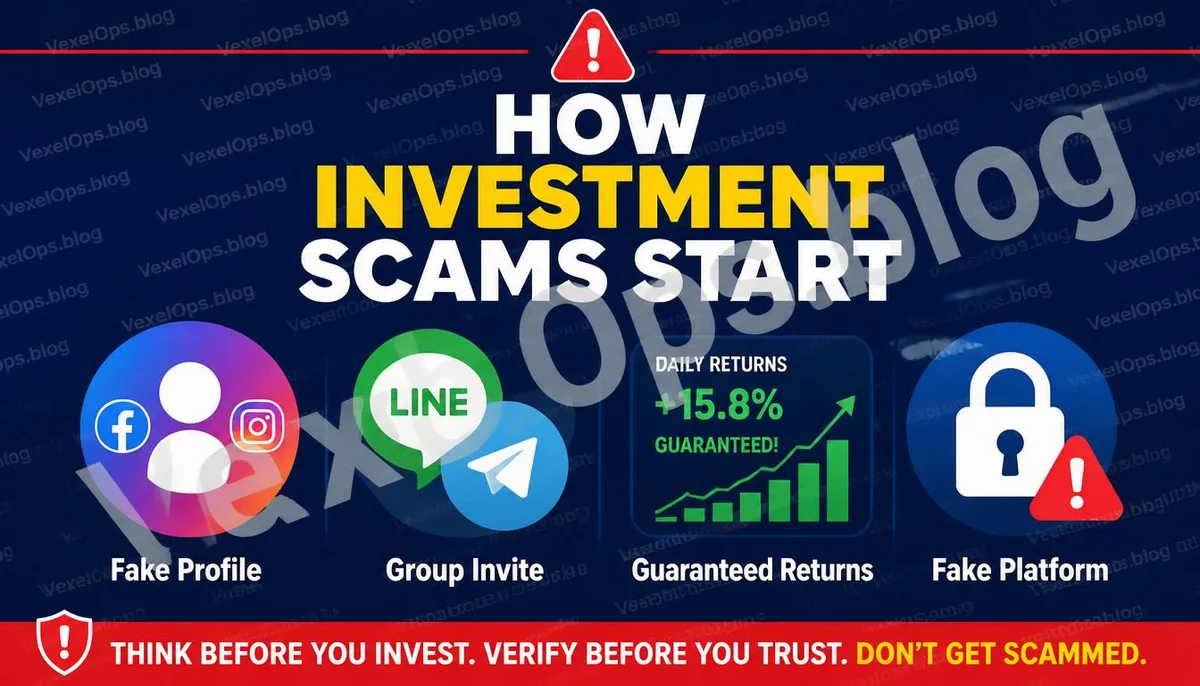
Understanding how scammers approach their victims is the first step in identification. Here are the most common methods: - Social Media Friend Requests: Scammers frequently initiate contact through Instagram, Facebook, or LinkedIn, often starting with emotional or friendly engagement, slowly guiding the conversation toward investment topics. - LINE or Telegram Group Invitations: Using slogans like "insider information," "teacher guidance," or "VIP groups," they create the illusion of active profit discussions, while most members are fake accounts. - Fake Celebrity Endorsements: Utilizing images and names of well-known investors or financial media figures, even Elon Musk or Warren Buffett, they create bogus advertisements or interviews to bolster credibility. - Fake Trading Platforms: Victims are directed to operate on professionally-looking websites or apps that initially show profits, only to start presenting various reasons for withdrawal issues when they attempt to cash out.
Features of Scamming Language: Red Flags to Watch For
Although scammers’ pitches vary slightly each time, several fixed characteristics are essential to remember: 1. Guaranteed Profits, Zero Risk: Any legitimate investment will not guarantee returns; claims of sure profit without losses are an obvious warning sign. 2. Limited-Time Offers, Limited Spots: Creating a sense of urgency that pushes you to make decisions quickly without thorough consideration. 3. Requesting Others to Join: Investment opportunities that encourage recruiting others often have Ponzi-like structures, relying on the funds from later participants to support the earlier returns. 4. Withdrawal Requires Payment: Claims that handling fees, taxes, or verification fees must be paid before cashing out are common tactics to extort further funds.
Identifying Fake Platforms
The appearance of fake investment platforms is often quite sophisticated, sometimes even mimicking the interface styles of Binance, Coinbase, or other reputable brokers. Here are some details that can help you make an initial judgment: - The domain name is similar to the official platform but has slight differences, like an extra letter or a different top-level domain. - Independent reviews or negative feedback cannot be found through Google searches. - Customer service only communicates via Telegram or WhatsApp, lacking formal phone numbers or addresses. - The app can only be downloaded through links provided by the scammer and is not listed on the Apple App Store or Google Play.
After Transferring Funds, Organizing Calmly is More Important Than Panicking Immediately
If you discover that you have already sent money to a suspicious party, the first step is not to rush to transfer more funds to someone claiming they can help you recover your money, as such "recovery services" often turn out to be extensions of scams. A more practical approach is to save all relevant communication records, transfer proofs, and screenshots of the counterpart's account information, as this data will be needed when reporting to law enforcement or seeking assistance. Although tracking cryptocurrency transactions can be challenging, the transaction records on the blockchain are publicly accessible. After organizing a complete timeline and transaction details, VexelOps can help clarify the flow of funds, providing a clearer basis for future reporting or appeals.
Common Questions About Fake Investment Scams
Are All the People Sharing Profits in the Investment Group Fake?
In fake investment groups, most accounts appearing to actively speak and share profit screenshots are likely operated by scammers or automated scripts. This tactic is known as "pump and dump," aiming to create an illusion of genuine activity in the group, so that new members lower their guard. One way to assess this is to try messaging a few "profit members" to see if their responses resemble a real conversation or if they simply repeat recommendations for you to follow their trades or invest more.
Should I Be Skeptical of Investment Opportunities Introduced by Friends?
Yes. A substantial percentage of investment scam cases involve victims unknowingly introducing opportunities to others, as they themselves believed these were legitimate. This does not imply malice on the part of the friend, but the scammer's design inherently involves making early victims see apparent profits, turning them into voluntary introducers. When faced with investment opportunities introduced by friends, it is equally necessary to independently verify the platform's legitimacy instead of skipping this step just because the source is familiar.
How Can I Confirm Whether an Investment Platform is Legitimate?
You can first check whether the platform is formally registered with local financial regulatory agencies (e.g., Taiwan's Financial Supervisory Commission, Hong Kong's Securities and Futures Commission, or the SEC in the United States). Additionally, entering the platform's name into Google along with keywords like "scam," "review," or "fraud" can help you identify any negative feedback from other users, serving as a quick filtering method. Legitimate platforms typically do not rely solely on private messages or Telegram groups to attract investors. One Key Takeaway: The most effective line of defense against fake investment scams is to deliberately give yourself a cooling-off period when you find this opportunity very appealing, proactively seeking information rather than being swayed by the counterpart's pace.