

Sudden Receipt of Free Tokens: How Airdrops Become Phishing Entrances
Blockchain addresses are public, and anyone can send tokens to imToken, MetaMask, or other wallet addresses. Scammers search for active addresses en masse, airdropping tokens with exaggerated names but no real value, and hide fake URLs within the token names, introduction pages, social media posts, or search ads. When users see unfamiliar assets in their wallets, they often search for exchange methods, inadvertently walking into a pre-prepared fake website. These pages often mimic popular projects, exchanges, or official events, displaying high rewards, countdowns, and the number of tokens claimed. Entrances may come from X, Telegram, Discord, shortened URLs, or search results, and the page may even read wallet balances normally, making it appear highly credible. However, being able to read a public address does not mean the website is officially accredited, and that a page can display assets does not prove the airdrop is legitimate. What scammers really wait for is not the user entering the password but connecting the wallet and clicking 'sign' or 'authorize.' If the request content is ignored, the free tokens can quickly become an entry point that transfers real assets away.
How Malicious Authorization Works: Moving USDT Without a Recovery Phrase
Token authorization is originally a normal function of decentralized applications. Users allow exchange platforms to access a certain amount of USDT to facilitate transactions. Fake airdrop websites wrap this process as claiming, verifying, or unlocking, but the actual requirement may be very high amounts or even unlimited control over the tokens. Once an authorization transaction is confirmed, the contract or address controlled by the scammers can transfer the relevant tokens within the specified limits without needing to obtain the recovery phrase again. Some signature requests may establish fee-free authorization, and the screen may not show a clear transfer amount, misleading users into thinking they are merely logging in or verifying. The ways of transferring native on-chain assets and different tokens are not entirely the same, but unfamiliar transactions, authorizations, and signatures should not be blindly confirmed.
- Fake activities ask to connect imToken or MetaMask
- Claim buttons trigger authorization or signature requests
- Users overlook limits, tokens, and addresses
- Automated programs transfer assets after authorization takes effect
How to Identify Fake imToken Websites: Details to Check Before Signing
Scam pages can copy brand colors, icons, and wallet connect buttons, but identification should not rely solely on appearance. Ensure to verify complete URLs, source channels, contract addresses, and whether the activities are announced by the official project. Search ads, group admin messages, and friends' shares cannot substitute for official confirmation; even a slight typo in a URL may lead to an entirely different site. When a wallet confirmation window pops up, check the action type, asset name, authorization limit, receiving address, and network. If a page claims free claims but requests extensive access rights to USDT, the purpose of the transaction is clearly unreasonable. When the signature content is not understood, the safest choice is to refuse instead of expecting to revoke afterwards. Unfamiliar tokens do not need to be exchanged, activated, or destroyed. Hiding them in the wallet interface is sufficient, while interacting with the token contract may increase risks. Recovery phrases, private keys, and backup files should not be entered on any webpage, as official customer service will never ask users to provide this information to receive an airdrop.
What to Do If Assets Have Been Transferred: Immediate Damage Control and Evidence Preservation
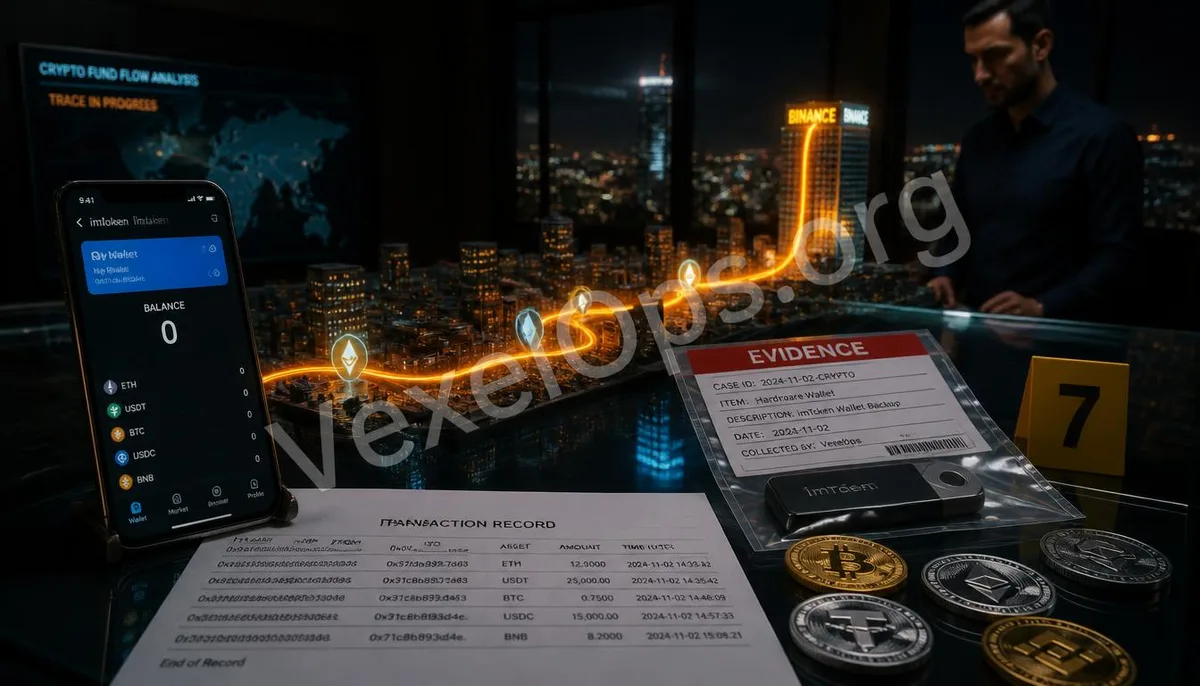
Upon discovering unusual transactions, stop interacting with the original website and reject all pending confirmation requests. If only token authorizations have been abused, check and revoke suspicious limits through the corresponding blockchain explorer or trusted authorization management service. If the recovery phrase or private key has been exposed, simply revoking authorizations is insufficient; create a new wallet on a trusted device to move remaining assets to a new address, and refrain from storing funds in the old address. At the same time, preserve wallet addresses, transaction hashes, token contracts, receiving addresses, timestamps, phishing URLs, and related dialogues. Do not delete browsing history and do not pay to any team claiming they can recover wallets or first collect deposits. VexelOps can assist in organizing on-chain transaction paths and associated addresses, enabling reports, contacting exchanges, and handling subsequent processes based on verifiable records, but tracking results do not guarantee asset recovery. If funds flow into a centralized exchange, promptly submit transaction data and official case proof to the exchange's risk control department.
Common Questions About imToken Airdrop Scams
Does Receiving Unknown Tokens Mean the Wallet Has Been Compromised?
Not necessarily. Public addresses can receive tokens sent by anyone, and simply receiving unfamiliar assets usually does not grant the sender control of the wallet. Danger typically arises when users click on URLs attached to tokens, enter exchange pages, interact with unknown contracts, or confirm unclear signatures and authorizations. Unknown tokens can be hidden in the wallet interface, but do not attempt to transfer, sell, or destroy them. If unauthorized actions by others, asset transfers, or unknown applications’ connections occur simultaneously, it is essential to handle possible invasion incidents immediately and check wallet permissions and transaction records.
Could Connecting to a Fake Website Without Confirming a Transaction Lead to Theft?
Typically, wallet connections allow the website to read public addresses, chain types, and visible balances. Without confirming transactions or signatures, websites usually cannot directly transfer assets. However, you should still sever the website connection, clear browser permissions, and ensure there are no pending requests or strange authorizations in the wallet. It is particularly important to note that signatures do not always require payment of fees. Some fee-free signatures may still grant token operational rights, so security cannot be judged solely by whether fees were deducted. If any unknown signature has been clicked, check authorization status and subsequent on-chain activities.
Is It Possible to Reclaim Transferred Cryptocurrencies?
Blockchain transactions typically cannot be canceled unilaterally by the original wallet, so recovery is not guaranteed. If funds remain on an on-chain address, the focus of the investigation is to continuously record the whereabouts; if funds enter a centralized exchange with identity verification, it may be possible to seek restrictions on transfer through the exchange's risk control and formal law enforcement procedures. When processing, provide complete transaction hashes, addresses, timestamps, currencies, amounts, and reporting data. Do not hand over recovery phrases to any tracking personnel nor trust claims of returning assets through payment for unlocking, as victims often encounter further false recovery scams.
One Key Takeaway Ignore unfamiliar airdrops. Verify authorization limits and receiving addresses before signing, and immediately revoke, transfer any assets, and preserve transaction evidence upon asset anomalies.