
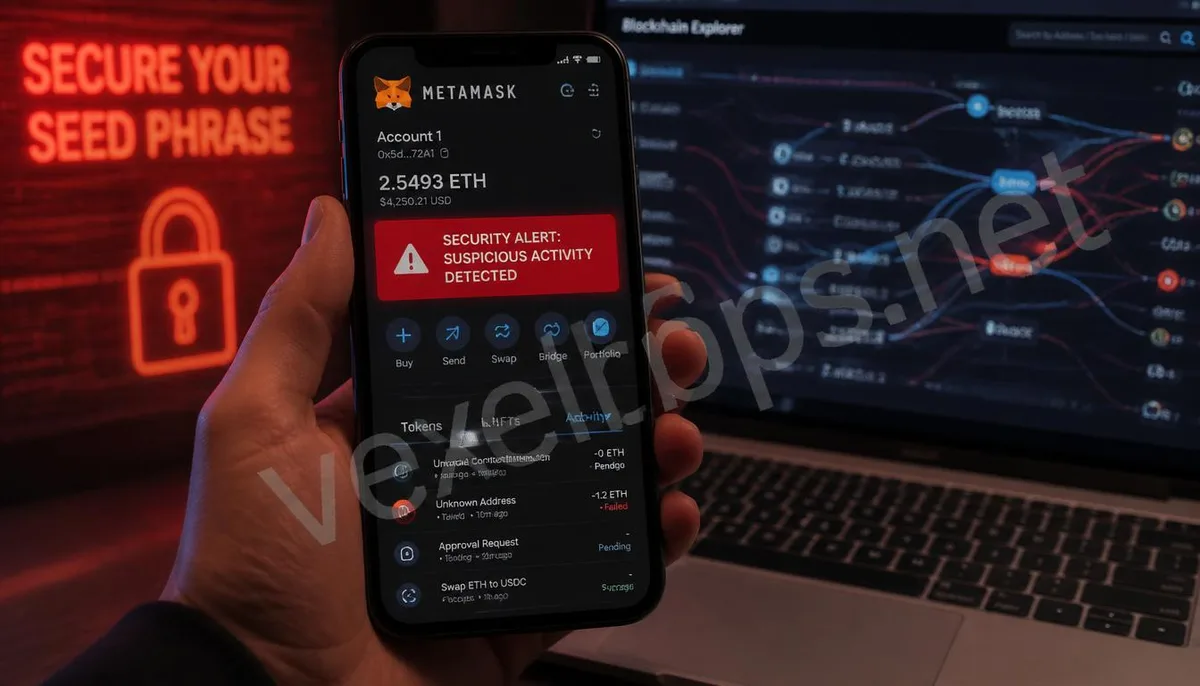
Vulnerabilities in Digital Vaults: Attack Vectors on Cryptocurrency Wallets
Decentralized wallets grant users complete control over their assets, but this also means users are entirely responsible for their security. In the blockchain architecture, once a mnemonic phrase or private key is leaked, the transfer of assets becomes irreversible. Hackers and scammers often exploit users' lack of technical understanding to execute targeted technical infiltrations.
- Counterfeit official websites and applications: Attackers optimize fake ImToken or MetaMask download links to appear at the top of search results, luring users into installing backdoored wallet software.
- Phishing web pages for mnemonic phrases: Under the guise of false system upgrades or account verifications, users are prompted to enter their twelve-word mnemonic phrases online, instantly usurping wallet access.
- Malicious airdrops and authorization traps: Sending tokens of uncertain value to users' wallets, enticing users to visit specific websites for exchanges, during which they fall victim to high-value Unlimited Allowances.
Beware of the Logic Behind PT Wallets and High-Return Scams
Recently frequent PT Wallet scams are essentially investment schemes veiled in a blockchain facade. These platforms usually claim to offer high quantifiable returns or arbitrage functions, luring users to transfer mainstream coins into designated wallet addresses.
- Closed centralized management: While the name includes 'wallet', users do not actually control the private keys. All data only displays in the platform backend, and once funds are deposited, they are transferred to the scam group's mixing
- Hierarchy-based promotion models: High referral rewards encourage users to spread the word voluntarily, establishing a typical Ponzi scheme structure.
- Technical withdrawal restrictions: Once funds reach a certain threshold, the platform limits withdrawals under the pretext of system maintenance or upgraded nodes, ultimately resulting in a full harvest.
If you find yourself unable to withdraw funds due to such platforms, VexelOps can assist with in-depth on-chain path analysis. We can track the path that funds take from these illegal wallets to exchanges or money laundering points and provide professional technical reports to support your asset recovery efforts.
Guarding Your Private Keys: Establishing Immutable Wallet Security Standards
The core of protecting digital assets lies in strict control of permissions. In the digital environment, any solicitation of your mnemonic phrase should be deemed a scam. Here are the key steps to establish secure wallet habits:
- Maintain physical backups: Write down your mnemonic phrase on paper and store it securely, prohibiting screenshots, uploads to cloud drives, or saving it in messaging app dialogs.
- Isolate operational environments: For large assets, use hardware wallets (cold wallets) for storage and ensure the device never connects to unsafe networks.
- Regularly revoke authorizations: Use blockchain explorer authorization management tools to periodically revoke authorizations for unknown decentralized exchanges (DEX) or projects.
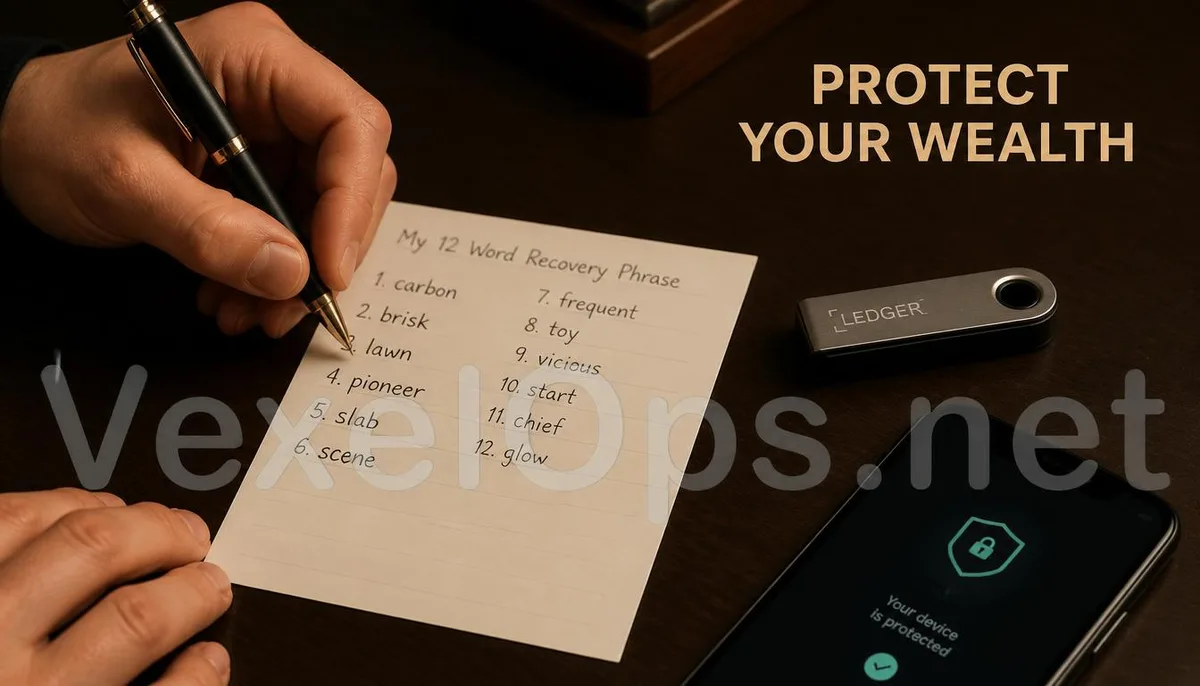
In the blockchain world, vigilance is your best firewall. If you notice suspicious trading activity in your wallet or accidentally clicked on a confirmation on a dubious website, immediately transfer any remaining assets to a new wallet address. VexelOps' cybersecurity experts can assist you with a comprehensive scan of your wallet's environment to identify hidden malicious scripts, ensuring your digital assets remain under secure monitoring.
Common Questions about Wallet Scams and Asset Security
Why did my MetaMask wallet assets disappear without disclosing the mnemonic phrase?
This is often because you clicked on a confirmation authorization (Approve) on certain phishing websites. This action grants malicious contracts permission to directly call specific tokens from your wallet without needing your re-approval. It is advisable to immediately visit authorization management websites to revoke all suspicious authorizations and check for any malicious browser extensions.
Will ImToken official contact me through SMS or Email to ask me to update versions?
No. Reputable wallet providers like ImToken will never contact users through SMS, phone calls, or emails to request upgrades or verify accounts. Any official notifications claiming account anomalies or data migration needs are almost always scams. Always ensure updates are conducted via official websites or trusted application stores.
Is there still a chance to recover funds after PT wallet platforms crash?
The chance of recovery depends on whether the funds have entered high-difficulty mixers. Given that such platforms often involve massive transfers, their funds usually follow specific patterns. With VexelOps' professional on-chain tracking technology, we can identify the gathering addresses of scam groups and alert you when funds enter exchanges with KYC mechanisms. Staying calm and quickly gathering all transfer hashes (TXIDs) is key to success.
One Key Takeaway: The core of cryptocurrency wallet security lies in the physical isolation of the mnemonic phrase and authorization management. By rejecting unknown downloads, regularly revoking contract authorizations, and effectively utilizing professional on-chain tracking services, you can identify wallet traps and safeguard your digital asset security.