
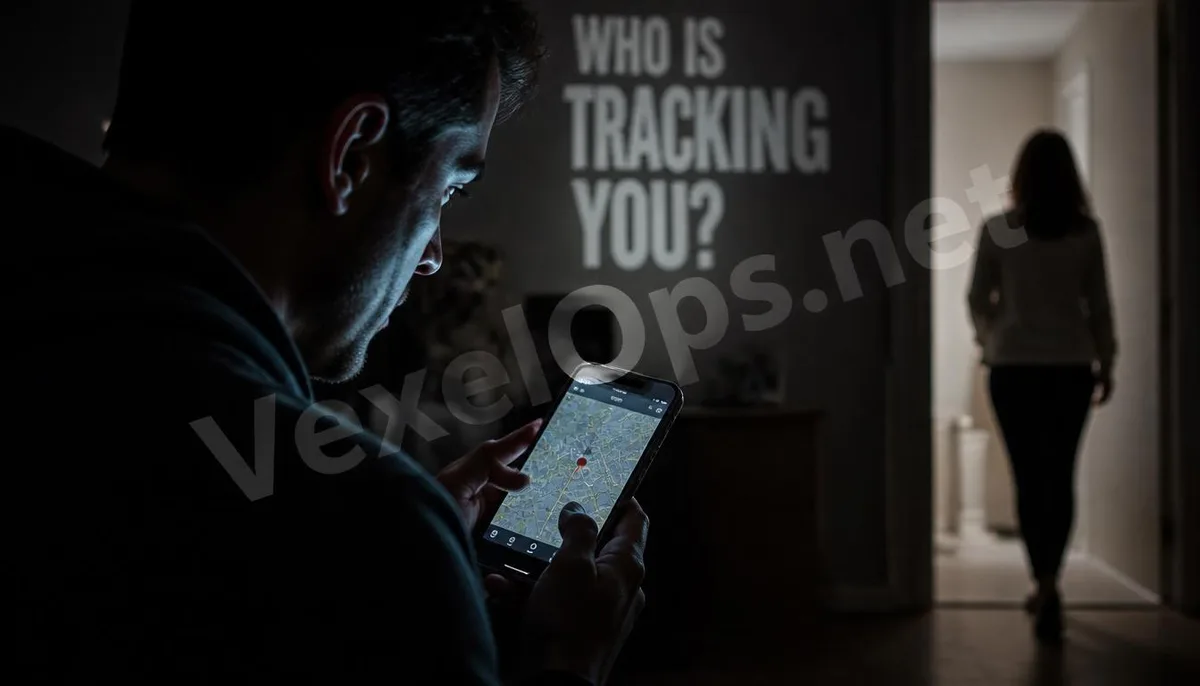
The Silent Watcher Hidden in Your Pocket
Modern smartphones are a double-edged sword; while they provide convenient navigation, they can also serve as the most precise trackers. Illegal location monitoring often does not come from distant hackers but is hidden within close social relationships or the permissions granted to daily-used apps. When you start to suspect that your movements are no longer a secret, this intuition often stems from subtle anomalies exhibited by your device. For example, the location icon at the top of your phone screen frequently flashing even when navigation is not active, or the system privacy report displaying certain unrelated Apps frequently accessing location data in the background. The technological logic behind this type of monitoring typically relies on A-GPS, Wi-Fi fingerprinting, and Bluetooth crowd-sourced networks. Even if you manually turn off the GPS switch, high-level monitoring software can still deduce your precise indoor location by scanning known Wi-Fi hotspots nearby or measuring distances to other Bluetooth devices. This silent surveillance, like a digital shadow, quietly records every stopping point and movement trajectory of yours.
Data and Heat: Physical Clues for Detecting Tracking Scripts
- Abnormal battery drain curves: Location tracking requires frequently waking communication modules and processors. If you notice that your phone's battery percentage is still dropping at a rate exceeding 5% per hour while in standby mode,
- Timed spikes in network traffic: Monitoring software often sets specific schedules to ensure data return. By using traffic monitoring tools, if you find small amounts of unknown data being uploaded to foreign servers at fixed intervals,
- Device overheating anomalies: When your phone heats up unnecessarily while sitting in a bag or pocket, it's usually because the GPS chip and processor are working under high load. This physical heat is the most direct evidence left by
When facing such covert monitoring concerns that may involve family or social relationships, VexelOps can assist users in conducting thorough geographic access audits. We can use professional techniques to restore hidden location records and identify illegal scripts that bypass system permission monitoring, providing substantial technical support and solutions for your privacy security.
Uncovering Third-Party Authorizations and System Partition Backdoors
Many users unconsciously grant permissions for location access whenever they install software. Such authorizations create a long-term tracking channel in the background. In more severe cases, the phone might have had tracking software with administrator privileges physically implanted after contact. This type of software can hide its icon and even be completely invisible in the system application list. They can monitor your speed of movement, duration of stay, and even send real-time notifications to the monitor when you enter specific areas.
Additionally, one should remain highly vigilant about requests for installing profiles or custom certificates. In iOS or Android systems, these advanced settings can grant great system control over the software, including intercepting and faking geographic location data. Maintaining a meticulous review of system settings and being on guard against any unknown components is an essential skill for survival in the digital age.

Reclaiming Digital Sovereignty: Establishing a Solid Movement Defense Line
In the face of the fear of movement leaks, we should not choose to evade but rather counteract with technological measures. Modern systems provide powerful location obfuscation features. For non-navigation Apps, it is better to choose to provide approximate rather than precise locations. At the same time, regularly change passwords related to location sharing accounts and check the authorization list of Apple Find My or Google Find My Device to ensure that no unknown devices are synchronizing your location. Maintaining a sense of control over the digital environment allows you to navigate more adeptly in the complex worlds of social and online interactions. Once you learn how to identify and block these invisible trackers, what you hold will be not only the security of your privacy but also the freedom and peace of mind.
Common Questions about Mobile Location Tracking Detection
Why can map Apps still accurately display my location even when I turned off GPS?
This is because the phone uses multiple positioning technologies. In addition to GPS satellite signals, the phone also detects the MAC addresses of nearby Wi-Fi routers and the signal strength from cell towers for triangulation. This technology is known as network-assisted positioning, and its accuracy can reach within ten meters in urban environments. To completely block positioning, besides turning off GPS, you also need to disable Wi-Fi and Bluetooth scanning in privacy settings.
What should I do if I suspect someone has placed a physical tracker in my car or bag?
Physical trackers like AirTags or dedicated GPS trackers usually emit signals periodically. You can utilize the abnormal tracker detection feature built into your phone or download a professional Bluetooth signal analysis App to scan your surroundings. If you find an unknown Bluetooth device consistently following your movement path, you should conduct a physical search immediately. VexelOps can offer professional detection tool recommendations and technical analysis when dealing with surveillance cases that combine physical and digital elements, helping you accurately locate the source of the threat.
Does changing my phone number solve the tracking issue?
Changing your phone number can only solve tracking based on cell tower signals, but it cannot solve monitoring based on App permissions or system vulnerabilities. If monitoring software has already been implanted in your phone hardware or cloud account, even changing the SIM card will not stop the tracker from obtaining your location through network connectivity. Therefore, the fundamental solution is to conduct a comprehensive cybersecurity audit of the entire system and ensure that all social account access permissions have been reset.
One Key Takeaway: The core of mobile location tracking detection lies in identifying physical anomalies and permission changes. By strictly controlling background location permissions, regularly auditing associated devices, and making good use of professional technical audits, you can effectively block illegal movement monitoring, safeguarding personal privacy and digital sovereignty.