
The First Step After Cryptocurrency Fraud is to Organize Clues
When users encounter fraud involving USDT, Bitcoin, Ethereum, TRON, or other cryptocurrencies, the immediate reaction is often anxiety. Common scenarios include fake investment platforms, counterfeit customer service, sham exchanges, bogus airdrops, wallet authorization risks, or being directed to transfer funds via Telegram, WhatsApp, LINE, Instagram, Facebook, and other platforms. In such cases, the most important action is not to repeatedly recall the whole process but to gather and organize all available data. Cryptocurrency transactions usually leave an on-chain record, such as transaction hashes, sending addresses, receiving addresses, transaction times, and network types. If organized properly, this information will yield clearer insights for subsequent assessments. The value of VexelOps.net’s self-commissioning service platform lies in enabling users to submit relevant clues systematically, preventing information from being scattered across various chat windows, screenshot albums, or payment records.
What Transaction Information is Most Important?
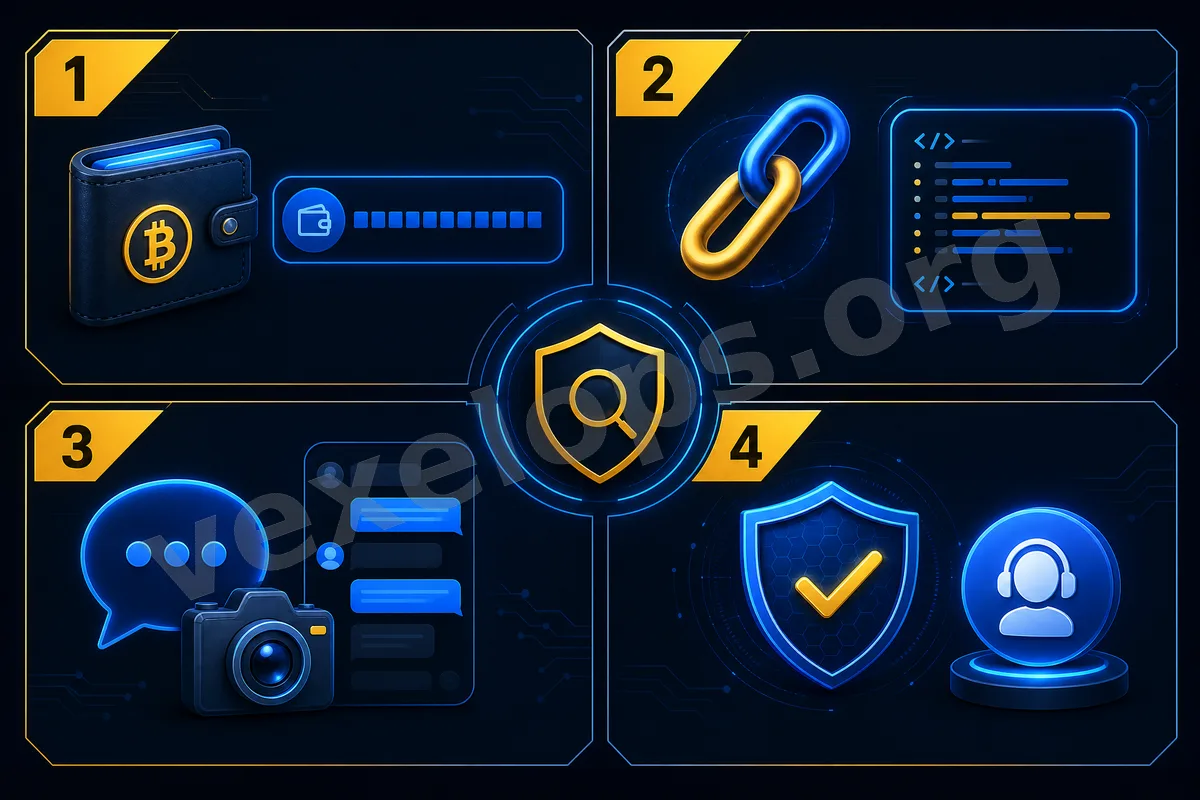
When facing risks related to cryptocurrencies, it is advisable to prioritize organizing several types of information. First is the Transaction Hash. This is a critical record in blockchain transactions that can be used to check the transaction's time, amount, sending address, and receiving address. Second is the Wallet Address. This includes your own sending address, as well as the receiving address provided by the other party. If there were multiple transfers, each address should be saved. Third is the Coin Type and Network. For instance, USDT might be on the TRON network or the Ethereum network. Users should note whether it’s USDT TRC20, USDT ERC20, BTC, ETH, or other types of coins. Fourth is the Block Explorer Link. For example, Ethereum-related transactions may be found on Etherscan, while USDT transactions on TRON may appear on Tronscan. Such links facilitate quicker confirmation of transaction records in the future.
Chat Records and Platform Information are Also Crucial
In addition to on-chain data, the contact details of the other party and platform information are vital. Many cryptocurrency scams do not start directly with transactions but first establish trust through social platforms. For instance, the other party might contact you via Telegram, WhatsApp, LINE, Instagram, Facebook, X, or a dating app, then guide you to a specific investment website, trading platform, wallet page, or customer service group. You should save the following information:
- The other party's account name
- Telegram ID or group name
- WhatsApp / LINE contact details
- Platform URL
- Screenshots of customer service conversations
- Screenshots of payment instructions
- Wallet address provided by the other party
- Screenshots of platform backend earnings
- Messages about withdrawal limits or additional payment requests
These contents help fully restore the event timeline and provide a basis for further risk analysis.
VexelOps.net Can Assist Users in Organizing Commission Information
Many users possess a lot of information after encountering cryptocurrency fraud but are unsure about what is important, what should be provided first, and what can be supplemented later. VexelOps.net’s self-commissioning process allows users to submit requests following platform prompts. Compared to directly describing everything in private messages, organizing information through the platform is clearer and more suitable for subsequent service assessments. Users can begin by describing the background of the event, for example:
- On which platform did you meet the other party?
- Which type of cryptocurrency is involved?
- Is there a transaction hash?
- Is there an Etherscan or Tronscan link?
- Is there a wallet address from the other party?
- Is there chat records and payment instructions?
- Can you still log into the suspicious platform's backend?
- The more complete this information is, the easier it will be to determine the direction of subsequent service processes.
Why is the Transaction Hash Critical?
In cryptocurrency transactions, the transaction hash acts like a query number for a specific transaction. It allows one to view whether the transaction is complete on the corresponding blockchain explorer, where it was directed, the amount involved, and when it occurred. For example, USDT TRC20 transactions can typically be queried through Tronscan, while ETH or USDT ERC20 transactions are usually checkable on Etherscan. Bitcoin transactions also have respective blockchain explorers to view. For ordinary users, there is no need to understand too many on-chain technical details, but at least they should know: transaction hash, wallet address, and transfer time are crucial basic data when organizing events related to cryptocurrency fraud.
VexelOps Prioritizes Clear Processes and Privacy in Submissions
Cryptocurrency fraud often involves payment records, chat histories, wallet addresses, and personal contact information, making the method of data submission essential. The process design of VexelOps.net focuses on allowing users to orderly submit the necessary information, rather than overwhelming them with sensitive content in chat at the beginning. Users can first submit an event summary, transaction information, and necessary screenshots, then supplement other data according to the subsequent service process. This helps centralize information and makes it easier for users to confirm what content they have provided.
When is it Appropriate to Submit a Request via VexelOps.net?
If you encounter the following situations, it is appropriate to submit your commission via VexelOps.net: 1. Funds have already been transferred out to a suspicious platform, such as USDT, BTC, ETH, or other cryptocurrencies. 2. You have a transaction hash or wallet address on hand. 3. The other party guided you to transfer funds through Telegram, WhatsApp, LINE, or other social platforms. 4. The suspicious platform shows earnings but requires more fees to withdraw. 5. The other party insists on taxes, unfreezing fees, deposits, or verification fees. 6. You suspect you clicked on a fake airdrop or fake wallet authorization page. 7. You need to organize on-chain records and event timelines. In these cases, it's advisable to gather your data first and then proceed through a clearer process for subsequent service assessment.
Learn About Services from VexelOps.org and Submit Requests through VexelOps.net
If you have encountered cryptocurrency fraud, on-chain transaction risks, USDT transfer anomalies, or issues with suspicious platforms, you can submit requests through the VexelOps.net self-commissioning platform. VexelOps aims to provide users with a clearer, more private, and orderly entry point for services when facing complex digital security issues. When cryptocurrency transactions have already occurred, the earlier you organize transaction records, chat evidence, and platform information, the clearer the subsequent judgments will become.