

What is AI Voice Cloning?
AI voice cloning is a technology that uses artificial intelligence to analyze vocal features and generate voices that are similar to the original speaker's. Modern voice generation systems can build voice models from relatively short audio samples, meaning attackers do not necessarily need long recordings of a person's voice. The FTC has noted that short audio clips publicly posted online could be used by scammers to create voice clones. This technology was not developed solely for fraudulent purposes. Voice cloning can also be applied in legitimate instances, such as assisting those who are unable to voice correctly, content creation, voice assistants, and other valid scenarios. The real concern arises when this technology is misused to impersonate others; the voice may transform from an identity verification cue into a tool for building credibility for scammers.
Why could a short audio sample pose a risk?
Today, many people have their voices present in the public online space, such as in YouTube videos, podcasts, live streams, social media videos, company events, or public speeches. These materials, initially regular public information, may contain voices that could become sources for voice cloning models. After obtaining a voice sample, attackers can further insert the cloned voice into phone calls or voice messages, combined with already acquired information like names, occupations, and family relationships to make the entire scenario more believable. The FTC has warned that scammers could use cloned voices to impersonate friends and family or even impersonate corporate executives, asking employees to transfer funds or provide sensitive information. Thus, the real risk lies not in whether a single voice can be replicated, but in how voice, personal data, and social engineering can be combined and used.
How do AI voice scams typically start?
Voice cloning scams often do not rely solely on one cloned voice. Scammers usually establish a seemingly reasonable scenario and then use voices to make victims more likely to trust the identity. Common scenarios include:
- Impersonating friends or family, claiming a car accident or other emergencies.
- Impersonating an executive, asking employees to handle payments immediately.
- Impersonating customer service or agency personnel, asking to verify accounts or personal data.
- Impersonating acquaintances, requesting to switch to another communication platform.
- Impersonating government or other trusted organizations, using fear to heighten compliance.
The FTC specifically cautions that household emergency scams often exploit the victim's emotions, demanding immediate payment and potentially requiring methods that are hard to reverse. Thus, when a call combines 'familiar voice + urgent situation + immediate payment,' it should raise alarms.
Why is a voice alone no longer enough for identity verification?
In the past, people often viewed a familiar voice as a crucial method of identity verification. If the voice on the other end sounds like a parent, child, friend, or boss, it is naturally easier to let one’s guard down. However, after advancements in voice cloning technology, the voice itself can no longer serve as the sole proof of identity. The FBI has recently warned that AI-generated voices can be very similar to those of known contacts, so when encountering suspicious contacts requesting significant actions, one should confirm the true identity through other means. A more reliable method is to treat the voice as a clue rather than as complete identity verification. For example, if the caller suddenly asks you to transfer money, even if the voice matches perfectly, hang up and use the previously saved phone number to reach out again. Do not directly use the new phone number or link provided in the call.
What details are more important than the voice?
One of the most effective ways to identify voice cloning is not to strain to find subtle artificial traces in the voice but to observe if the entire event aligns with normal circumstances. If someone suddenly makes the following requests, halt the operation:
- Request to transfer money immediately.
- Request to purchase gift cards and provide card numbers or PINs.
- Request for cryptocurrency payments.
- Request to keep information from other family members or colleagues.
- Request to provide passwords, verification codes, or financial information.
- Request to click unknown links or install new applications.
The most critical aspect is the 'urgency.' Scammers know that once victims have time to calm down, ask others, or contact the true parties again, the scam could be exposed. Therefore, they frequently use fear, urgent situations, and demands for secrecy to compel victims to make decisions when emotions are running high.
The most reliable method: verify identity instead of the voice.
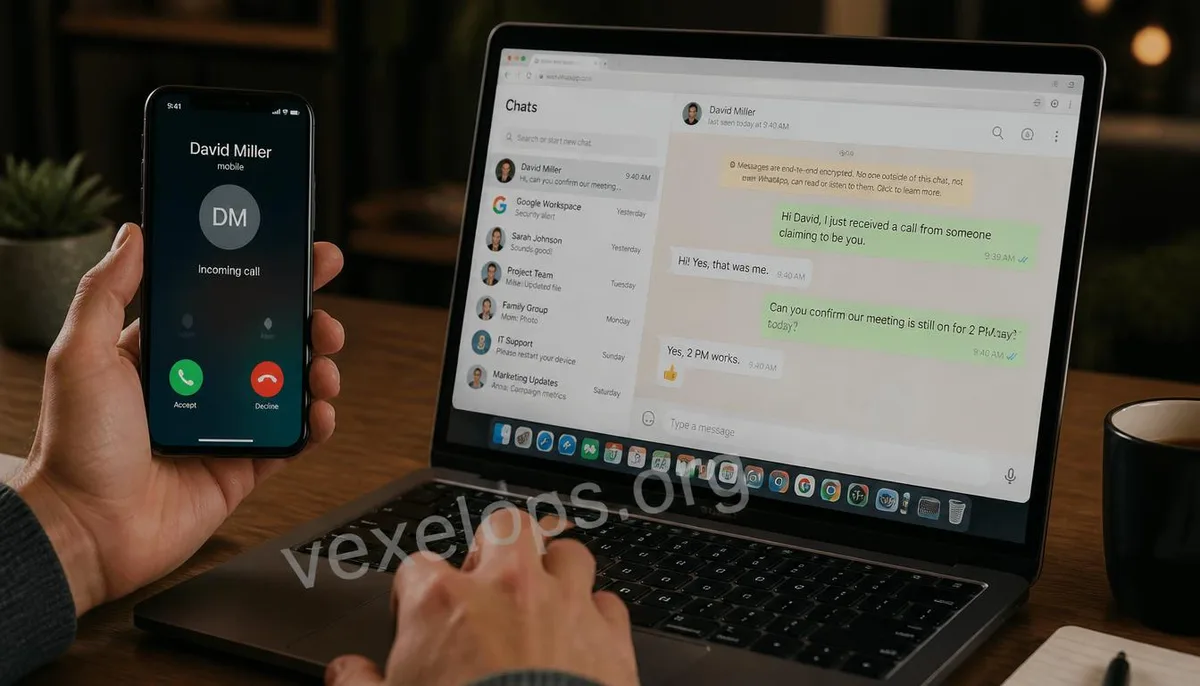
If you receive a call that sounds very much like a friend or family member in an emergency, the safest course of action is not to continue asking several questions that only friends or family would know but to establish an independent verification channel. For instance, if the caller claims to need immediate payment, hang up and directly call the friend you have saved. If you are unable to reach them, you can also confirm through another family member, friend, or another known contact method. The emphasis on this approach is to ensure that the verification process does not rely on the same suspicious source. If the caller claims to be an executive, do not directly follow the instructions given during the call to transfer funds. Confirm the request through the company's original communication system, official email, or other known channels.
What to do if you encounter AI voice cloning fraud?
If you receive a suspicious call but have not made a payment, first, stop any payment, login, or data provision actions during the conversation. Do not assume you must fulfill the request just because the voice sounds very realistic. If you have already provided account information, verification details, or payment, you should immediately contact the relevant service or financial institution to explain that fraud may be involved, and preserve phone numbers, voice messages, chat records, payment records, and other information. For suspicious AI impersonation content, you can report to the relevant platform or law enforcement. The FTC in the U.S. recommends that people submit reports of fraud via ReportFraud.gov, and cases involving online crime can also be reported to the FBI’s Internet Crime Complaint Center (IC3). Most importantly, do not lower the normal standards of identity verification just because the voice is convincingly realistic.
Common Questions About AI Voice Cloning Fraud and Verification Methods
Could a voice that sounds exactly like a friend or family member be AI-generated?
It is possible. Modern voice cloning technology can generate voices that are very close to the original speaker, making it hard to reliably determine if the person on the other end is indeed who they say they are based solely on tone, inflection, or familiarity. The FBI also warns that AI-generated voices can be quite similar to known contacts' voices. Thus, if the caller suddenly requests a transfer, payment, or verification codes, do not consider the voice as the sole proof of identity. The most reliable method is to hang up the phone and reconfirm using the originally saved contact methods.
Why do AI voice cloning scams frequently exploit emergencies?
Emergencies can quickly heighten emotional stress, making victims more likely to overlook normal verification processes. For example, scammers may claim that a friend has had an accident, has been detained, or that an executive urgently needs a payment handled, and then ask the victim to complete actions within a short timeframe. The core of these scenarios is not about making the story entirely believable, but ensuring the victim has no time to verify. The FTC points out that household emergency scams often use urgency, demands for secrecy, and pressure for payments to prompt victims to act without sufficient validation.
How to establish identity verification habits that resist AI voice impersonation?
The simplest method is to not let the call itself be the sole verification source. Family members can pre-agree on a confirmation method known only to true friends and family, while businesses can establish independent verification processes for payments and sensitive data operations. When encountering any unexpected requests for payment, account information, or changes in procedures, one should first halt, then reconfirm through saved phone numbers, the company’s official system, or other trusted channels. This multi-channel verification method is more reliable than trying to judge authenticity from voice details.
One Key Takeaway: AI voices can be highly realistic; when faced with urgent payment or data requests, do not trust the voice itself, but confirm identity through independent channels.