

What is Wireshark? Why do many IT professionals Use It?
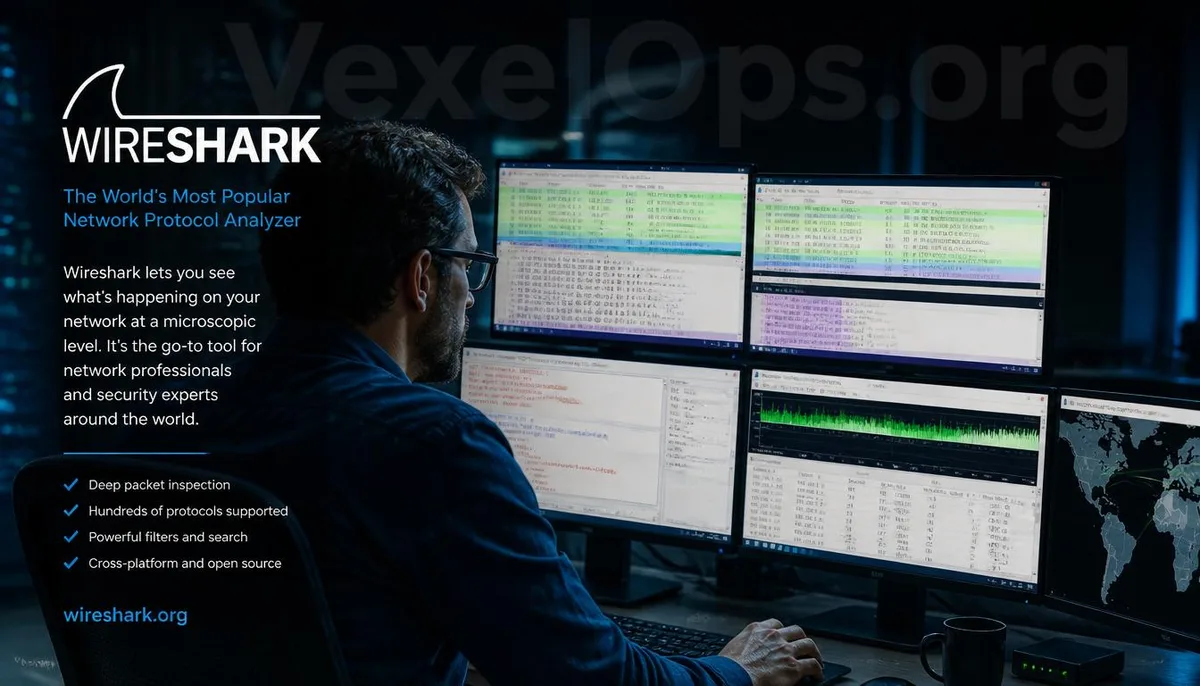
If you have ever dealt with information security, network administration, or server maintenance, you may have come across the name Wireshark. It is a free and comprehensive network packet analysis tool that helps users observe the data transmitted across networks and understand the communication processes between different devices. Many people might believe that Wireshark is a tool only hackers would use due to the overwhelming amount of packet information displayed when first encountered. In reality, it is more commonly found in the daily operations of enterprise IT departments, research labs, network engineering teams, and information security personnel for the purposes of network problem analysis, confirming service operations, and assisting in the troubleshooting of various connectivity issues. Owing to its comprehensive functionality, Wireshark has long been one of the most frequently used tools in many information security courses and network technology training.
What Can Wireshark Do?
The greatest feature of Wireshark is its ability to capture and analyze network packets in real-time, enabling users to better understand how data is transmitted over networks. For instance, when a website suddenly slows down, a service cannot connect properly, or an anomaly occurs between different devices, technicians can use Wireshark to examine the packet contents to identify the source of the issue. In addition to this, it is frequently applied in: - Analyzing network packet traffic. - Troubleshooting network connectivity issues. - Verifying server and device communication integrity. - Learning about network protocols like TCP, UDP, HTTP, and DNS. - Conducting packet analysis exercises in tandem with information security courses. For beginners, Wireshark is more like a window into observing network operations, rather than a tool for attacking others.
Why is Wireshark So Important in the Field of Information Security?
Information security is not just about studying vulnerabilities or defending against attacks; it is more crucial to understand how data flows over the network. Every time a website is opened, an account is logged in, an email is sent, or an online service is used, a significant number of network packets are generated, and Wireshark is the critical tool that helps technicians observe these processes. Through packet analysis, it is possible to determine whether devices successfully establish connections, whether data is transmitted properly, and how various protocols interact with each other. When anomalies occur in the system, it allows for quicker identification of the source of the problem instead of relying solely on guesswork for troubleshooting. For this reason, many enterprises employ packet analysis tools during the setup of large network environments for daily maintenance, while information security researchers frequently leverage Wireshark to verify if network behaviors align with expectations. For those just entering the field of information security, learning to read basic packet contents can help build a robust understanding of networking concepts, rather than merely
Is Wireshark Suitable for Beginners to Learn Right Away?
Many individuals feel confused by the extensive packet information displayed when they first encounter Wireshark. This is quite normal because Wireshark is not a teaching tool but a professional analysis software. If one lacks basic network concepts, it will be challenging to understand what each piece of information in the packet contents represents. Thus, it is advisable first to establish foundational knowledge about TCP/IP, DNS, HTTP, HTTPS, etc., before diving into Wireshark's interface and common functions. As familiarity with network operations increases, gradually learning about packet filtering, protocol analysis, and troubleshooting tends to be easier than attempting to research extensive packet contents from the onset, allowing for a more solid technical foundation.
The Tool Itself is Neither Good Nor Bad; It’s About How It’s Used
When many people see information security tools, the first thing that comes to mind is hacking or illegal activities. However, the original design purpose of most professional tools is to assist in the management, analysis, or improvement of information systems, rather than to encourage improper use. Wireshark is a prime example; it is extensively used in enterprise operations, educational training, research analysis, and information security work. What truly needs to be emphasized is the legitimate authorization and correct usage methods, rather than simply concluding that it possesses offensive capabilities due to its analytical abilities. By understanding the intended uses and design philosophies behind the tools, one can not only enhance their technical skills but also adopt a more rational view of the various common tools in the information security field.
Frequently Asked Questions About Wireshark
Can Wireshark Be Used to Crack Passwords?
The primary use of Wireshark is to analyze network packets, and it is not specifically designed for cracking passwords. The ability to observe data content still depends on the communication method and whether or not the data is encrypted.
Is Wireshark Suitable for Complete Beginners?
Yes, but it is recommended to first establish basic network knowledge, such as TCP/IP, HTTP, and DNS concepts, before learning Wireshark, as understanding is usually quicker.
Is There a Fee to Use Wireshark?
Wireshark is an open-source and free software that is currently widely supported on operating systems such as Windows, macOS, and Linux.