
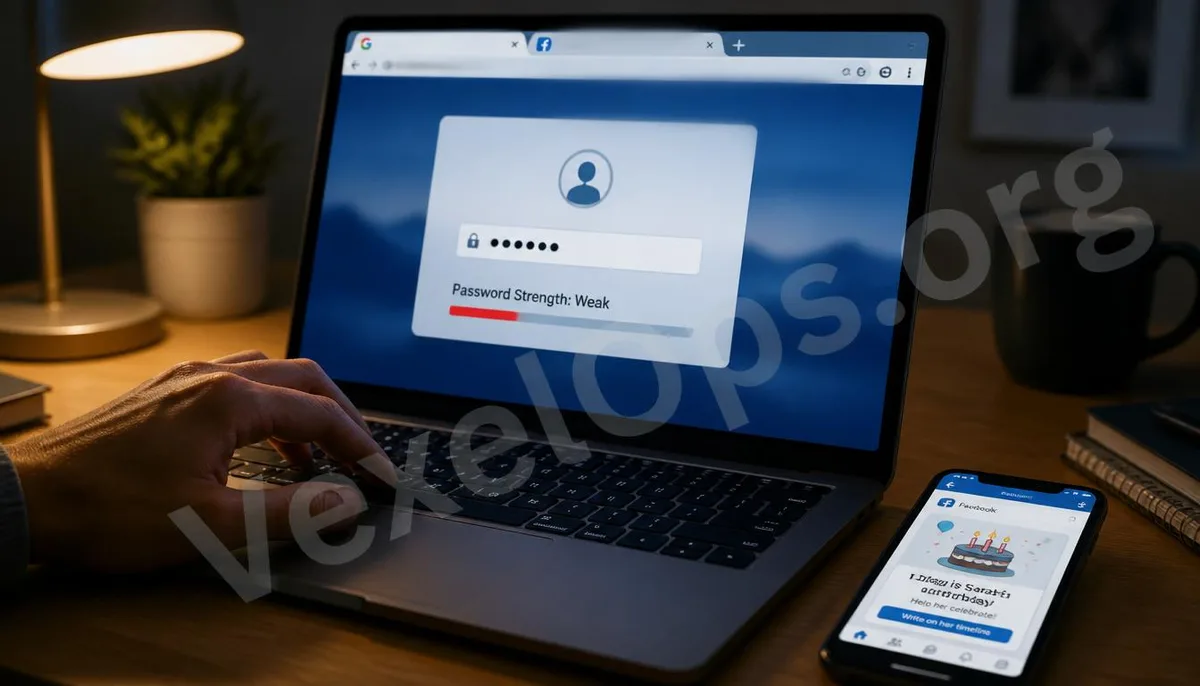
Your Password May Already Be Written in Your Profile
If your password includes your birthday, pet name, partner's initials, or the last four digits of your phone number, don’t panic just yet; this is a common habit among most people. Such passwords are easy to remember, but therein lies the problem. Birthdays often appear on Facebook profiles and in birthday wish comments on Instagram posts. Pet names may be found in the tagged photos or stories you share. These pieces of personal information that you might think are private are actually publicly available on various forms of social media, allowing anyone who spends a few minutes browsing your public posts to piece together several possible passwords.
What Password Cracking Actually Compares
Passwords are usually cracked not by hackers manually guessing word by word, but through automated programs, with two common methods. The first is called a dictionary attack. Cracking programs prepare a large list of common words, which includes popular names, words, and number combinations, and then let the program automatically attempt logins in groups, achieving speeds of thousands per second or even faster. If your password happens to be on that list, cracking could take just seconds. The second method is targeted guessing through social engineering. This method isn't random; it first gathers publicly available information about the target, such as their birthday, pet name, school, and partner's name, and then arranges these pieces of information into a candidate password list for targeted attempts. Although this method may be slower than a dictionary attack, its success rate is higher, as it focuses on the common password habits of the user. By understanding these two methods, you can see that the safety of a password doesn't depend on how complex it looks visually, but rather on whether it can be deduced from publicly available information or exists in common word lists.
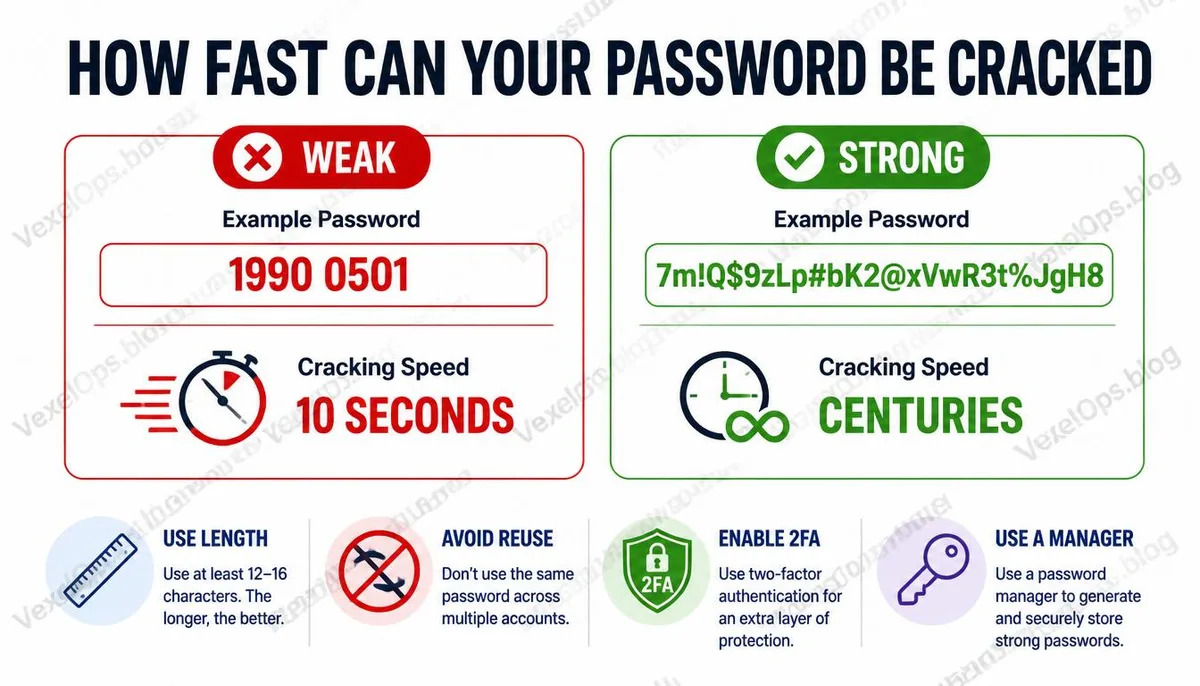
Several Immediate Steps to Strengthen Your Passwords
To effectively reduce the chance of your password being cracked, consider these approaches: - Avoid using any information related to yourself or your family that can be publicly searched, including birthdays, names, or phone numbers. - Aim for a password length of 12 characters or more; length usually has more impact on cracking difficulty than complex symbol combinations. - Do not reuse the same password across multiple platforms; if one platform's data is compromised, other accounts are at risk. - Enable two-factor authentication for important accounts like Google, Facebook, Instagram, etc.; even if your password is guessed, there’s an additional layer of defense. If you find it cumbersome to remember multiple complex passwords, consider using a password manager like 1Password or Bitwarden, which can automatically generate and store strong passwords, requiring you to only remember one master password.
Frequently Asked Questions About Password Security
Does Adding Special Characters to a Password Make It Secure?
Not necessarily. If you merely substitute letters in common words with visually similar characters, like changing password to p@ssw0rd, that substitution method is already included in the lists used by cracking programs and won’t significantly enhance security. The most effective tactic is to increase the length and randomness of the password, rather than relying on visually complex symbol substitutions.
If I Haven't Changed My Password in a Long Time and Haven't Received Any Notifications, Does That Mean I'm Safe?
Not receiving abnormal notifications does not guarantee that your account is absolutely safe, as data breaches often take time to be discovered and reported. Your password may have already entered a data breach database without being actively used for login attempts. It is advisable to regularly use data breach checking tools to confirm whether your email has appeared in known breaches, and to develop a habit of changing important account passwords periodically.
Is Two-Factor Authentication Too Much Trouble and Worth Enabling for Every Account?
Two-factor authentication does involve an extra step when logging in, but this step usually takes only a few seconds, such as entering a six-digit code generated by an authenticator app. In contrast, the potential consequences of having your account hacked, including data breaches, financial loss, or account impersonation, make this added step very low cost. It is recommended to prioritize enabling two-factor authentication for your email, social accounts, and any accounts tied to financial information.
One Key Takeaway: The key to passwords being quickly cracked is often not how advanced a hacker's skills are, but rather that the password itself contains publicly available personal information or falls within common vocabulary lists. Avoid using personal information such as birthdays or pet names as passwords, and using sufficient length and two-factor authentication is the most practical and effective way to enhance account security.