
YouTube Account is More Than Just Watching Videos
Many regular users see YouTube as a platform for watching videos, subscribing to channels, and interacting through comments. However, if you have your own channel, your YouTube account may contain more critical information, such as video management, channel settings, revenue data, collaboration emails, brand contact information, and audience interaction. A YouTube account is typically linked to a Google account. This means that if there are security issues with your Google account, YouTube, Gmail, Drive, Photos, and other services could also be affected. For regular users, a compromised YouTube account could lead to the misuse of subscriptions, comments, and viewing history. For creators, the impact may be even more severe, such as changes to channel names, deletion of videos, the upload of questionable content, or even the use of the channel to publish scams.
Scenario One: Receiving Suspicious Collaboration Invites
Many creators receive emails for brand collaborations, advertisement invites, product promotions, or sponsorship requests. Some of these emails are legitimate, but they may also harbor phishing risks. Common characteristics of suspicious emails include:
- Requesting you to download unfamiliar files
- Offering unknown compressed files or executable programs
- Pressuring you to confirm collaboration quickly
- Asking you to log into unknown websites to view contracts
- Using email addresses that resemble but do not exactly match the brand
If you are a creator, do not rush to download attachments when you receive collaboration emails. Be particularly cautious with unfamiliar compressed files, installers, and external login pages.
Scenario Two: Unknown Devices in Account Login Activity
YouTube account security is closely related to Google account login activity. Regular users should periodically check their account login history for any unfamiliar devices, unusual locations, or unknown times of access. If you find suspicious logins, you should immediately change your password, log out unknown devices, and check if two-factor authentication is enabled. Don’t just remove the device; if your password has been compromised, the attacker might try to log in again. Login locations may sometimes be inaccurate due to network environments, but if device names, timings, and your usage patterns are clearly inconsistent, treat this as a security alert.
Scenario Three: Excessive Third-Party Tool Authorizations
Some creators use editing tools, data analytics tools, scheduling tools, comment management tools, or external platforms to manage their channels. These tools occasionally require linking to your Google or YouTube account. The authorization itself is not necessarily problematic, but if the source is unknown, the permissions are too broad, or you haven't used them in a long time, the risks increase. It is advisable to regularly check third-party app authorizations, removing any unfamiliar, unused, or suspicious services. Particularly prioritize checking tools authorized through unknown links.
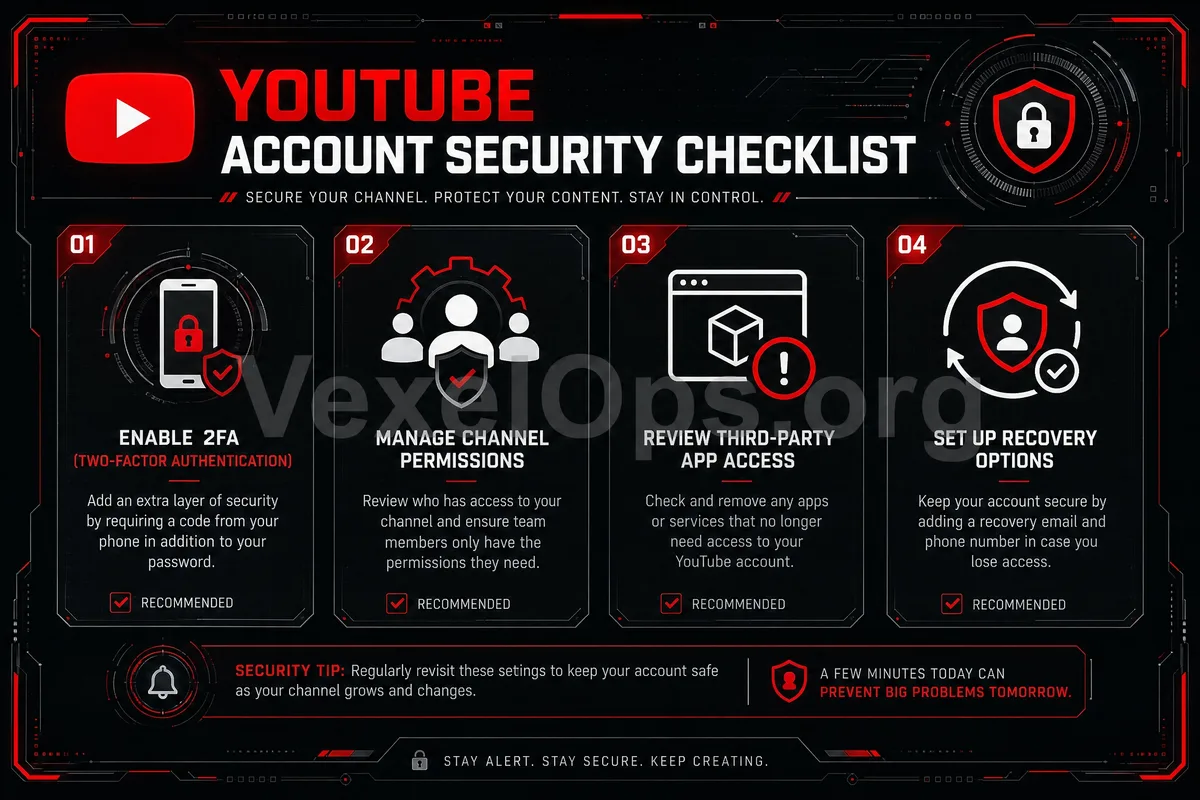
YouTube Account Security Check List
You can check from the following directions: - Whether the Google account uses a unique password - Whether two-factor authentication is enabled - Whether backup codes are saved - Whether login activity has been reviewed - Whether unfamiliar third-party authorizations have been removed - Whether suspicious collaboration emails have been handled carefully - Whether login from unknown links has been avoided - Whether channel admin permissions are only given to trusted individuals If you operate a channel, pay special attention to channel management permissions. Do not casually grant management permissions to unfamiliar people, and do not add administrators without verifying their identity.
Do Not Log into YouTube or Google Accounts from Unknown Links
Many phishing attacks disguise themselves as YouTube notifications, Google security alerts, brand collaboration platforms, copyright notices, or channel review messages, coaxing you to click links to log in again. If a page asks you to input your account, password, verification code, or authorization information, first ensure that the URL is correct. A safer practice is to directly open the official website or official app, avoiding entry through unknown emails, direct messages, or group links. Truly important security notifications can usually be found on the official account security page or within the platform itself, without needing to rely on unknown links.
Creators Should Protect Their Primary Email Even More
If you manage a YouTube channel, your primary email is crucial. Collaboration invites, account security notifications, channel alerts, and revenue-related messages may all be sent via email. Once your email is compromised, the attacker may reset your account password, view collaboration emails, impersonate you in brand communications, or even affect accounts on other platforms. Therefore, creators should not only protect YouTube but also their linked email: use unique passwords, enable two-factor authentication, check forwarding rules, verify recovery information, and avoid logging in on untrusted devices.
Proactive Management is More Important Than Remedial Action
YouTube account security does not need to be overly complex, but it requires ongoing checks. Regular users can start with passwords, two-factor authentication, and login activity; creators should also pay extra attention to collaboration emails, third-party tools, channel permissions, and primary email security. Many account risks do not suddenly appear but begin with a suspicious email, an unknown authorization, or a phishing login. Just a little more verification at these points can significantly reduce the risks of account theft, channel misuse, or data breaches. For YouTube users, security is not a limitation on creativity but a means to protect content, audiences, and long-term results.