Why Are Online Dating Scams So Easy to Fall For?

Online dating and romance scams differ from typical phishing links. They do not ask for passwords or payments right away but spend time establishing a relationship instead. The scammer may get to know you through social media, dating apps, messaging software, or unfamiliar private messages, slowly chatting, showing concern for your life, and sharing photos, creating a sense of trust between you. What makes these scams particularly dangerous is that they exploit emotions and trust rather than purely relying on technology. When someone feels understood, cared for, or potentially on the brink of a close relationship, they are more likely to dismiss unreasonable demands. Thus, the key to identifying online dating scams is not merely observing if the person speaks gently, but rather if their actions gradually lead you to hand over money, personal data, or account control.

Rapid Establishment of Intimacy is a Common Warning Sign

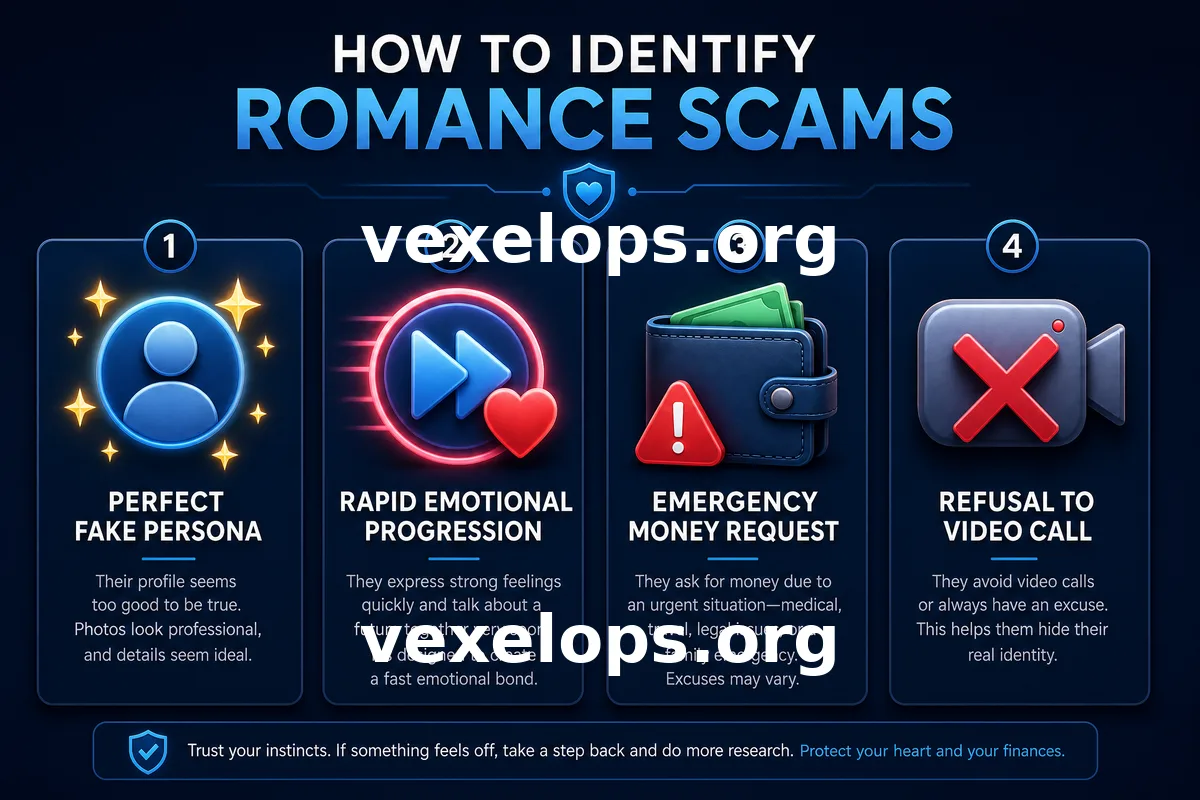
Many romance scams quickly pull you into a close relationship in a short time. The scammer may frequently check in with you, use affectionate names, discuss future plans, or even profess feelings very soon after meeting you. This rapid escalation can create a sense of being valued, but it may also be a deliberate tactic to foster emotional dependence. A normal relationship takes time to understand one another, while scammers typically aim to lower your guard as quickly as possible. If someone you don't know well quickly asks to switch to other messaging apps, avoids communication on the original platform, or starts discussing money, investments, difficulties, and urgent assistance, it is a red flag.

Long Time Without Meeting or Refusal of Video Calls is Concerning

One common scenario in romance scams is the person consistently finding excuses not to meet or refusing to engage in normal video calls. They might claim to be working abroad, in the military, on a ship, in a hospital, or on a construction site due to confidentiality reasons. Some may provide photos or short videos, but these contents do not necessarily verify their identity. Photos might be stolen, and videos could originate from other sources. Ordinary users should not jump to conclusions just because someone is unable to meet; however, if they refuse to confirm their real identity over prolonged periods while beginning to ask you for money or personal data, this is a clear risk signal.

When Money is Mentioned, Risks Increase

Romance scams typically culminate in monetary requests. The scammer may not initially ask for money outright but this will often follow a story such as a family member falling ill, an account being frozen, difficulties during a business trip, a package being stuck, needing just a little more for a flight, or requiring funds for an investment opportunity. Common requests include: - Emergency loans - Help with payment of fees - Receiving packages or documents on their behalf - Transfers to a specified account - Purchasing gift cards or cryptocurrencies - Participating in investment platforms recommended by them The moment an online relationship starts to request money—regardless of how heartfelt the reason may seem—you should pause operations. Someone who genuinely cares for you should not turn a newly formed relationship into a financial burden.

Diagram showing risk judgment for online dating scams, including rapid relationship building, refusal to meet, requests for transfers, and guidance towards investments as common

Investment-Style Romance Scams Are Also Common

Some romance scams do not directly ask for loans but instead steer you towards investing. The scammer may claim expertise in cryptocurrencies, forex, stocks, short-term trading, or a high-yield platform and profess they can help you earn money. These tactics usually first build trust through emotional bonds and then package money transfer requests as investments. You might see fake profits displayed on their platform, or initially be able to withdraw small amounts, only for them to push you to invest more later on. If an online relationship begins steering you toward unfamiliar investment platforms, requesting you to recharge money, transfer cryptocurrencies, pay taxes, or unfreeze fees, you should be particularly careful. Relationships should not be tied to obscure investment processes.

Do Not Provide Identification Documents or Account Information

In addition to money, romance scams may also ask for personal data. They might request identification documents, addresses, bank account details, selfies, job information, email addresses, social media accounts, or even ask you to register an account or receive verification codes on their behalf. This information could be used for identity theft, fake identity verification, money laundering risks, other scams, or more precise follow-up tactics. Ordinary users should remember: people met online, regardless of how long you've been chatting, should not easily gain access to your identification documents, verification codes, bank details, or account recovery information.

What If You Have Already Paid Money or Provided Information?

If you have already transferred money or made a payment, do not continue to invest based on their claims of "just one more supplement and it will be resolved." Many romance scams will continue to pressure the victim emotionally, making promises about the future, or creating emergencies to request more funds. You should save chat logs, transfer records, the scammer's account details, platform URLs, wallet addresses, phone numbers, emails, and all related information. If banking or payment platforms are involved, you should contact the service provider promptly to see if protective measures can be taken. If you have provided usernames, passwords, or verification codes, please immediately change your password, log out from other devices, enable two-factor authentication, and check if recovery data has been altered.

Trust is Needed in Relationships, But Money Requires Verification

Online dating itself is not inherently problematic; many real relationships may start online. What really warrants caution is when the individual begins demanding money, investments, or sensitive information while the relationship remains unstable, their identity unclear, and real-life interactions minimal. Ordinary users can keep a simple principle in mind: feelings can be understood over time; with money, always pause to verify first. If someone truly cares about you, they will not pressure you to transfer money, will not demand verification codes, and will not package opaque investment opportunities as a shared future. As long as you take a moment’s pause when money is requested, you can avoid many losses caused by romance scams.