
Why are Online Part-Time Job Scams Common?
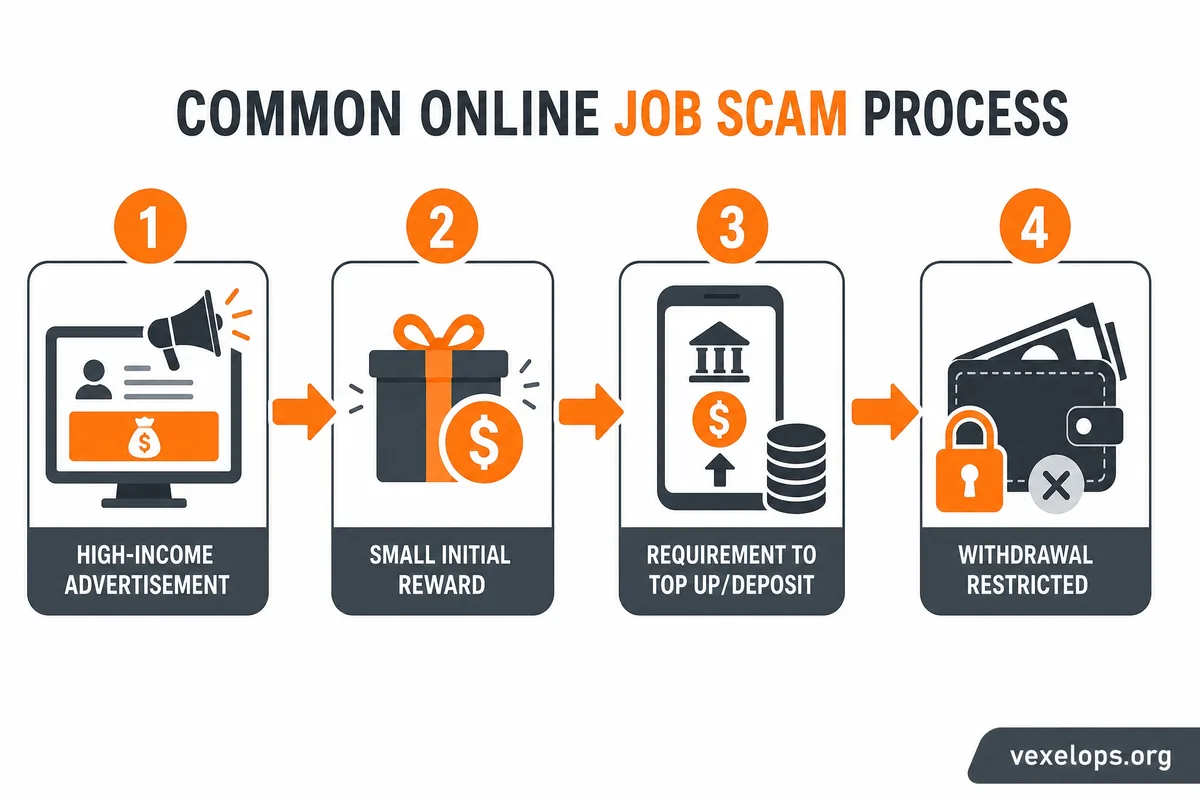
Many ordinary users come across advertisements for part-time jobs and side businesses on social platforms, short videos, messaging apps, job websites, or groups. Common phrases include 'work from home', 'only an hour a day', 'no experience needed', 'high income', 'can be done on a mobile phone', 'quick salary payout'. These terms alone don’t necessarily indicate a scam, but if the conditions seem too easy and the income too high, it’s time to be cautious. Scammers typically exploit people's desire to increase income and find flexible work by initially building trust with simple tasks and then gradually guiding them to invest more money or personal information. The most dangerous aspect of online part-time job scams is that they may seem perfectly normal at first. The scammer may not immediately ask for a transfer but will first let you complete small tasks and see minimal returns. Once your guard is down, they will ask for more substantial investment.
High Income and Low Threshold is the First Warning Sign
If a part-time job ad claims no experience, no skills, no interviews are needed, and only minimal time daily will yield high income, it is usually worth questioning. Legitimate jobs typically include clear responsibilities, reasonable pay, company information, contact details, and contract details. Suspicious part-time jobs often only emphasize earnings and fail to clarify the actual job content. For example, if they only say 'help the platform increase traffic', 'complete tasks to earn commissions', 'system automatically allocates tasks', 'limited spots available', but are unwilling to clearly explain company background, payment methods, and job rules, then you should pause.
Common Strategy: Start with Small Gains
Some scams will initially let you complete very simple tasks, such as liking, following, taking screenshots, commenting, filling out forms, or joining groups. After completion, the scammer might actually give you a small reward, making you feel that the platform is reliable. Then, the tasks will gradually escalate. They may ask you to prepay fees, recharge to the task platform, purchase products, complete combination tasks, or pay deposits to unlock higher earnings. Once you invest more money, withdrawal issues may begin. The platform might require you to continue funding, complete more tasks, pay taxes, or cover fees for unlocking or account verification. By this point, many people, having already invested money, are reluctant to stop immediately and end up sinking deeper.
Be Particularly Cautious of Upfront Fees
Legitimate part-time jobs typically should not require you to pay money upfront to start. If the other party asks you to pay membership fees, training fees, deposits, information fees, unlocking fees, or task principal amounts, you should be particularly cautious. Some scams present upfront fees as reasonable, saying things like 'this is just for system verification', 'it will be refunded after completion', or 'you need to pay upfront to get advanced tasks'. However, if they ask for payment before the work begins, it is already a high-risk signal. If they request that you transfer money to a private account, a cryptocurrency address, or a strange payment account, or insist that you shouldn’t tell others, you should definitely not proceed.
Personal Information Can Also Be Misused
Part-time job scams not only aim to steal money but also may gather personal information. The other party may ask for identification documents, bank account details, phone numbers, addresses, social media accounts, email addresses, or selfies for verification. Once this information is given out, it may be used for further scams, identity theft, fraudulent identity verifications, or make subsequent pitches more targeted. Ordinary users applying for online part-time jobs should first confirm that the other party has legitimate company information, an official website, reliable contact methods, and clear job descriptions. Don't give out sensitive information just because the other party seems friendly or because many people in the group claim to have made money.
How Can You Evaluate Job Invitations?
You can start by considering a few basic questions: Is the job content clear? Are the earnings reasonable? Does it require upfront payment? Does it ask you to join unknown groups? Can you only contact them through private messages? Do they refuse to provide company information? Are they repeatedly urging you to join immediately? If a part-time job primarily attracts you with high income potential, yet fails to clearly explain the work involved, you should keep your distance. Legitimate safety-oriented job opportunities should allow you to verify, inquire, compare, and think things through, rather than continually urging you with phrases like limited-time offers, last chance today, or immediate joining.
Most Importantly, Don't Rush to Transfer Money
Online part-time job scams often exploit people's sense of anticipation. When you see others claiming they’ve made money or you’ve already invested some time, it becomes tempting to continue trying. However, as soon as they start asking you to transfer money, recharge, prepay, or pay any fees, you should stop immediately. If you have already made payments, please save chat records, transfer records, platform URLs, the other party's account, and payment information. Don’t continue spending just because the other party says, 'Just make one more payment and you can withdraw.' There’s nothing wrong with looking for part-time or side jobs, but remember: truly reliable opportunities won’t lure users with exaggerated earnings and upfront fees. When you see signs of high income, low thresholds, upfront payments, or withdrawal limitations, stay alert.