
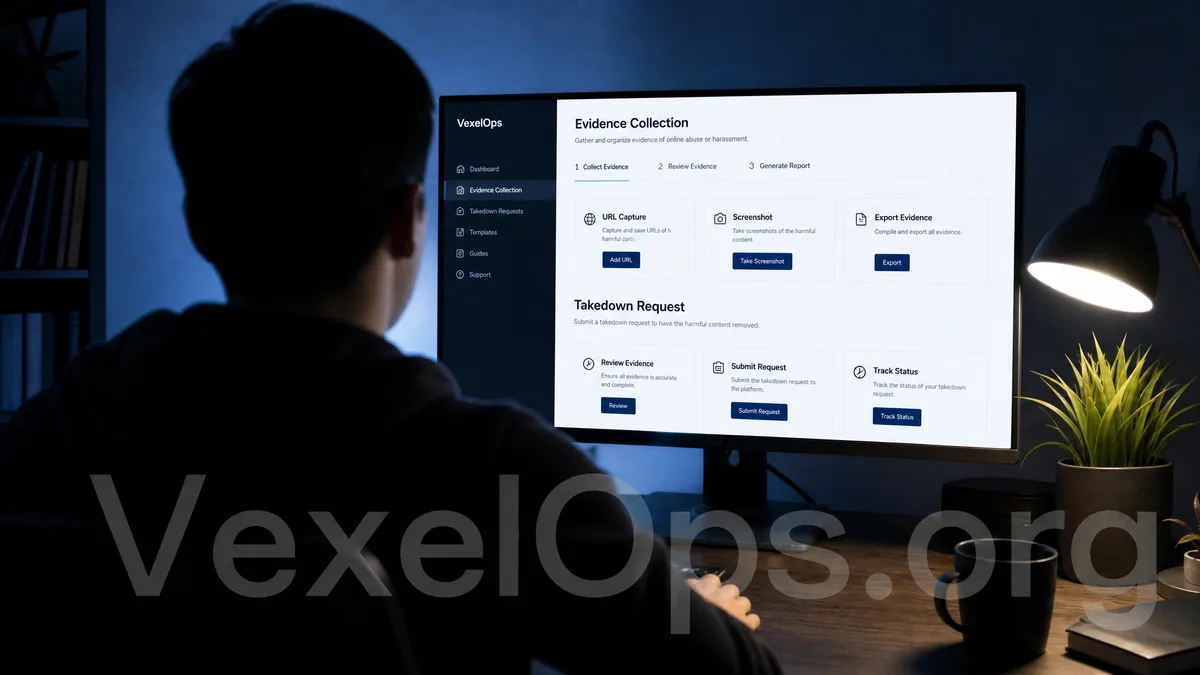
After Private Images Leak, the First Step is Not to Share Links Everywhere
When inappropriate videos, private photos, or intimate images are uploaded online, the affected person often feels panic, anger, or shame. Such content may appear in Google search results, Telegram groups, X posts, Facebook groups, Instagram messages, Discord servers, or even be reposted on unfamiliar websites or forums. In such cases, the first priority is not to share links widely for help nor to immediately argue with the distributor, but to first reduce the risk of further dissemination. Every time a link is shared with more people, it increases the chances that the content will be saved, screenshotted, or re-uploaded by more devices. A safer approach is to calmly document where the content appears, who posted it, the time of posting, relevant account names, and URLs, and then address the matter through the official complaint channels of the platform.
Organize Basic Evidence First, but Do Not Spread the Content
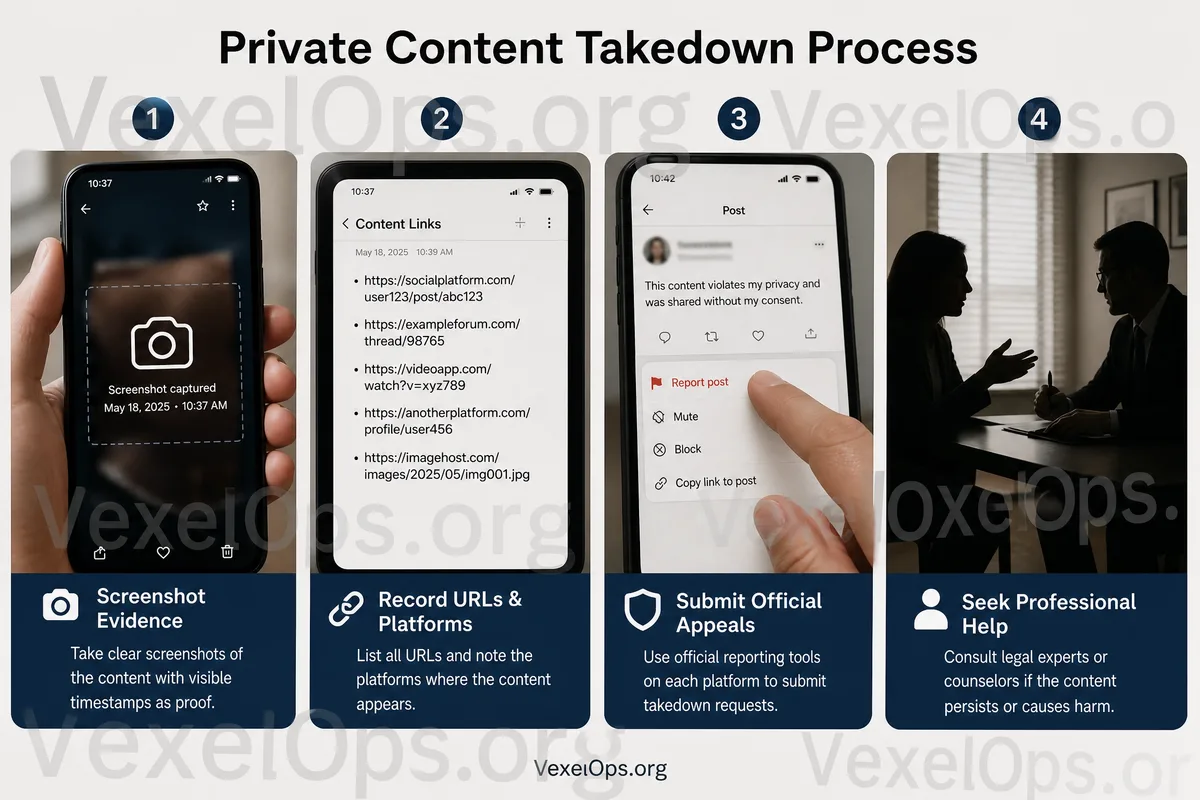
Many people mistakenly believe that "downloading the video or image" is necessary to save evidence. In reality, this could create a higher risk, especially when the content involves minors, surreptitious recordings, threats, extortion, or non-consensual distribution; it is particularly important not to download, share, or re-save indiscriminately. It is advisable to first organize the following information: 1. Date and time the content was discovered 2. URL or platform name 3. Publisher's account name, ID, or nickname 4. Screenshots of posts, groups, channels, or pages 5. Any threats, extortion, or demands for payment from the other party 6. Whether content uses your name, photos, phone number, social account, or other personal information When taking screenshots, try to retain the URL, account name, and time information, but do not send the content to more groups or platforms for inquiries. If you need assistance, focus on "incident information" and "platform location," rather than repeatedly sending the images themselves.
File Takedown Requests Through Official Platform Channels
Different platforms have varying reporting and removal mechanisms. If content appears on Instagram, Facebook, X, TikTok, YouTube, Reddit, Telegram, Discord, or other websites, it is usually possible to submit complaints through the platform's internal reporting, privacy violation, harassment, non-consensual intimate images, or personal data exposure-related entrances. If the content has already appeared in Google search results, two points need to be clarified: Google search results can request the removal of specific search presentations, but the original content on the website often still requires submitting takedown requests to the original website or platform. In other words, removing search results does not equate to the original content being deleted. If the content involves Telegram groups, Discord servers, or private communities, be particularly cautious of scams from fake customer support or so-called "removal specialists". Anyone who asks you to provide passwords, verification codes, original nude photos, mnemonic phrases, remote control access, or advance payment guarantees for deletion should be treated with suspicion.
If Involves Threats, Extortion, or Minors' Content
If the other party uses private images to threaten you for payment, demand more photos, request transfers in USDT, Bitcoin, Ethereum, or threaten to send to your family, colleagues, school, and social friends, this is no longer simply a privacy issue; it may involve extortion and criminal risks. If the content involves minors, do not download, save, share, or forward that content; instead, immediately report it through the platform's official reporting channels and consider seeking assistance from local law enforcement, legal assistance, or trusted support organizations. If you need to organize incident data, focus on account names, URLs, times, conversation records, payment requests, and threatening content rather than repeatedly saving the images themselves.
For a More Organized Takedown Process, You Can Also Seek VexelOps Assistance
Leaking private images or inappropriate content is a highly stressful situation, but the more urgent it is, the more care must be taken to avoid erroneous actions. Do not share content with more strangers, do not believe messages that guarantee deletion, and do not provide passwords, verification codes, or additional private images. VexelOps can assist users in organizing the incident timeline, platform location, publisher information, suspicious conversations, and required data for the complaint, allowing for a more orderly process when reporting to the platform, requesting search result removals, or preparing for legal consultations. If you are uncertain which platform to address first, what data to provide, or which content should not be shared again, you can also find out about the assistance process through VexelOps.org, VexelOps.net, or Telegram @vexelops.