
What is the Dark Web?
The dark web, commonly referred to as the Dark Web, refers to parts of the internet that cannot be directly accessed via standard search engines and require specific environments or tools to enter. When people hear about the dark web, they often think of mystery, illegal transactions, hacker forums, or data breaches. However, these are just part of the external impressions of the dark web. To understand the dark web, it can be divided into three concepts: the regular internet, deep web, and dark web. The regular internet consists of public websites that you can find every day through Google, Bing, Yahoo, or other search engines, such as news articles, blogs, stores, and social media pages. The deep web refers to content not directly indexed by search engines, such as your email inbox, cloud storage, banking accounts, member pages, and internal company systems. This content is not necessarily dangerous, but it requires login or permissions to view. The dark web is a more specialized part, often associated with tools such as the Tor Browser, onion URLs, anonymous forums, or hidden services. It does not equal the entire world of cybercrime, but it may indeed host more high-risk
Do Everyday Users Need to Access the Dark Web?
For most everyday users, there is no need to actively access the dark web. The purpose of understanding the dark web is not to explore it but to comprehend its relationship with everyday digital security. Many people are intrigued and search for ways to access the dark web out of curiosity or are drawn in by social media videos that depict it as mysterious. In reality, the dark web can harbor scams, malicious links, illegal transactions, fake services, phishing pages, and unreliable information. For ordinary users without a cybersecurity background, casually engaging with it can pose unnecessary risks. A more practical concern is whether your email, passwords, phone number, address, personal identification data, or account information have ever appeared on underground forums, dark web markets, or other non-public data exchange channels due to data breaches. This is what everyday users should truly focus on.
What is the Relationship Between the Dark Web and Data Breaches?
When a website, app, forum, or service experiences a data breach, the leaked data may be organized, resold, shared, or used for other attacks. This data sometimes appears in underground forums, closed communities, data trading channels, or is even described as "dark web data." This data may include emails, password hashes, phone numbers, names, addresses, birth dates, account names, or other personal information. Even if the data did not stem from your own operational errors, it could leak due to a security incident on a particular platform. Ordinary users are most commonly affected when attackers take leaked email and password combinations and try to log into other platforms. If you use the same password across multiple sites, the risk significantly increases. This is why password managers, two-factor authentication, data breach inquiry tools, and account security checks are crucial for everyday users.
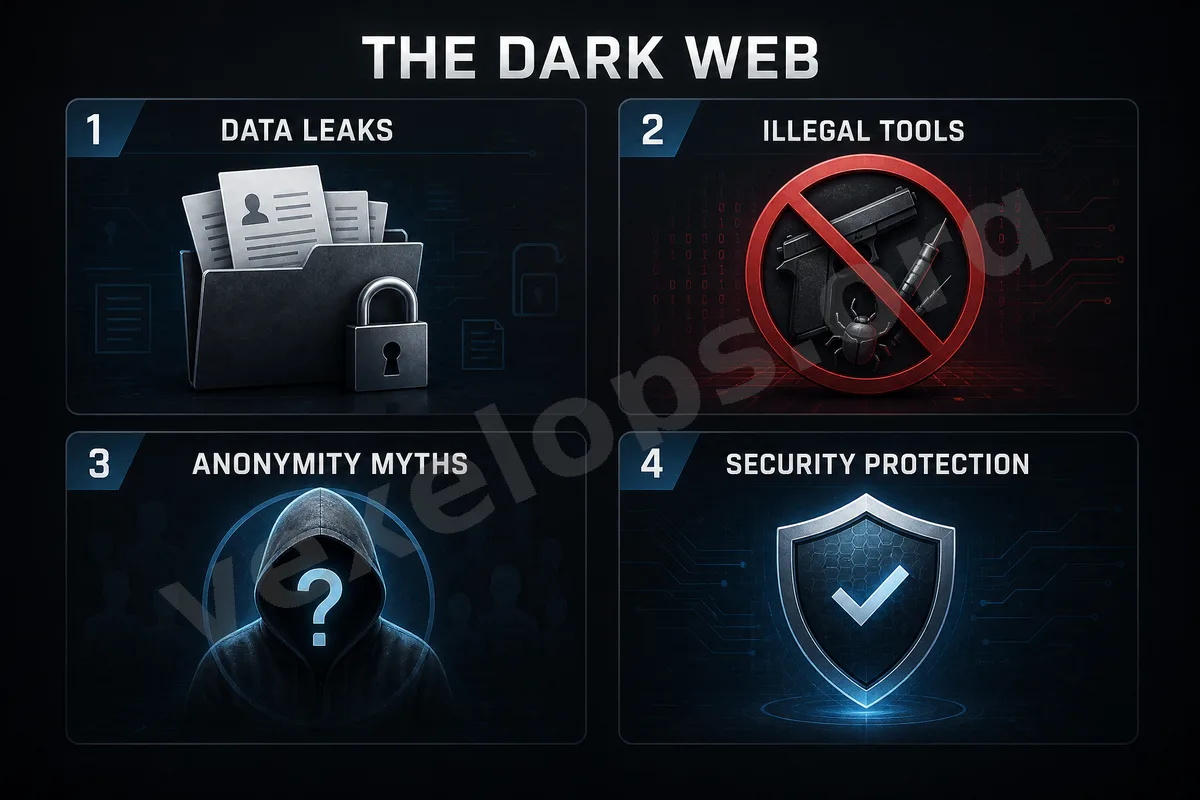
Common Misconceptions About the Dark Web
Many people believe that the dark web can only be accessed by hackers or think that if data appears on the dark web, it means their accounts have been completely compromised. Such understandings are not fully accurate. Having your data appear in a leak does not necessarily mean your account has been accessed, but it indicates that you need to check for risks. Especially if you have reused passwords, you should quickly change the passwords for important accounts. Another misconception is that using the Tor Browser guarantees safety or anonymity. In reality, anonymous tools alone cannot guarantee security. If you input personal data on untrusted websites, download unfamiliar files, believe in fake services, or provide account passwords, you may still be exposed to risks. Tools are just tools; what truly matters is the user's judgment.
How Should Everyday Users Protect Themselves?
For ordinary users, rather than researching how to access the dark web, it is better to first establish some basic protections. Firstly, main emails should use unique passwords, as email is often the core gateway for password resets and account recoveries. Secondly, do not reuse the same password across multiple platforms. If data leaks from one platform, other accounts may potentially be compromised. Thirdly, enable two-factor authentication on important accounts, especially email, social media platforms, cloud services, payment platforms, and work accounts. Fourthly, consider using data breach inquiry tools such as Have I Been Pwned, or check password security alerts provided by browsers or systems like Google Password Manager, Apple iCloud Keychain, Microsoft Edge, Chrome, etc. Fifthly, do not ignore suspicious login notifications, password reset emails, or verification code messages. This may indicate someone is attempting to use your account information.
What to Do If You Suspect Your Data Has Been Leaked?
If you suspect your email or password has been leaked, do not panic, but promptly organize your important accounts. First, change the password of your main email, confirm that two-factor authentication is enabled, and check if your login devices are secure. Then, check your social media accounts, cloud accounts, shopping sites, and payment-related accounts. If a leaked password was used on multiple platforms, do not just change it on one account. All platforms using the same or similar passwords should be updated. It is also recommended to remove old accounts that you no longer use, as many outdated websites can actually pose high risks for data breaches. Even if you haven’t logged in for years, your data may still reside in their databases.
The Dark Web is Not the Focus; Data Protection is the Key
The dark web may seem distant for everyday users, but data breaches, password reuse, phishing links, and account theft are risks we may encounter daily. What truly matters is not to explore the dark web, but to understand that the information you leave on regular websites could potentially flow into more difficult-to-trace places due to platform leaks. Once the data leaves the original platform, the actions users can take decrease significantly. Thus, the best protection is to lower risks in everyday life. Using unique passwords, enabling two-factor authentication, regularly checking for data breach alerts, and not inputting sensitive information on unknown websites are the most practical safety actions for ordinary users. The dark web sounds mysterious, but account security can actually begin with everyday habits.