
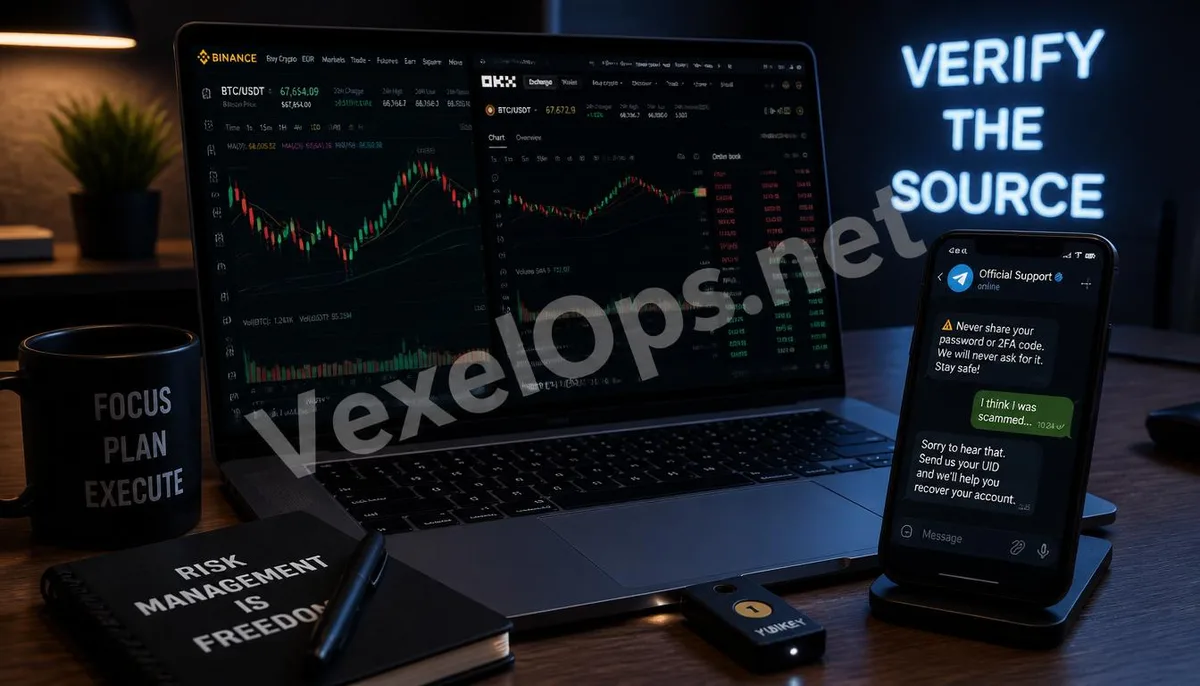
The Authority of Disguise: The Psychology and Technical Manipulation of Fake Exchange Customer Service
In the ecosystem of centralized exchanges, official customer service is the last line of defense for problem resolution, but this trust is being exploited by hackers. Scamming groups often impersonate Binance or OKX's official technical support staff on Telegram, Discord, or social media, proactively contacting users facing trading issues.
- Impersonating alert messages: Hackers may send text messages or emails claiming that the user's account is involved in money laundering or has security risks, and that they must contact "online customer service" immediately for
- Remote desktop deception: Fake customer service may request users to install remote control software like AnyDesk or TeamViewer, claiming they need to assist the user with "technical repairs," when in fact, they aim to directly control the
- Screen sharing traps: During the call, they may coax users into enabling screen sharing to observe the 2FA (two-factor authentication) codes or backup keys being entered.
This attack mode does not involve hacking the exchange system, but rather manipulates user behavior to gain access. VexelOps advises users to always contact customer service through the official app's channel and to reject any proactive contact through unofficial channels.
The Invisible Hand: API Key Hijacking and Automatic Fund Transfers
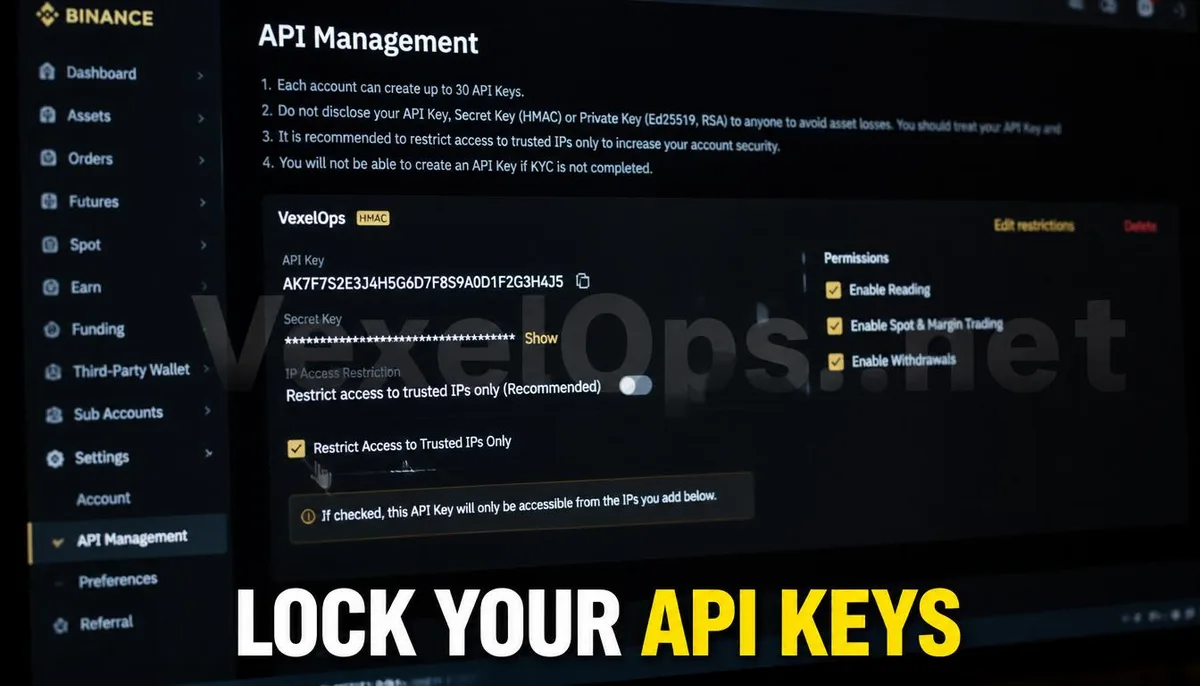
For professional traders, API keys are essential tools for automated trading. However, if misconfigured, they can become secret pathways to fund loss. Hackers can use phishing websites or malicious browser extensions to trick users into creating API keys with "withdrawal permissions" and leaking them.
- Misuse of withdrawal permissions: Once hackers obtain API keys with withdrawal permissions, they can bypass password and SMS verification on the web front end and directly transfer funds to external wallets using code commands.
- Hedging and harvesting trades: If the API only has trading permissions, hackers can use your account to perform high-buy low-sell hedging trades with their preset scam tokens, cleaning out your assets without directly withdrawing them.
- Bypassing IP whitelists: Many users fail to set IP access restrictions for APIs, allowing hackers to launch attacks from any location worldwide.
If you notice unusual transactions or unexplained reductions in funds within your exchange account, VexelOps can assist you in conducting a deep analysis of your API call logs. We can track the source IP of illegal commands and the ultimate destination wallet of the funds, providing technical basis for your damage control.
Strengthening Exchange Accounts: Establishing Multi-layered Digital Defense
In the face of increasingly sophisticated platform scams, a single password protection is no longer sufficient. Establishing a complete account security system is essential for every digital asset holder.
- Force enabling hardware 2FA: Prioritize using physical security keys like YubiKey instead of SMS or email verification, which can effectively prevent remote interception of verification codes.
- Strictly limit API permissions: Do not enable withdrawal permissions for APIs unless absolutely necessary, and ensure they are bound to fixed server IP addresses.
- Activate withdrawal whitelisting: Enable the withdrawal address whitelisting feature in your Binance or OKX settings, along with a 24-hour withdrawal lock-in period, which allows for valuable response time in case of anomalies.
In the battlefield of digital finance, a proactive defense mindset and professional technical support are equally important. If you suspect your account has been compromised, immediately disable all API keys and change your core email password. VexelOps's cybersecurity expert team can assist you in conducting a comprehensive audit of platform permissions to identify and eliminate potential backdoors, ensuring that your investment environment remains at the highest security level.
Frequently Asked Questions about Exchange Security and Fake Customer Service
Why does the sender of the text message appear as Binance but it is a scam?
This is a technique known as SMS sniffing or spoofing, where attackers can forge any sender name. Remember, neither Binance nor OKX will ever ask you to click links for account verification via SMS. All security operations should be conducted directly within the official app. If you clicked a link in the text message and provided information, please contact VexelOps immediately for urgent measures.
Is it safe if the API key only has trading permissions and not withdrawal permissions?
Not completely safe. As mentioned earlier, hackers can exhaust your account assets through hedging trades. Therefore, even without withdrawal permissions, strict monitoring of the API usage environment is essential, and keys should be replaced regularly.
If funds have already been withdrawn from the exchange, can they be recovered?
The difficulty of recovery depends on the flow of funds. If the funds have been transferred to another exchange with KYC verification, there might be an opportunity to intercept and freeze them through VexelOps's on-chain tracking reports and legal cooperation. The key is the speed of tracking, which must be completed before the hacker transfers the funds to a mixer.
One Key Takeaway: The core of exchange security lies in API permission management and hardware verification. By rejecting unofficial customer service, binding IP whitelists, and effectively utilizing professional on-chain tracking services, you can identify platform traps and safeguard your digital asset security.