
Identifying Technical Detection Points for Abnormal Access on Instagram
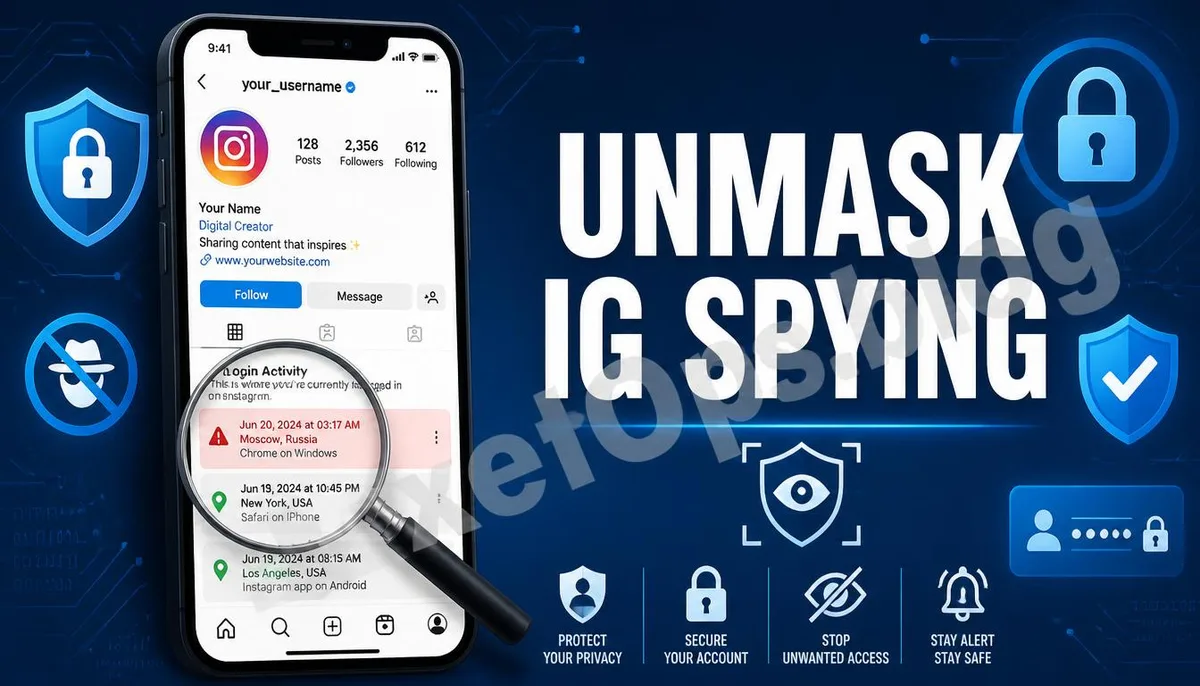
The security of Instagram relies on a complex stage operation management mechanism. The most obvious yet easily overlooked signs often appear in the login activity records when your account is being monitored. Hackers may employ geolocation spoofing techniques to make the login location appear close to your actual location. However, by reviewing the device types and browser versions, subtle discrepancies can often be uncovered. If you see a device model you have never used or access records from different operating systems, it clearly signals that the primary control of the account has been partially hijacked. In addition to explicit login records, changes in the account's interaction behaviors are also critical judgment criteria. If you notice that the recommended content on the Explore page suddenly shifts to areas you have never expressed interest in, or if strange keywords appear in the search history, this suggests that another identity is synchronously operating your account. This kind of invisible monitoring usually does not require a password change but achieves its goal through access token hijacking, allowing the victim to inadvertently leak all direct messages and
Analysis of Access Token Hijacking and Third-Party Application Authorization Vulnerabilities
- The lifecycle of access tokens: Once a hacker obtains your Token through phishing sites or malicious extensions, they can bypass two-step verification and communicate directly with Instagram's servers in your identity.
- Over-authorization of third-party applications: Many seemingly harmless filter apps or data analysis tools request permissions to read messages and post on your behalf when authorizing. If these permissions are abused, they can become
- API anomaly call records: While ordinary users cannot directly view API logs, they can apply to download their personal data and check the access records to identify automated operation trails that do not belong to them.
When facing complex token hijacking or suspected advanced script monitoring, VexelOps can assist users in conducting a thorough account security audit. Utilizing professional techniques to analyze access sources and abnormal paths, we can accurately identify illegal links and completely revoke related authorizations, restoring your digital social life to normal.
Establishing a Multi-Layered Privacy Defense Structure on Instagram
To comprehensively block monitoring, a systematic defense process must be established. First, immediately enter the app and website settings to revoke all third-party links that are no longer used or of unknown origin. These links are often the main channels for privacy leaks. Subsequently, force log off from all current stages of operation. This will invalidate all old access tokens, forcing the system to re-verify your identity.
Additionally, enabling login alerts is crucial. Whenever a new device attempts to access your account, the system should immediately send real-time notifications to your trusted devices. This kind of immediate alert mechanism allows you to take action before damage expands. Maintaining a moderate suspicion of digital tools and being highly vigilant about any authorization requests is the best way to keep your account clean.
Cleaning Digital Footprints and Long-Term Monitoring Protection Practices
- Regularly download account data: Use Instagram's download information feature to review login IPs and timestamps.
- Check linked account settings: Confirm whether Facebook and other linked platforms also exhibit abnormalities to prevent cross-platform chain invasions.
- Limit the display of sensitive information: Reduce the exposure of excessive life details in personal profiles to lower the risk of social engineering attacks.
Through these proactive technical measures and habit formation, you will be able to enjoy the conveniences of social networks while having stronger control over your privacy. While technology poses risks of monitoring, it also provides us with tools to combat prying. If properly utilized, your digital world will always remain a safe haven.
Common Questions About Instagram Monitoring Detection
Why does the location shown in my login record differ from my actual location?
This does not necessarily indicate that your account is being monitored. Instagram's location determination is based on the IP allocation of internet service providers, which sometimes shows nearby cities or the location of telecommunication facilities. However, if the displayed location crosses national borders or the device model is completely inconsistent (for example, showing Android login when you are using an iPhone), action must be taken immediately. It is recommended to perform a comprehensive assessment combining device models and access times rather than solely focusing on geographic locations.
What should I do if I suspect monitoring but abnormalities persist even after changing my password?
This suggests that the monitor may not be logging in through your password but rather accessing via authorized third-party applications or malicious software implanted on your device. In this case, simply changing the password cannot revoke the already issued Access Token. You must manually revoke any suspicious third-party authorizations in the app and website settings and check if your phone has been implanted with monitoring software that has screen-capturing functionalities.
Does enabling two-step verification completely prevent monitoring?
Two-step verification greatly increases the difficulty for hackers to brute-force your password, but it cannot protect against session hijacking or the abuse of authorized malicious apps. If your token is stolen after verification, the monitor can still maintain access. Therefore, two-step verification should be viewed as part of a defense system, which still requires regular device scans and authorization audits for comprehensive security protection.
One Key Takeaway: The core of Instagram monitoring detection lies in reviewing login activities and third-party authorizations. By forcibly logging out of all devices, revoking unknown application links, and strengthening two-step verification, you can effectively block unauthorized access and safeguard social privacy and digital identity security.