
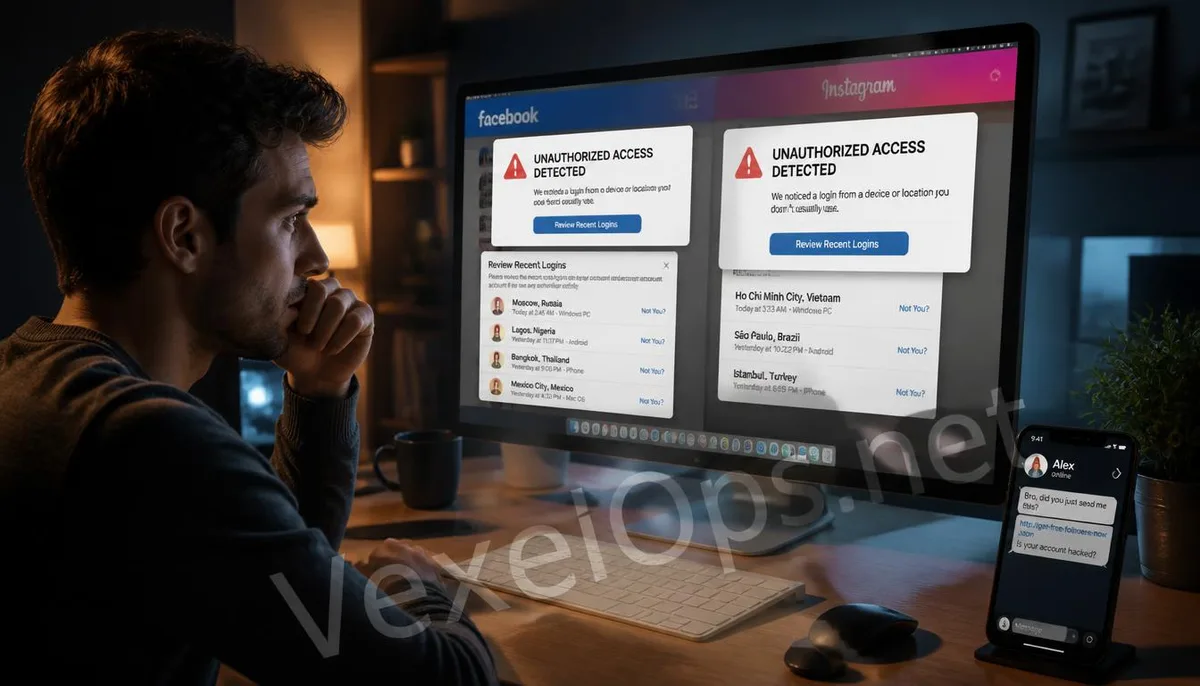
The Security Crisis of Social Accounts: Why Your Account Might Be Targeted
To be honest, you might have encountered this situation: one morning you wake up to find friends messaging you, asking why you posted some strange investment links on Instagram or Facebook. It sounds like a movie plot, but in reality, it often marks the beginning of an account hijacking. Scammers target your account not for your private messages, but for your social credibility. They aim to exploit your identity to deceive your friends and family, which is often more effective than randomly casting a wide net for scams. Ordinary people often think that just making passwords longer is enough for security. However, modern intrusion techniques have evolved. Scammers no longer attempt to guess your password; instead, they directly target your access tokens. When you click on what seems to be an innocent link or authorize a fun quiz app, your account's doors could have quietly opened for them. This intrusion process is often silent, leaving you unaware of any anomalies.
The Technical Truth of Token Hijacking: How Hackers Bypass Your Password
It sounds technical, but the principle is quite simple. Token hijacking is like a hacker stealing your access card to enter a building, rather than trying to pick your door lock. Once they obtain this access card, even if you change the door lock password, as long as the card remains valid, they can come and go freely. Technical experts point out that this method can perfectly bypass two-factor authentication, as the system sees the holder of the token as a legitimate user. To achieve this high-efficiency harvesting, scam groups typically employ several highly deceptive tactics:
- Malicious link inducement: clicking on a fake webpage to directly steal access tokens.
- Software backdoor implantation: intercepting tokens through malicious plugins in the browser.
- Cross-site scripting attacks: exploiting website vulnerabilities to automatically forward user authorization information.
These methods are visually designed with precision, aiming to make you unknowingly relinquish control. If you open a fun link sent by your spouse or a discount detail forwarded by your partner, if there’s a malicious script hidden behind it, your digital identity may have been copied to the scammers' server within seconds.
The Scammers' Chain Tactics: From One Link to Full-Scale Harvesting
Once the token falls into the hands of scammers, the real disaster begins. They won’t immediately change your password, as that would alert you. Instead, they lurk in the background, observing your social habits. They then use your account to send out massive phishing messages or add your account to illegal groups for fraudulent activities. This spread, leveraging social trust, can quickly damage your reputation. During this process, VexelOps' professional cybersecurity team can offer in-depth connection reviews and token effectiveness analyses for your account. We assist in monitoring for anomalous API call records and identifying illegal connections hidden in the background. Through professional data flow monitoring, we can help victims swiftly cut off the scammers' remote control and clear all malicious authorization information, ensuring the account returns to a fully controlled state.
Guarding Your Digital Identity: Establishing True Security Barriers
Protecting your account from being hacked begins with habitual changes to establish a proactive defense mechanism. This effort is not just for data protection; it is about safeguarding your credibility and dignity in the digital world.
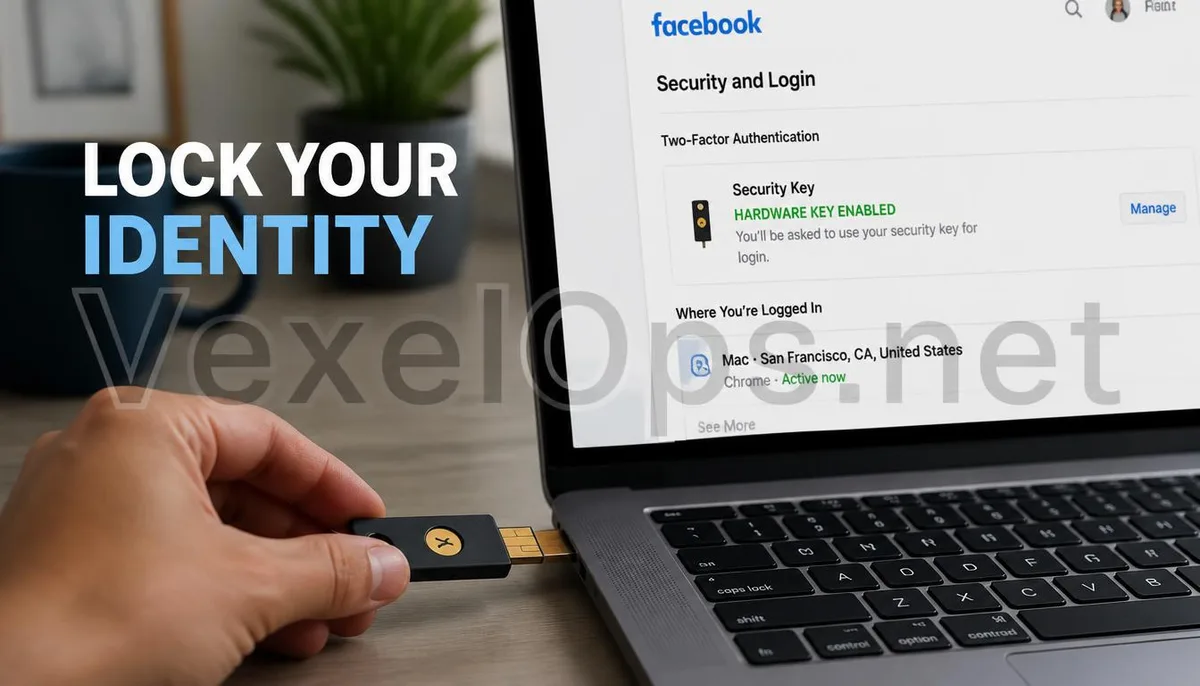
- Enable physical security keys: use hardware-level authentication to completely block remote hijacking.
- Regularly clean authorization lists: revoke any unknown plugins to ensure account purity.
- Conduct professional account audits: identify hidden connection backdoors through in-depth monitoring.
These defensive actions are visually consistent and hold high practical value. When we learn to be vigilant about every authorization request and utilize professional technical tools for self-examination, the cost of harvesting for scammers will significantly increase. A rational social mindset paired with scientific protection measures can effectively prevent your digital identity from becoming a tool for criminal organizations, allowing you to enjoy the convenience of social interactions while possessing absolute peace of mind.
Common Questions About Social Media Account Hacking and Token Hijacking
Why is my account still vulnerable even though I have enabled two-factor authentication?
This is because token hijacking techniques can bypass the login process. Two-factor authentication (2FA) usually only works at the moment of login to verify your identity and issue access tokens. However, if scammers directly steal already generated tokens through malicious links or plugins, they essentially hold a pass to access your account, and the system will recognize this as a legitimate action that has already been authenticated, hence not requiring re-entry of the verification code. This illustrates why relying solely on passwords and SMS verification is insufficient to deal with modern threats.
How can I determine if my account has already been token hijacked?
You can look for clues in your account activity logs. First, check whether there are devices in the login device list that don't belong to you or if there are unusual geographic locations. Secondly, observe whether your account posts updates, likes, or follows unfamiliar people when you are inactive. The most covert sign is when your account suddenly begins receiving a large number of verification emails or security alerts. If you notice these phenomena, it likely means that your tokens have been leaked and scammers are using your account permissions for illegal activities.
Will changing my password really invalidate stolen tokens?
This depends on the security mechanisms of different social platforms. In most cases, changing your password will force old access tokens to become invalid, requiring all devices to log in again. However, certain sophisticated scam techniques might utilize continuously running malicious plugins to immediately steal new tokens right after you change your password. Therefore, the safest approach is to manually revoke all logged-in devices and third-party app authorization in the account's security settings after changing the password. Additionally, conducting a thorough system scan is suggested to ensure no backdoor programs remain, thereby fundamentally addressing the threat of token hijacking.
One Key Takeaway: The core of token hijacking lies in bypassing password verification. By consistently cleaning authorizations, enabling hardware keys, and utilizing professional cybersecurity audits, you can effectively block scammers' illegal control and ensure absolute security for your social accounts.