Passwords Are Never an Absolute Security Barrier
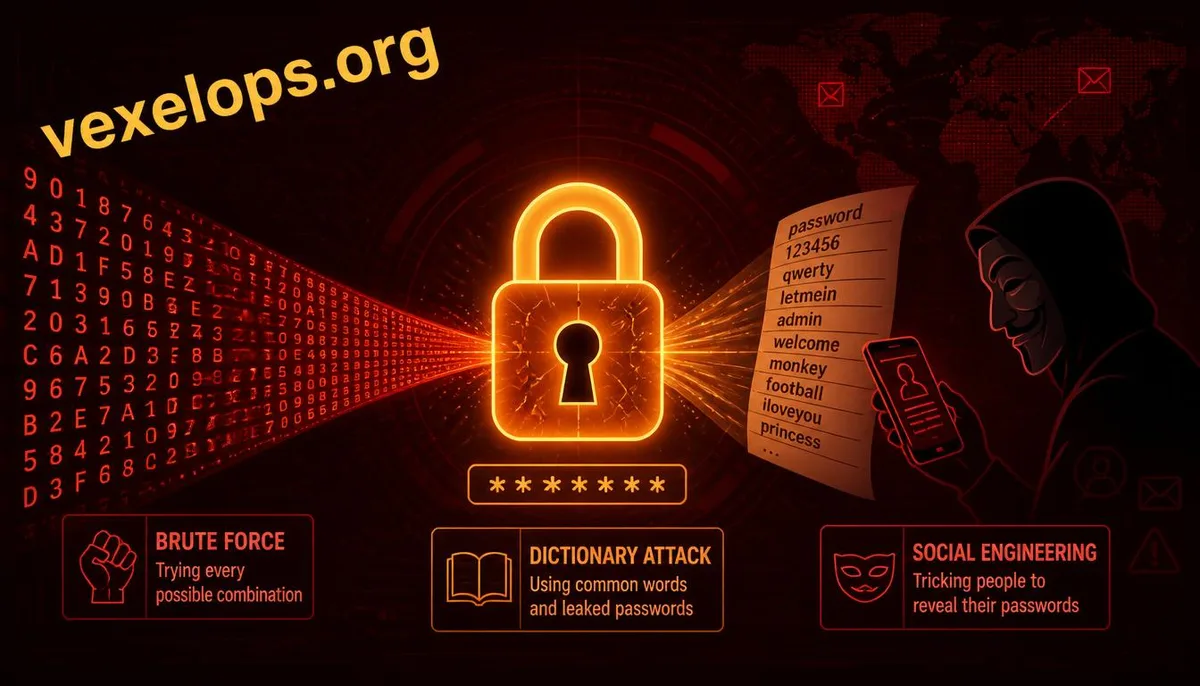
Many people treat passwords as the ultimate defense for account security, believing that as long as the password is long and complex enough, their accounts are safe. However, there are actually multiple ways through which passwords can be breached. Hackers' methods for attacking passwords can be broadly categorized into three approaches: brute force, dictionary attacks, and social engineering. These three methods have completely different attack logics and varying risk levels, so understanding their differences is crucial for knowing where your account is truly vulnerable.
Brute Force: Hard Power vs. Time and Computation
Brute force is the most straightforward attack method. As the name suggests, it involves exhaustively trying all possible combinations until the correct password is guessed. While this method sounds inefficient, with the increase in computing power, coupled with hackers' ability to utilize numerous computers for simultaneous calculations, short passwords become quite weak in the face of brute force attacks. A six-digit numeric password, in theory, could be exhausted in a very short amount of time. The length of the password and the types of characters used are key factors influencing the difficulty of brute force attacks. Each additional character or type of character (for example, mixing uppercase letters, numbers, and symbols) exponentially increases the number of combinations that need to be tried, which is why cybersecurity experts emphasize that "password length is more important than complexity."
Dictionary Attack: Exploiting Human Naming Patterns
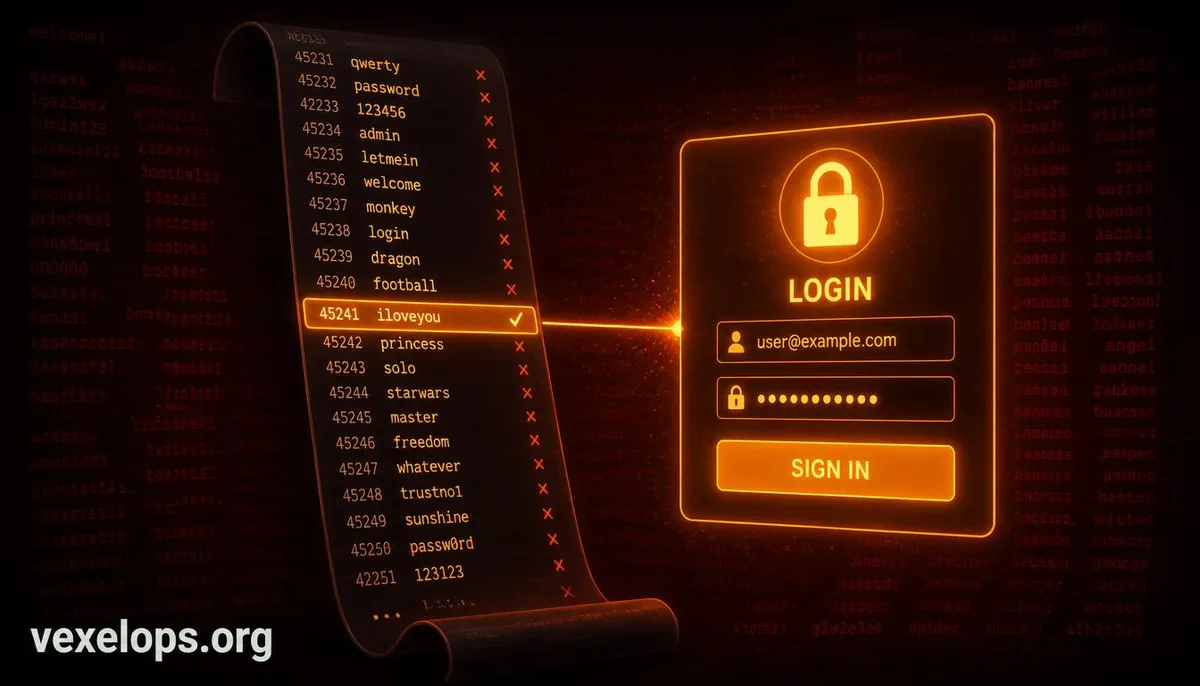
Compared to the blind exhaustive search of brute force, dictionary attacks are more targeted. Hackers prepare a massive list of commonly used passwords, usually including passwords gathered from real data breaches, common word combinations, and information people usually use, such as names, birthdays, and anniversaries, then try them one by one to log in.
This method is effective because most people follow similar naming logic when setting passwords. Combinations like "password plus the year" or "pet names plus numbers" may seem personalized, but they have often been recorded in various public or privately circulated dictionary files. If your password has appeared in a data breach, even if you switched to a new platform, as long as your new password continues similar naming habits, it is still susceptible to dictionary attacks.
Social Engineering: Directly Targeting People, Not Just Passwords
Unlike the other two purely technical methods, social engineering attacks derive their goals not from "guessing" passwords, but from getting you to verbally disclose it or input it into a fake page. Common social engineering techniques include impersonating customer service calls and requesting a verification code under the pretext of "account issues," or sending phishing links disguised as banks or shopping platforms, tricking you into entering your account information on seemingly identical fake login pages. These types of attacks circumvent issues of password strength; even the strongest passwords can be compromised if the user lowers their guard under pressured circumstances. The danger of social engineering lies in its exploitation of human trust, anxiety, and urgency rather than vulnerabilities in systems or algorithms, making it one of the hardest attack methods to defend against solely with technology.
Comparing the Risks of the Three Methods
When simply comparing the cost and success rate of compromising a single account, social engineering is typically considered the most dangerous method, as it does not rely on password strength. If the victim makes a momentary mistake, even the strongest password offers no protection. Dictionary attacks are the most efficient method for mass attacks, especially when many users are still using simple, repetitive passwords, allowing hackers to test large numbers of accounts simultaneously at a low cost, with a relatively high hit rate. Brute force, while theoretically a threat to any password, often becomes impractical in real-world applications. If the password length is sufficient and the system has a login failure lockout mechanism, the time and resources required for brute force attacks will usually deter attackers, leading them to opt for cheaper alternative methods.
Corresponding Protective Recommendations for the Three Attack Methods
- Set a password of sufficient length (at least 12 characters) and avoid easily guessable personal information combinations.
- Use unique and non-repeating passwords for each account, utilizing password management tools to remember and generate complex passwords.
- Enable two-factor authentication for important accounts to add an extra layer of protection, even if passwords are guessed or leaked.
- Stay highly vigilant regarding requests for verification codes or passwords in calls, texts, or emails, as legitimate customer service will not actively request full passwords.
- Regularly check whether your accounts have appeared in known data breach lists and promptly change any potentially compromised passwords.
Recognizing Attack Methods is the First Step in Building Protective Habits
Understanding the differences between brute force, dictionary attacks, and social engineering is not to instill fear about using the internet but to help everyday users establish clearer risk awareness. Password security has never been a problem that can be solved by simply creating a complicated password; it requires considering password strength, account management habits, and judgment in social engineering situations— all three are indispensable to truly lower the overall risk of account compromise.