
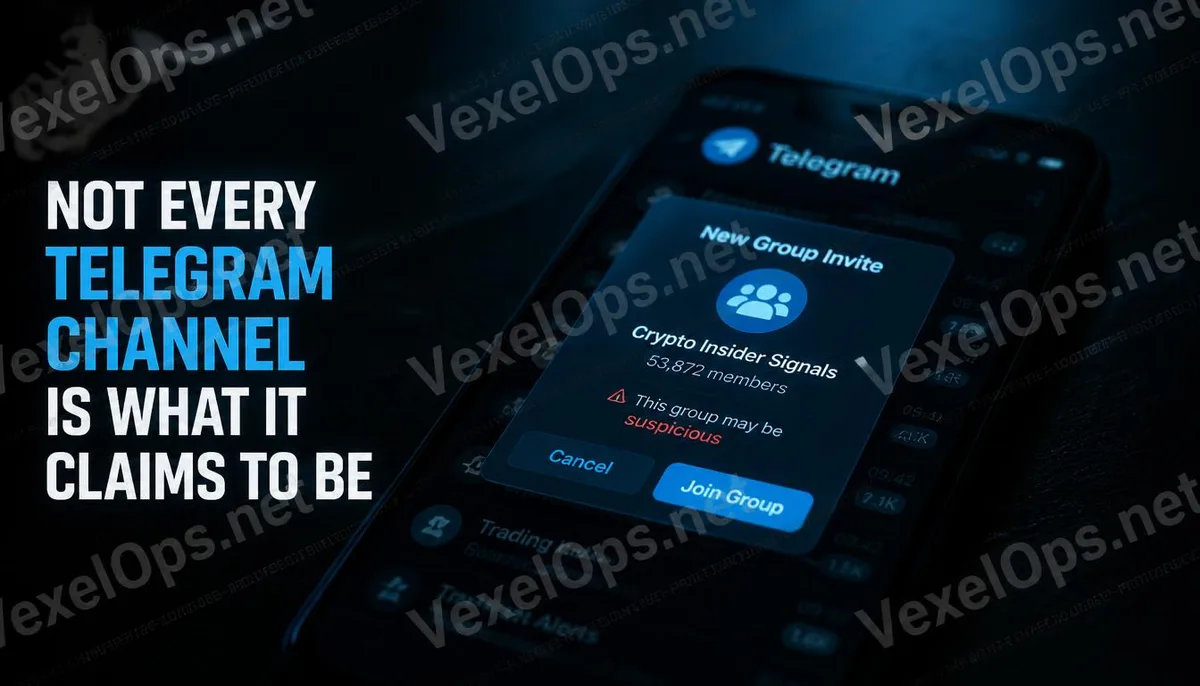
Telegram's openness is its greatest strength and also its main risk source
Telegram is designed to be more open than most instant messaging platforms. Anyone can create a channel or group without needing approval, real-name verification, or disclosing the identity of managers. This openness makes Telegram a preferred communication platform for many communities, media, businesses, and individuals, while also making it an active space for scammers. In 2022, a report from cybersecurity firm Kaspersky pointed out that Telegram has become an important alternative platform for dark web forums, facilitating the trade of personal information, sales of tools, and various scams through Telegram groups. This does not imply a problem with Telegram itself; rather, its structural characteristics make regulatory oversight much more challenging compared to other platforms.
Fake official channels: The most common and easily overlooked risk
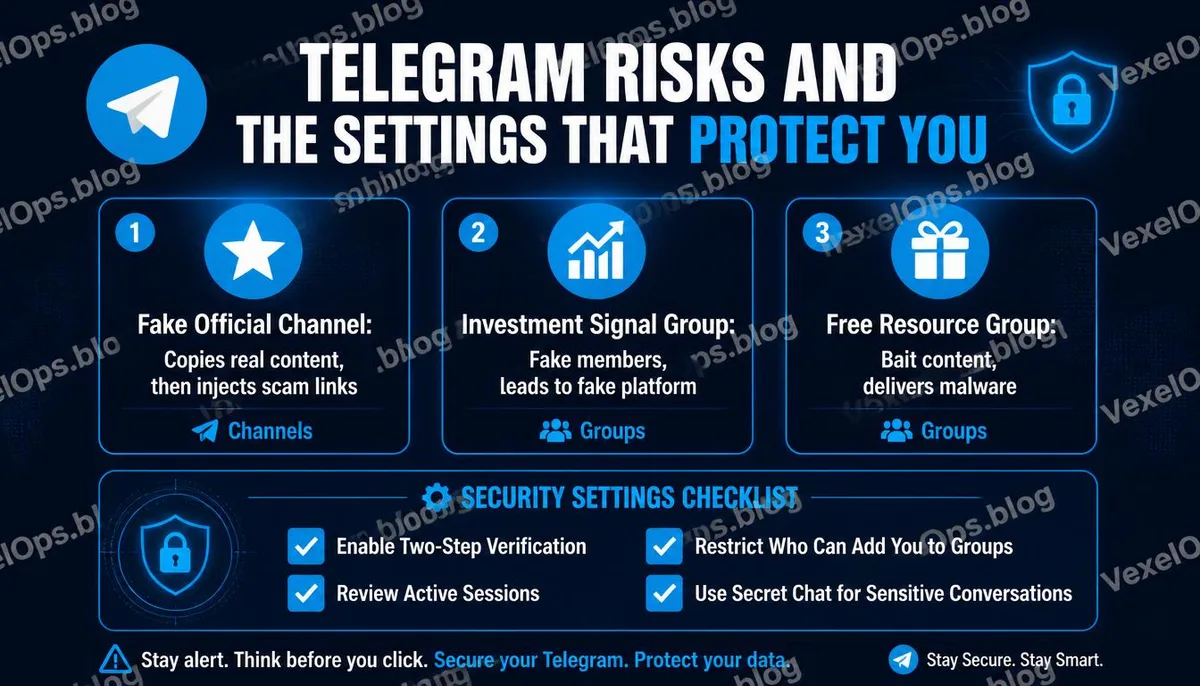
Telegram's channel search function allows anyone to create a fake channel that has a name and appearance almost identical to an official channel. The impersonated entities include cryptocurrency exchanges, well-known investors, news media, government agencies, and various brand official accounts. These fake channels usually operate in several phases. Initially, they will share content from the real official channel, making subscribers believe it is a legitimate source. After accumulating a certain number of subscribers, they will begin to introduce fake news, scam links, or notifications about fake airdrop activities. Victims, believing in the authenticity of this channel, lower their guard against the content it publishes. The most reliable way to determine whether a Telegram channel is official is to find the link to the Telegram channel from the official website of the brand or entity, their official social media accounts, or other verified channels, rather than relying on the internal search within Telegram.
Risks of group invitation links
Telegram's group invitation link design makes joining very convenient, but it also allows problematic groups to spread quickly. Several common types of problematic groups include: Investment Signal Groups Claiming to provide insider investment information or copying services, often featuring a large number of members and active fake accounts to build credibility, ultimately leading members to fake investment platforms. Fake Customer Service Groups Impersonating the official customer service group of a platform, appearing when users search for account-related keywords, guiding them to provide account information or complete verification steps in the group. Free Resource Groups Groups claiming to provide cracked software, paid courses, or video content, requiring members to click external links or download files to access resources, which are actually channels for distributing malware.
Key security settings to confirm for Telegram accounts
In addition to assessing groups and channels, there are several settings for Telegram accounts worth actively confirming. Two-Step Verification Telegram accounts are initially set up to login with just a phone number and SMS verification code, without additional password protection. If your phone number is subject to a SIM swap attack, attackers can directly access your Telegram account. Enable two-step verification in the settings, adding an extra password to significantly raise the threshold for account takeover. Further reading: What happens when your phone number is transferred? Alerts on SIM swap, eSIM, and SMS verification code security. Active Session Management Telegram allows the same account to be logged in on multiple devices simultaneously. In the privacy and security settings page, you can view all active sessions, including device types, login times, and approximate locations. Regularly check this list and terminate any unknown sessions. Who Can Find You In Telegram's privacy settings, you can control who can find your account via your phone number, who can see your phone number, and who can add you to groups. If you do not want to be added to unknown
Frequently asked questions about secure usage of Telegram
Are Telegram messages end-to-end encrypted? How is it different from WhatsApp?
This is one of the most common misconceptions about Telegram. Regular chats on Telegram, including group messages, by default use client-to-server encryption, meaning messages are encrypted during transmission, but Telegram's servers can access the content. End-to-end encryption is only enabled when using the secret chat feature, preventing even Telegram's server from reading the message content. In contrast, all private messages on WhatsApp are end-to-end encrypted by default. This difference is crucial in scenarios requiring high message privacy; if the privacy of the message content is important to you, use Telegram's secret chat feature rather than standard chats.
After a Telegram account is hacked, how can I verify what messages were accessed?
Currently, Telegram does not provide a feature to view message access records, meaning after recovering your account, you cannot ascertain what conversations the attacker read while controlling the account. However, you can confirm the records of active sessions, including which devices logged in at what time. If your account had conversations involving sensitive information, informing those parties that the account was compromised after recovery so they are aware that conversations during that time may have been viewed by a third party is the most direct response. If financial or personal security impacts are involved, VexelOps can assist in assessing the scope of events and subsequent handling directions.
Is it safe to click a Telegram link sent by a friend?
It depends on the source and content of the link, but an important judgment principle is that if your friend suddenly sends you an unexpected link, especially without any explanation, first confirm through other channels whether your friend actually sent this link before deciding to click. One common action taken by attackers after an account is hacked is sending malicious links to the contacts of that account, exploiting the familiar identity to lower the recipient's guard. This habit of confirmation applies to Telegram and is equally relevant to all instant messaging platforms.
One Key Takeaway: Telegram's openness makes it a powerful communication tool, but the same openness allows for the existence of fake channels and problematic groups with almost no barriers. Before joining any channel or group, verifying the credibility of the source is the most basic habit to maintain safety on this platform.