
Check the Source and Purpose Before Joining a Group
Platforms like Telegram, Discord, LINE, and WhatsApp have become primary tools for daily communication, community interaction, customer support, and investment information sharing. Whether through Facebook groups, Instagram messages, YouTube comments, X posts, or TikTok profiles, various group invitation links can appear. The group itself might not necessarily be problematic, but the issue lies in whether you know who created the group, why they invited you to join, and whether they will ask for sensitive information after you join. Many scams involving fake customer service, investment fraud, cryptocurrency deception, and phishing sites start with seemingly ordinary group invitations. If you see phrases like 'official customer service group,' 'quick account recovery,' 'internal investment opportunities,' 'high yield on USDT,' or 'limited compensation channels,' you need to pause and verify. Don't rush to join or provide information just because the tone of the invitation is urgent.
Common Risk 1: Fake Customer Service Groups
Fake customer service groups are often found on Telegram, LINE, or WhatsApp. Scammers impersonate trading platforms, banks, social media platforms, e-commerce sites, or cryptocurrency services, claiming they can assist with account freezes, withdrawal failures, order issues, or login problems. Once you're in the group, they may ask you to provide Gmail, Facebook, Instagram, Google Authenticator verification codes, SMS codes, or even request you to download remote assistance software. These are high-risk signals. Genuine customer service from reliable platforms typically guides you back to the official website, official app, or proper help center, rather than asking you to provide passwords, verification codes, or complete personal information in private groups.
Common Risk 2: Investment and Cryptocurrency Groups
Another type of common risk involves investment groups. These groups may claim to offer investment opportunities in Bitcoin, Ethereum, TRON, USDT, or other cryptocurrencies, showcasing seemingly successful screenshots, profit records, or member gratitude messages. However, many scam groups utilize fake members, fake conversations, and false profit charts to make newcomers feel as if 'many people have succeeded.' Subsequently, they may direct you to unfamiliar trading websites, fake wallet pages, or ask you to transfer funds to a specified address. If they continuously urge you to deposit funds, promise fixed returns, guarantee rapid doubling of your investments, or insist that you should not inform family and friends, these are not normal investment reminders but clear signals of risk.
Checklist Before Joining
Before clicking on a Telegram, Discord, LINE, or WhatsApp group invitation link, you can perform a few simple checks:
- Is the link from an official website or a trusted source?
- Does the group name deliberately mimic well-known platforms?
- Is the admin account newly created, lacking credible history?
- Is there a request for you to provide verification codes, passwords, or wallet information?
- Are you being asked to download APKs, compressed files, or unknown software?
- Are there promises of high returns, guaranteed account recoveries, or limited opportunities?
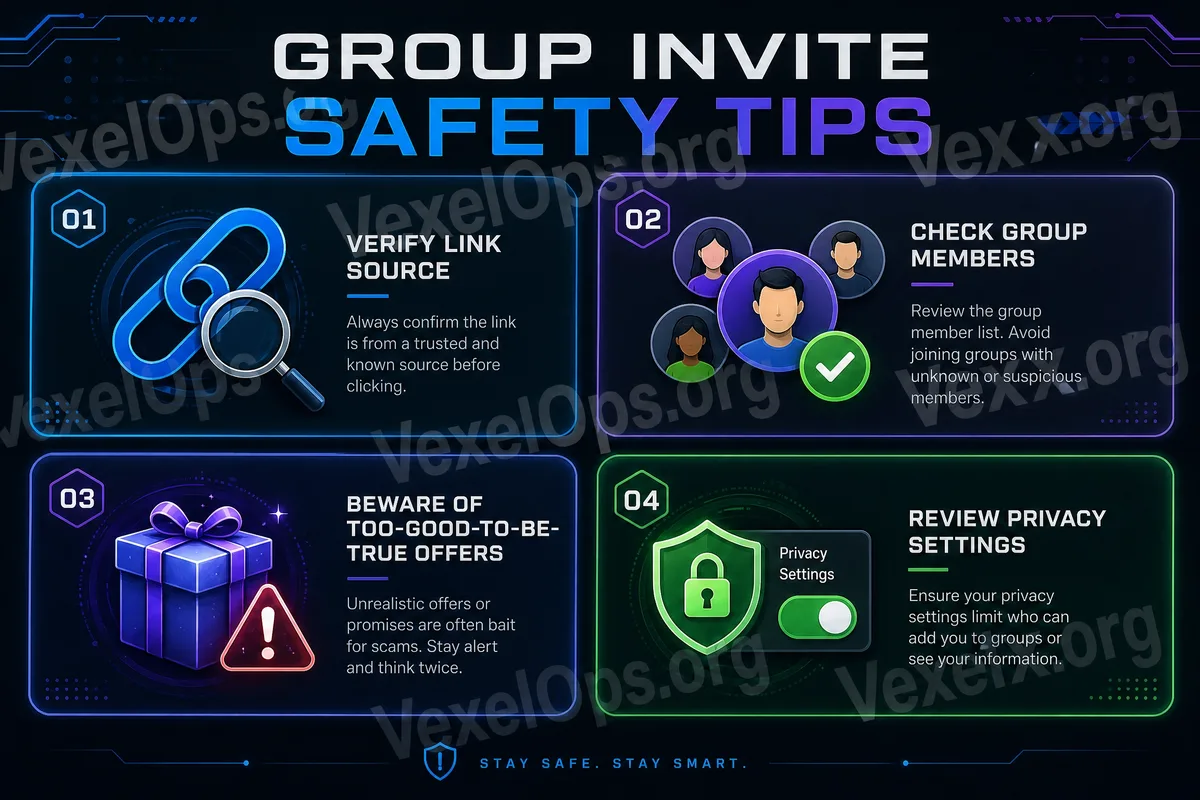
If any of these points seem suspicious, don't rush to join. You can search for the platform's official website, check the help center, or confirm through the customer service portal within the original app.
Basic Principles for Protecting Yourself
After joining any group, do not provide sensitive information just because the members seem professional. Passwords, verification codes, seed phrases, private keys, complete identification documents, and bank card information should never be shared casually in groups or private chats. If you have already joined a suspicious group, it is advisable to cease interaction, avoid clicking any links within the group, and not download any files. If you have entered your account password, you should change your password as soon as possible, check the login records of Gmail, Google, Facebook, Instagram, or related platforms, and re-confirm your two-factor authentication settings.
Conclusion
Telegram, Discord, LINE, and WhatsApp are common and practical communication tools, but group invitation links may also become gateways for fake customer service, phishing sites, or investment scams. Before joining groups, confirming the source, intent, and the type of information requested is more important than remedying the situation afterward. VexelOps Blog advises users to remember a simple principle: any group that requires you to provide passwords, verification codes, seed phrases, private keys, or make transfers should be regarded as high risk. Stay calm and verify through official channels to effectively protect your account, personal data, and asset security.