
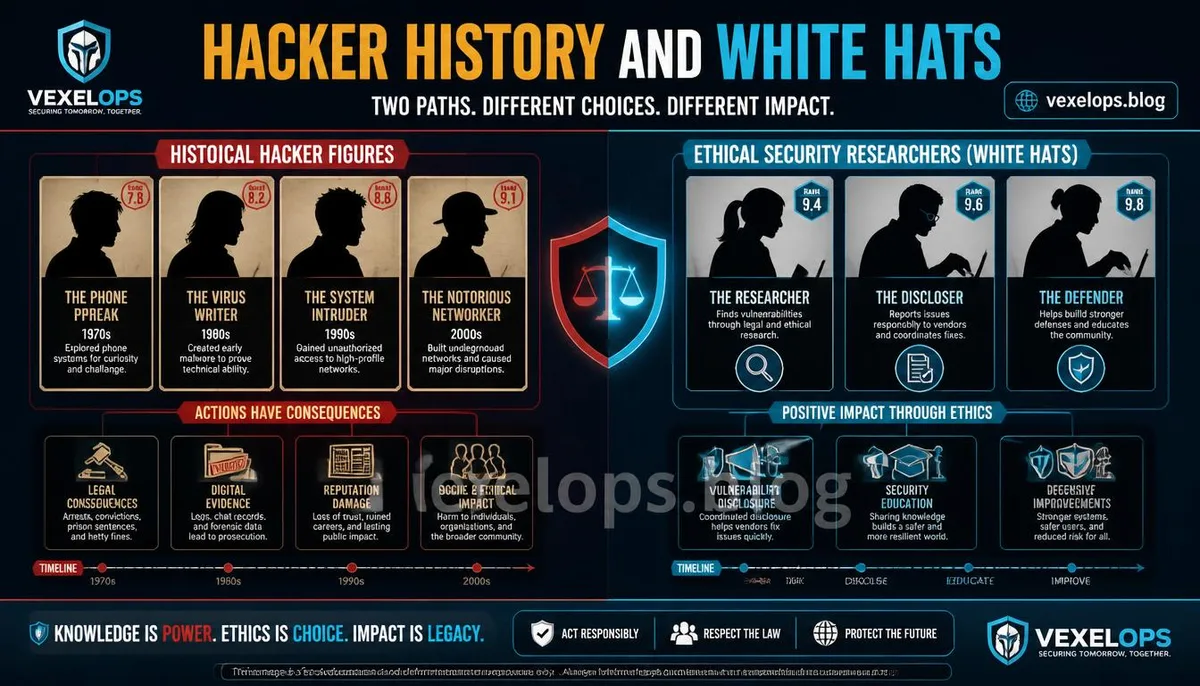
How is the Hacker Ranking Selected? Understand that this is Not a Strength Ranking
When searching for the world hacker rankings, many articles list individuals from different eras, with different purposes and legal statuses on the same ranking and even use terms such as strongest, most dangerous, or best at cracking. However, it is challenging to compare technical abilities with a single number, and criminals, white hat researchers, information security educators, and accused suspects are fundamentally not the same category. This article uses five editorial standards: whether the publicly available data is verifiable, the influence on information security history, the representativeness of the technique or research, contributions to defensive work, and whether the general reader can learn security lessons from the incidents. The ranking reflects the order of reading, not an affirmation of an individual's value or criminal capability. The article also distinguishes hackers from scammers. Hackers are technical roles and may engage in research, defense, or attacks; whereas scammers mainly profit through impersonation, manipulation of trust, induced payments, or data theft. While both may collaborate in the same incident, the concepts should not be conflated.
Top 5 Historically Famous Hackers
Top 1: Kevin Mitnick, From Controversial Figure to Information Security Educator Kevin Mitnick is one of the most frequently mentioned hacker figures in the media. His early experiences made him a notable figure in American computer crime history, and he later turned to become a security consultant, author, and educator. His official team profile links his later work to penetration testing, security awareness training, and social engineering defenses. Kevin Mitnick Official Profile He ranks first not because his crimes are worth emulating, but because his life transformation allows the public to see that security issues exist not only in code but can also occur among personnel, processes, and trust relationships. For ordinary readers, the most valuable lesson is not to view self-proclaimed technical experts as inherently trustworthy and not to disclose passwords and verification codes over the phone or in messages. Top 2: Gary McKinnon, Representative Figure of Military Computer Intrusion Controversy Gary McKinnon received global attention for his involvement with computers from the U.S. military, the Department of Defense, and NASA. In a document published by the U.S.
Top 5 White Hat Researchers and Information Security Figures
Top 6: Tsutomu Shimomura, Security Researcher Tracking Intrusions Tsutomu Shimomura is often mentioned in the history of information security research and intrusion tracking. Unlike the aforementioned figures who rose to fame through controversy or criminal cases, his representation is closer to security research, technical analysis, and aiding in understanding the sources of attacks. His inclusion in this ranking serves as a reminder that hacker techniques can also be used for defense. If researchers analyze systems, preserve evidence, and help fix issues within the authorized range, technical capabilities can be transformed into powers for improving security. Top 7: Charlie Miller, Representative of Mobile Device and Automotive Security Research Charlie Miller has garnered attention from the information security community for his research on mobile devices and automotive security. This type of research has made the public start to understand that smartphones, vehicles, and daily connected devices may contain software vulnerabilities, and security should not only focus on traditional computers. The essence of white hat research is not in showcasing astonishing
What Can the Hacker Ranking Teach Ordinary Readers?
This Top 10 list includes both historical controversial figures and white hat researchers, not to put the two on the same moral line but to show readers that technology can produce completely different outcomes. Unauthorized access can lead to data damage, criminal liability, and victim losses; whereas research conducted under rules and authorization can promote vulnerability remediation, improve defenses, and establish safer industry standards. Readers should also not focus solely on the ranking order. To judge whether a renowned hacker figure is trustworthy, they can check their publicly available data, legal status, research contributions, vulnerability disclosure methods, and subsequent defense contributions. Media references, social media follower counts, and mysterious rumors cannot replace verifiable sources. If you have questions about well-known hackers or information security history, you can contact VexelOps for assistance.
Common Questions About the Ranking of Famous Hackers
Is this Top 10 an internationally recognized hacker ranking?
No, there is no objective strength ranking of hackers that everyone in the world acknowledges. It is also difficult to compare technical abilities, event impacts, and contributions of white hats using a single score. This article is edited based on publicly available data, historical impact, technical influence, contributions to information security, and educational value. Different sources may select different individuals, and rankings may change with new evidence, legal outcomes, and research contributions. Readers should treat it as an introduction to the history of information security and should not view positions as proof of criminal capability or personal value.
Why Do White Hat Researchers Appear in Hacker Rankings?
The term hacker describes technical capabilities and exploration methods, not necessarily representing crime. White hat researchers may analyze systems, discover vulnerabilities, assist in fixing issues, or establish security protocols after obtaining authorization, thus making positive contributions to information security development. Including white hat figures in the rankings is to avoid readers mistakenly believing that all hackers are stealing data or disrupting systems. When judging roles, one should look at authorization, purpose, methods of data processing, and the outcomes of behavior, rather than solely focusing on the term hacker.
Will Understanding the Stories of Famous Hackers Teach People to Hack?
Security narratives are distinct from operational training. This article only organizes the publicly available backgrounds of individuals, the impacts of incidents, and defensive lessons, without providing attack commands, malicious codes, target selections, tool chains, or methods for bypassing verifications. What readers should truly learn is how to protect accounts, update devices, limit permissions, identify social engineering attempts, preserve security records, and understand the potential consequences of unauthorized behavior. Those interested in information security should use legitimate educational environments and authorized testing platforms for learning.
One Key Takeaway: Rankings are not strength lists; authorization, impact, and contributions to defense are the key judgment points.