
What Are the Different Types of Hackers? Understanding Classifications Beyond Good and Bad
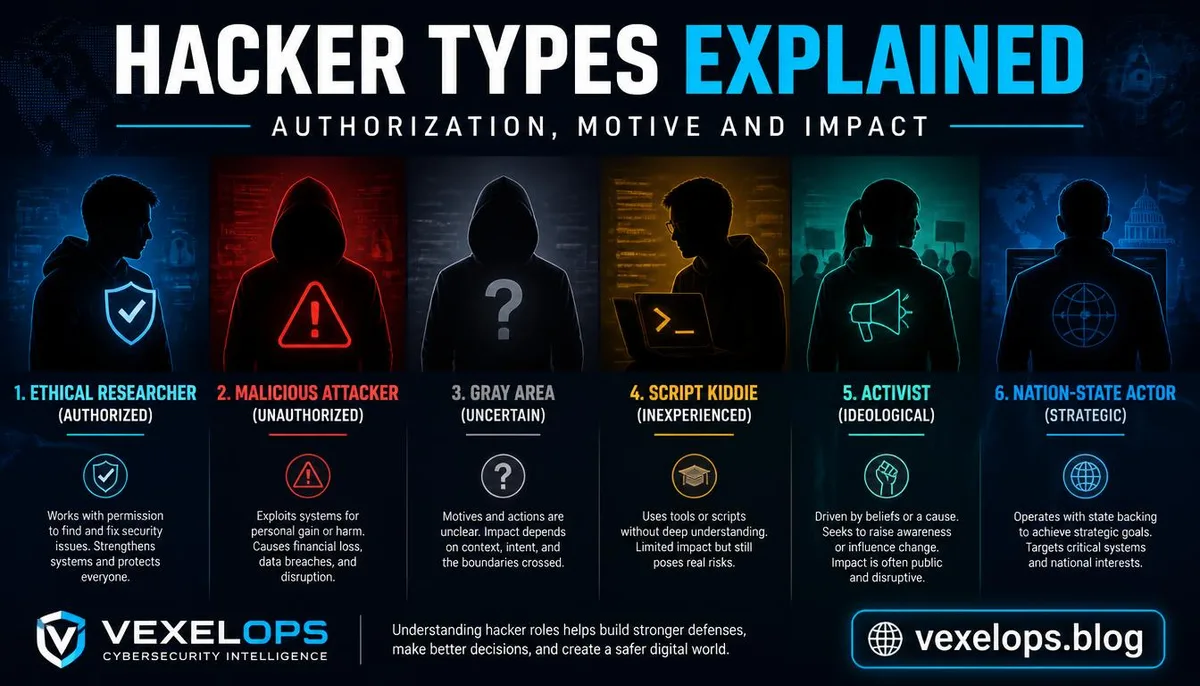
In news, films, and social media, hackers are often depicted sitting in dark rooms, quickly typing commands to infiltrate systems. However, in the field of cybersecurity, the term hacker is closer to a technical role, describing someone who has the ability to explore, analyze, test, or modify information systems. The crucial factors to determine are whether they have authorization, their intended goals, and whether their actions result in unauthorized effects. According to NIST's vocabulary on hackers, it includes individuals who attempt or gain access to information systems; the same document describes white hat hackers as cybersecurity experts whose aim is to assess and improve organizational security. Therefore, one should not assume that someone using hacking techniques is necessarily a criminal. The article also needs to differentiate hackers from fraudsters. Hackers are technical roles who may engage in defense, research, or attacks; fraudsters primarily profit by impersonation, deception, manipulation of trust, or inducing payments. Both can collaborate in certain criminal activities, but the concepts are not the same.
White Hat, Black Hat, and Grey Hat Hackers: Key Differences in Authorization and Intent
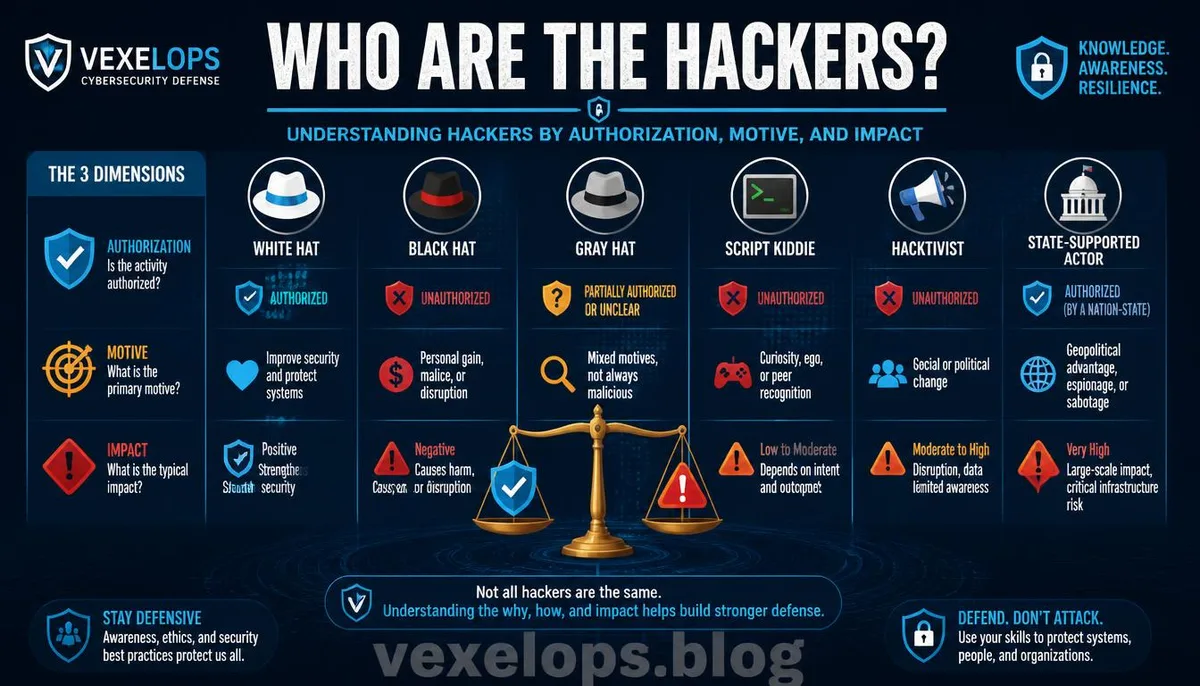
White Hat Hackers: Improving Security Within Authorized Boundaries White hat hackers, also known as ethical hackers, typically conduct security checks with explicit permission from the system owner. They can be internal security staff, penetration testers, bug bounty researchers, or external consultants, with their goal being to identify vulnerabilities, assess risks, and assist in remediation. The essence of white hat behavior is not just technical capability but the boundaries of authorization. Before testing, it's essential to confirm the target, timeframe, permitted methods, data handling practices, and reporting processes. Even upon discovering a real vulnerability, it does not imply researchers can arbitrarily read data, expand testing scope, or publicly disclose unpatched details. Black Hat Hackers: Unauthorized Activities with Malicious Intent Black hat hackers typically attempt to gain access, steal data, install malware, extort, disrupt services, or profit from vulnerabilities without the consent of the system owner. The danger of black hat behavior lies not only in the technology but in the fact that victims cannot control the testing scope, data usage, and
How Do Script Kiddies, Hacktivists, and State-Sponsored Hackers Differ?
Script Kiddies: Unskilled Attackers Relying on Ready-Made Tools Script kiddies is an informal term within the cybersecurity community, typically referring to individuals who use pre-written scripts, public tools, or programs developed by others without understanding the underlying principles. This term carries a pejorative connotation, so it should be avoided when referring to all beginners in formal writing. Lack of technical ability does not imply low risk. Those without understanding may misuse tools, scan the wrong targets, cause service disruptions, or leave more data exposed. For general readers, the key point is not to ridicule the capabilities of others, but to recognize that ready-made tools can still have real impacts. Hacktivists: Motivated by Ideologies or Social Issues Hacktivists are typically motivated by political, social, or ideological concerns and may express their positions through public data, website defacements, service disruptions, or other online actions. Compared to criminal groups that purely seek monetary gain, their actions may align more closely with protests or campaigns; however, such motives do not automatically legalize actions. If
Are Hackers and Fraudsters the Same? Concepts Cannot Be Confused
Hackers and fraudsters may appear in the same incident, but the responsibilities can be different. Hackers might exploit technical weaknesses to infiltrate systems, modify programs, or obtain data; fraudsters, on the other hand, may impersonate customer service representatives, build trust, or coerce victims into payment or providing verification information. Some fraud schemes do not require advanced hacking skills; they can result in losses through fake websites, impersonating messages, and psychological manipulation. Some attacks, however, necessitate technical personnel to manage infrastructure, malicious software, or data theft. For victims, it is most crucial not to trust someone's claims of being a hacker, technical expert, or security personnel just because they state so.
How Can the General Public Assess a Hacker's Role and Security Risks from Behavior?
General readers do not need to judge whether someone is a hacker based on their appearance, clothing, or technical jargon. A more reliable approach is to observe whether they can explain the source of authorization, testing scope, data handling rules, and reporting methods. Someone claiming to be a white hat, if they request private passwords, verification codes, or remote control permissions, should still be approached with caution. You can use the following questions as a basic check:
- Can this person verify their identity through official channels?
- Do they explicitly indicate the test subject and permitted boundaries?
- Are they requesting passwords, verification codes, or unnecessary personal information?
- Are they promising a 100% recovery of accounts, elimination of records, or immediate resolution of all issues?
- Are they willing to provide formal reports, public contact information, and traceable handling records?
Real security work typically emphasizes authorization, documentation, limitations, and remediation rather than attracting attention through mystique, intimidation, or absolute success promises.
Common Questions About Hacker Classifications
Can White Hat Hackers Test Websites Without Consent?
Generally, they should not. The core feature of a white hat hacker is to obtain authorization from the system owner and conduct security tests within agreed boundaries. Without authorization, even if the intent is research or helping the other party, it may lead to service disruptions, data exposure, or legal risks. If a potential vulnerability is discovered, a safer practice is to seek the website's vulnerability disclosure policy, bug bounty page, or official contact points. Do not expand the testing, download private data, or disclose unpatched details.
Are Grey Hat Hackers Always Bad?
Not necessarily. Grey hats typically describe instances where motives and actions do not fully align with either white or black hats. Some individuals may have no malicious intent and may wish to alert the system owner about improvements. However, lacking malicious intent does not equate to having authorization; actions can still lead to actual implications. When assessing grey hats, one should evaluate motives, authorization, technical actions, and outcomes separately. For system owners, unauthorized testing should still be treated as a security incident rather than overlooking the risk simply because the other party claims to want to help.
Do Script Kiddies Need to Be Mitigated Even Without Technical Skills?
Yes. Script kiddies may not understand the principles behind tools, yet they can use public scripts or automated programs to disrupt websites, accounts, and services. Their inexperience can even make their actions more unpredictable, as they may not grasp the consequences of their testing. General defense measures should not rely on guessing the attacker's skill level but should focus on maintaining updates, using multi-factor authentication, limiting permissions, keeping backups, monitoring for unusual logins, and establishing basic incident response processes.
Yes. Script kiddies may not understand the principles behind tools, yet they can use public scripts or automated programs to disrupt websites, accounts, and services. Their inexperience can even make their actions more unpredictable, as they may not grasp the consequences of their testing. General defense measures should not rely on guessing the attacker's skill level but should focus on maintaining updates, using multi-factor authentication, limiting permissions, keeping backups, monitoring for unusual logins, and establishing basic incident response processes.
One Key Takeaway: The key to categorizing hackers is not appearance but authorization, intent, and outcomes.