
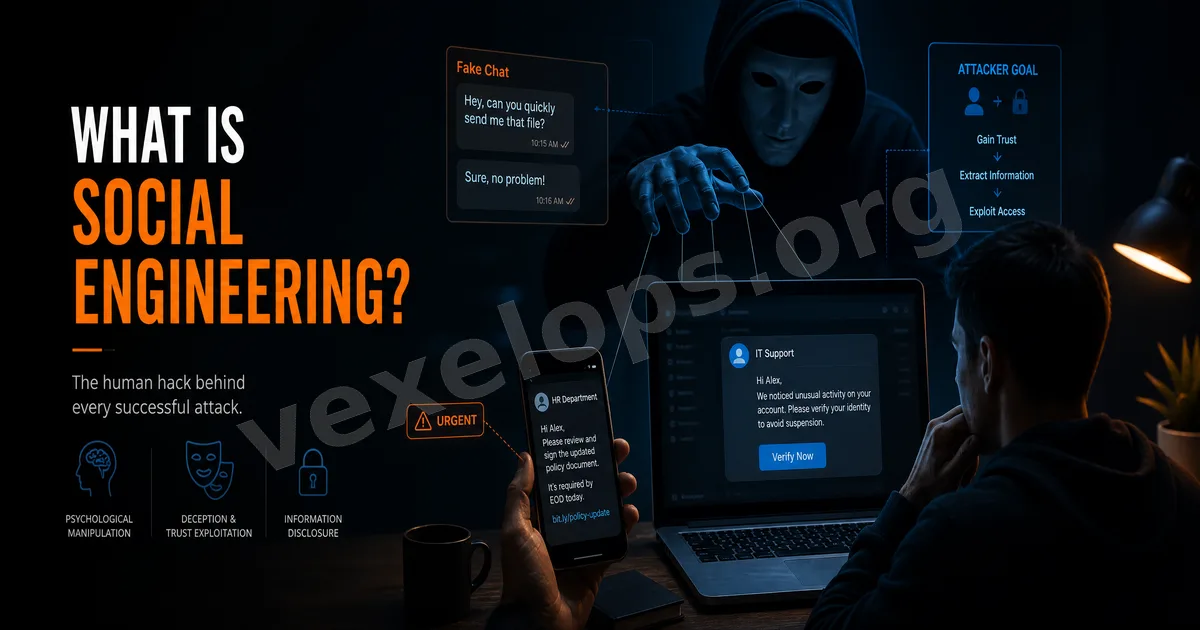
What is Social Engineering?
When many hear the word “hacker,” they often think of complex programming, system vulnerabilities, or advanced technologies. However, in reality, many accounts are compromised not because platforms are hacked, but because users are deceived. This method of exploiting human trust, anxiety, curiosity, or negligence to obtain information is commonly referred to as social engineering. In simple terms, social engineering doesn't start by attacking systems; it begins by influencing people. The perpetrator may impersonate customer service, a friend, a platform admin, banking personnel, an investment advisor, or a familiar brand notification, leading you to provide passwords, verification codes, payment information, or login credentials willingly. This is why users of platforms like Gmail, Instagram, Facebook, Telegram, WhatsApp, LINE, and X need to understand this concept. Because even the most secure platforms can lead to issues if users are persuaded to provide information.
Hackers Don’t Always Need to "Hack" Your Account
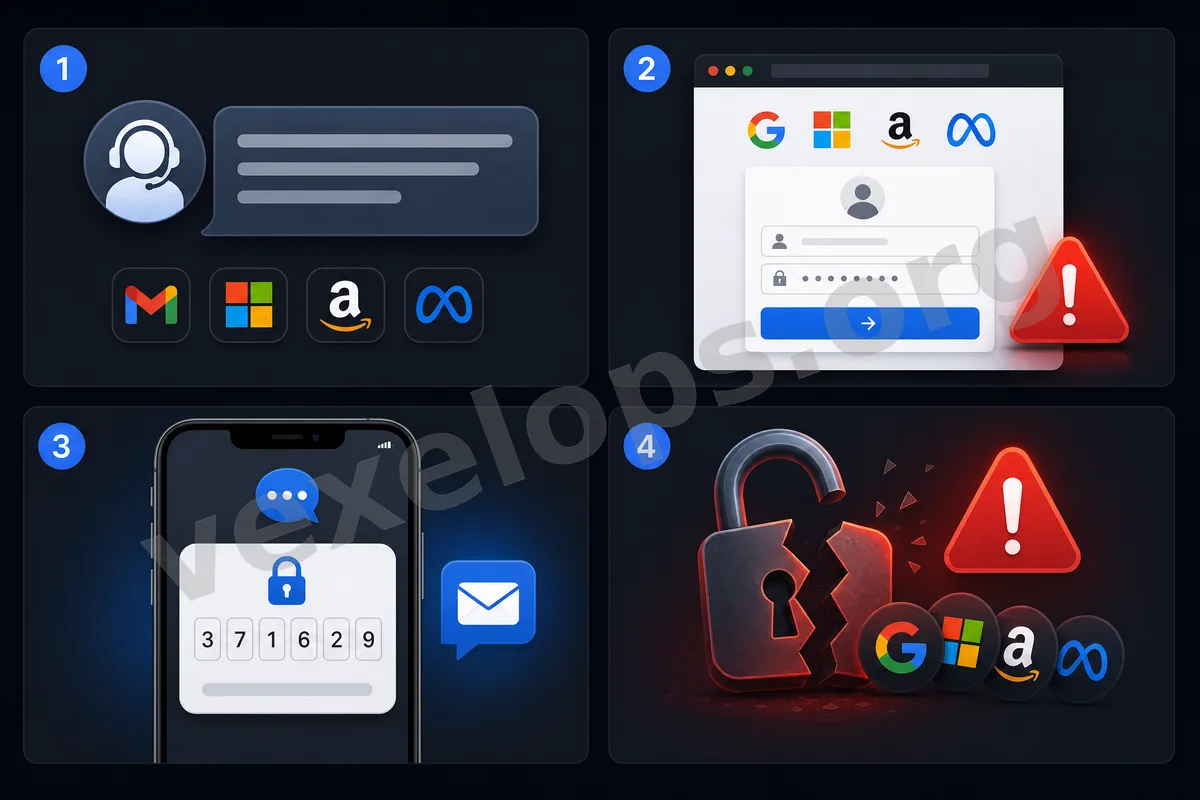
The process behind many account compromises is often not as mysterious as it seems. The perpetrator might simply send you a link that looks like an official login page, prompting you to enter your account credentials. For instance, you might receive a message stating that your Instagram account has violated rules, or that your Facebook fan page needs verification, or that Gmail has detected unusual logins, or that Telegram requires security confirmation, or that WhatsApp needs re-verification. The message appears urgent and includes a link. When you click on it, the page resembles the official site, and you end up entering your account, password, and verification code. At that moment, your information may already be in the hands of the perpetrator. This situation doesn’t arise because the platform is truly hacked; it occurs because the user is led into a false process. This is the most common and easily executed form of social engineering.
Fake Customer Service is the Most Common Social Engineering Tactic
Fake customer service frequently appears on social media platforms, messaging apps, emails, and investment platforms. The perpetrator might claim there is an issue with your account, that a transaction has been frozen, that a package cannot be delivered, that a payment has failed, or that you need to complete identity verification. The most common tactic used by fake customer service is to make you feel that "if it’s not handled right now, something will go wrong." For example, your account may be suspended, funds may be frozen, orders may be canceled, or data may be leaked. When individuals feel anxious, they become more likely to follow instructions. This is also the essence of social engineering: it doesn’t allow you to think slowly; instead, it pushes you to make hasty decisions under pressure. Real platform customer service typically won't ask for your password, two-factor authentication code, backup code, or remote access rights. As soon as you are asked for such data, you should immediately raise your vigilance.
Verification Codes are the Most Critical Information Not to Share
Many people understand that they shouldn’t share their passwords, but often overlook the importance of verification codes. SMS verification codes, email verification codes, or dynamic codes generated by Google Authenticator or Microsoft Authenticator are meant to confirm that you are the one operating the account. As soon as you provide a verification code to someone else, they could log in, change the password, or transfer the account. Common phrases in social engineering include: "This is just an identity confirmation," "Customer service needs the verification code to assist you," "You have to give me the code to remove the restriction," or "A friend accidentally sent the verification code to you." These statements are highly dangerous. Verification codes are not needed by customer service and are not something friends can borrow. They should only be used by you within the official app or website.
Why Are Ordinary People Easily Influenced by Social Engineering?
Social engineering is effective because it exploits human psychology rather than relying solely on technical vulnerabilities. Some individuals may click on links out of fear of their accounts being deactivated. Some may help out of trust when receiving messages from their friends’ accounts. Some might let their guard down when they see phrases like "limited-time offer," "free give away," or "security verification." Others might believe that the person appears professional enough to genuinely be customer service. These reactions are all normal. The issue isn’t that users are foolish; rather, fraudsters are adept at designing scenarios that make messages seem legitimate, create a sense of urgency, and lead you to believe that failing to act will result in a loss. Thus, preventing social engineering is less about mastering complex techniques but more about learning to "slow down."
When Encountering Suspicious Messages, Avoid Logging in from Links First
If you receive unusual notifications from Gmail, Instagram, Facebook, Telegram, WhatsApp, PayPal, banks, or any platform, the safest approach is not to click the link in the message directly but to open the official app or manually input the official website. This habit is critical. Phishing sites can mimic login pages, utilize HTTPS secure locks, and resemble official interfaces. However, if the URL is not from the official domain, the data you input may be stolen. Whenever logging in, making payments, entering verification codes, recovering accounts, or confirming identity, do not enter through links from unfamiliar messages or texts.
Social Engineering Isn’t Just Online Scams
Social engineering can also occur offline or over the phone. For example, someone may call claiming to be from the bank, asking you to confirm a transaction; someone might impersonate logistics customer service, asking you for additional information; or someone may pose as platform security personnel, requesting you to install remote assistance tools. In essence, these situations are similar: the person exploits a certain identity, persuading you to believe they have the authority to request action from you. Ordinary users should remember a simple principle: as soon as someone asks for sensitive information, requests you to install tools, share your screen, transfer payments, or provide verification codes, you should stop, and use official channels to verify.
How Can Ordinary Users Protect Themselves?
The most practical way to prevent social engineering is to develop a few habits. First, do not provide passwords, verification codes, or backup codes to anyone. Second, do not log into important accounts from unknown links. Third, enable two-factor authentication on important accounts. Fourth, verify urgent notifications first by checking the official app. Fifth, do not install remote tools requested by strangers. Sixth, if a friend's account sends suspicious messages, verify their identity through other means. These methods may seem simple but can guard against many common risks.
True Security Means Judging Before Acting
Social engineering reminds us of one essential fact: digital security isn't just a technical issue; it’s also a judgement issue. Many hackers or fraudsters don’t need to genuinely hack systems; they just need to convince you, create a sense of urgency, and make you click links or provide verification codes, which could lead them to their goal. Thus, the most crucial line of defense for ordinary users is not to be rushed into action. When encountering suspicious messages, first take a moment to check the source, examine the URL, and assess whether the request is reasonable before deciding whether to respond. As long as you can manage to "not rush to click, not rush to fill out, not rush to provide the verification code," you will already be safer than many others.