
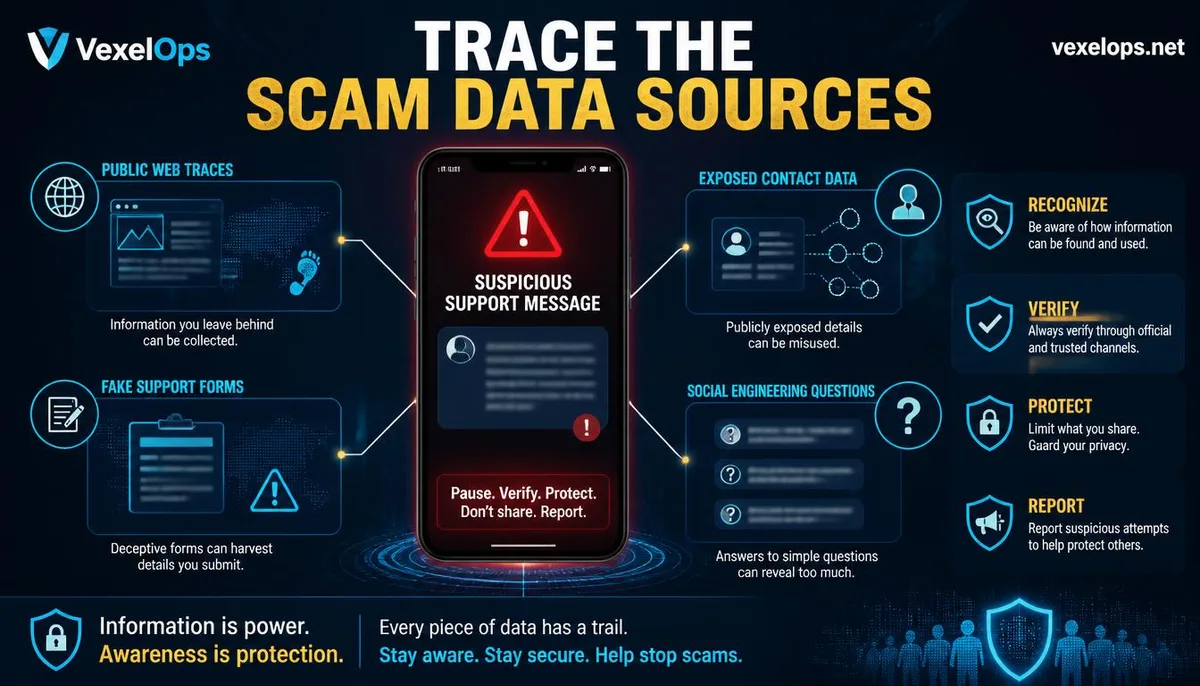
Why Do Fake Customer Service Agents Seem to Know Your Issues?
When you encounter a login error on a website and receive a message from someone claiming to be customer service just minutes later, knowing which platform you used, your first reaction is often: have they hacked my phone? This precision is indeed concerning, but it doesn’t necessarily mean they have complete control of your device. Fraudsters can piece together background information from public posts, search results, social media comments, leaked data, fake customer service forms, or incident information from other services. It might also be that you initially described your issue in a public space, and they proactively approached you using keyword searches. The FTC describes this type of impersonation scam as pretending to be a trusted business or entity to trick victims into providing money, account access, or personal data. Thus, just because they know your issue doesn’t mean they are official customer service; the more specific they are, the less you should feel compelled to provide verification codes, passwords, or payment information. What’s truly important is to verify their identity, not to be led by a few details they possess.
What Is the Difference Between Public Data, Leaked Lists, and Social Engineering?
Public data consists of content that anyone can search for, such as public account names, job titles, posts, comments, website records, or community discussions. These data may not seem sensitive on their own, but when combined with names, platforms, usage habits, and recent events, they can give strangers the illusion that they know you well. Leaked data may come from services that were previously compromised, third-party lists, reused contact information, or unknown databases. It can be challenging for individuals to verify if their information appeared in a breach, and one cannot immediately determine which platform the data refers to just because a fake customer service agent mentions their name or phone number. Social engineering involves extracting or confirming information through interpersonal interactions. CISA explains that attackers might pose as new employees, repair personnel, or researchers, gradually assembling trusted data through questioning; phishing, voice phishing, and SMS phishing may all utilize similar tactics. These three can occur simultaneously: fraudsters might first learn about your platform from public content, then use leaked contact data to reach
How Do Fraudsters Exploit Information You Unintentionally Reveal?
Many people believe that if they haven’t actively disclosed sensitive data, they cannot be affected by social engineering. However, customer service conversations often start with very ordinary questions, like which platform you're using, when you noticed the error, whether you’ve changed phones, or if you've received security notifications. Every answer might help narrow down the predator's judgment. They might even restate information you’ve already shared, creating the illusion that they have internal records. This technique doesn’t require them to access your account; it merely asks you to provide more details in anxiety, potentially giving away your email, phone number, verification methods, or payment habits. When dealing with a suspicious customer service representative, first pause before providing the following information:
- Complete account names, passwords, verification codes, or backup codes.
- Email addresses, phone numbers, and login methods for other services.
- Identification documents, payment card information, bank data, or remote access permissions.
- Whether you can still log in, which device remains logged in.
This isn’t a request for users to never contact customer service; it’s about verifying the identity and contact method of the person on the other end. Genuine customer service should not require you to provide one-time verification codes through personal accounts, nor should they pressure you for payment if you refuse to disclose sensitive data.
Which Customer Service Messages Seem Accurate but May Be Trap Designs?
Fake customer service often employs a combination of urgency and authority. They might say your account is about to be deleted, your payment is about to fail, your device has been compromised, or you must immediately transfer funds to protect your account. The FTC warns that impersonators may spoof caller ID, use employee numbers, or present seemingly official documents to mislead victims into thinking they are from a familiar business or government entity. CISA also points out that phishing messages often contain urgent language, request personal or financial information, use shortened URLs, incorrect sender addresses, and counterfeit links. Even if the text contains no typos, this does not mean the message is genuine; modern scams can utilize more natural language and official-looking layouts. The risk typically increases when the following signals are present simultaneously:
- The other party instructs you not to hang up, consult family, or contact officials.
- The phone number, URL, or QR Code provided only appears in this unexpected message.
- The other party requests you to immediately share your screen, install remote tools, or transfer funds.
- The other party knows some of your data but refuses to let you independently verify it through official channels.
The safest practice is to close the conversation on your own and find the contact methods from a known, reliable official website, app, or invoice. Do not use the phone numbers or links provided in unexpected messages to complete verification.
After Discovering Your Data Has Been Compromised, Which Accounts Should You Protect First?
If you suspect you have given information to fake customer service, do not continue to argue with them or provide more information in the attempt to verify identity. Preserve the conversation, phone numbers, emails, payment records, and URLs, then secure the most critical email accounts from a trusted device before tackling social media, financial services, and cloud accounts. If you have input your password, immediately change it across all services using the same password; if you have given out verification codes or backup codes, check the login activity, authorized devices, and two-factor authentication settings of your accounts. If payment or financial details are involved, contact the official institutions directly using the contact information from official websites; do not return calls to the numbers in unknown messages. If you are unsure where your data was leaked, you can contact VexelOps for assistance.
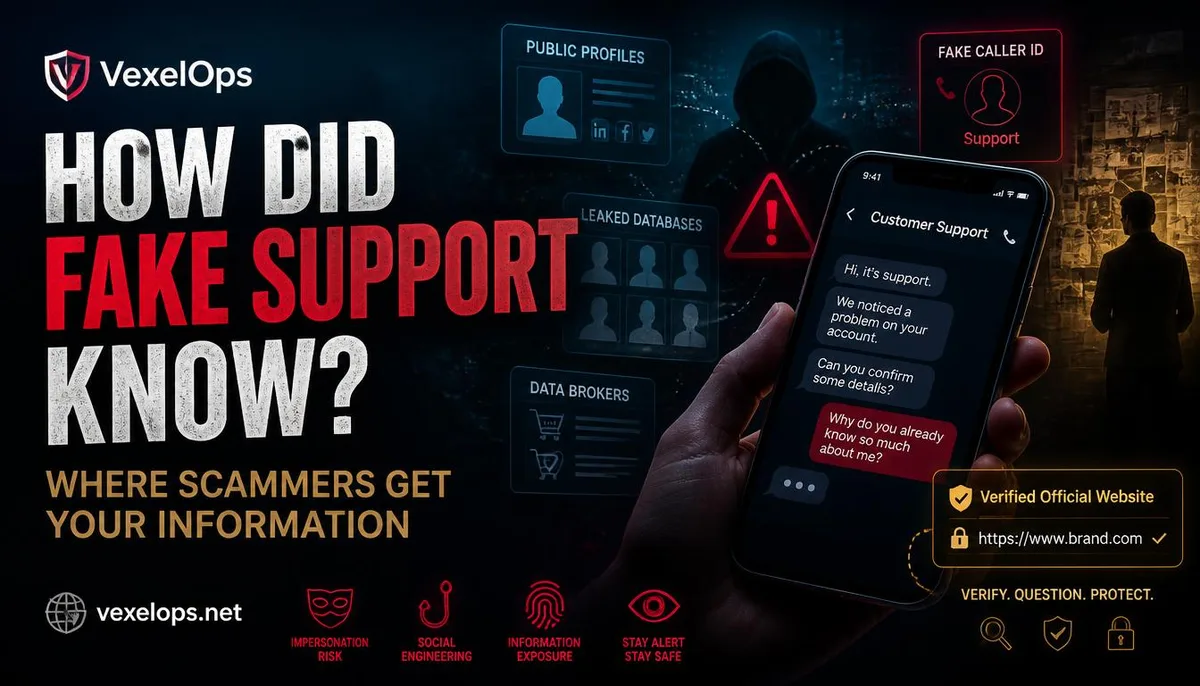
Common Questions About Fake Customer Service and Scam Data Sources
Does the fake customer service knowing my name and account name mean they have hacked my phone?
Not necessarily. Names, account names, public posts, company information, and some contact data may be obtained through public networks, previous leaked lists, third-party services, or social engineering. Knowing a few correct details only indicates they have some clues, not that your phone has been hacked on its own. But this is still a warning sign that needs to be addressed. You can check your email, account login activity, authorized apps, and device security settings from a trusted device, and do not hand out passwords or verification codes just because the other party seems accurate.
How Do I Verify If They Are Truly Customer Service?
Do not use the phone number, URL, or QR Code provided by the other party in an unexpected message. First, close the conversation, then independently enter the official website address and look for customer service methods through the official app, invoice, product packaging, or existing contact records. A genuine customer service identity should be verifiable through independent channels rather than relying solely on the employee number or screenshots they provide. If they request immediate payments, fund transfers, screen sharing, remote tool installations, or one-time verification codes, stop immediately. Whether customer service knows some of your data does not change the inherent risks of those sensitive requests.
What Should I Do if I Have Already Given Personal Information to Fake Customer Service?
First, save conversations, phone numbers, URLs, payment records, and notifications received; do not delete evidence. If you provided passwords, immediately change all accounts using that same password; if you provided verification codes or backup codes, check login activity, log out of unknown devices, and reset two-factor authentication. If financial accounts or payment services are involved, quickly notify the official institutions through the contact information from official websites or invoices. Even if no obvious loss has occurred, consider reporting to the anti-fraud and law enforcement agencies in your country or region to alert them of the same methods being used.
One Key Takeaway: Just because fake customer service has some information doesn’t mean they are trustworthy; independently verify their identity before protecting accounts and payment information.