

Digital Dissemination Mechanism: Analysis of the Dissemination Chain of Graphic Videos
Under the architecture of the internet, once private images are uploaded to a public platform, their dissemination speed often increases exponentially. Technical experts point out that the dissemination of such content mainly relies on automatic scraping by mirror sites and quick indexing by search engines. Fraud groups generally use these platforms for secondary dissemination, even using them as leverage to extort victims. Understanding how this content is stored and distributed is the first step in implementing effective removal.
Technical Intervention Strategies: Three Core Steps for Implementing Content Removal
- Implement platform-level removal requests: For mainstream social media and video platforms, submit removal requests with technical evidence using the Digital Millennium Copyright Act (DMCA) or the platform's built-in privacy violation
- Request search engine index blocking: Even if the original video has been deleted, cached versions and thumbnails may still appear in search results. By submitting personal privacy protection requests to Google or Bing, relevant links can
- Activate digital fingerprint matching protection: Use hash matching technology to submit the digital characteristics of specific videos to the security databases of major global platforms. This creates an automated interception mechanism
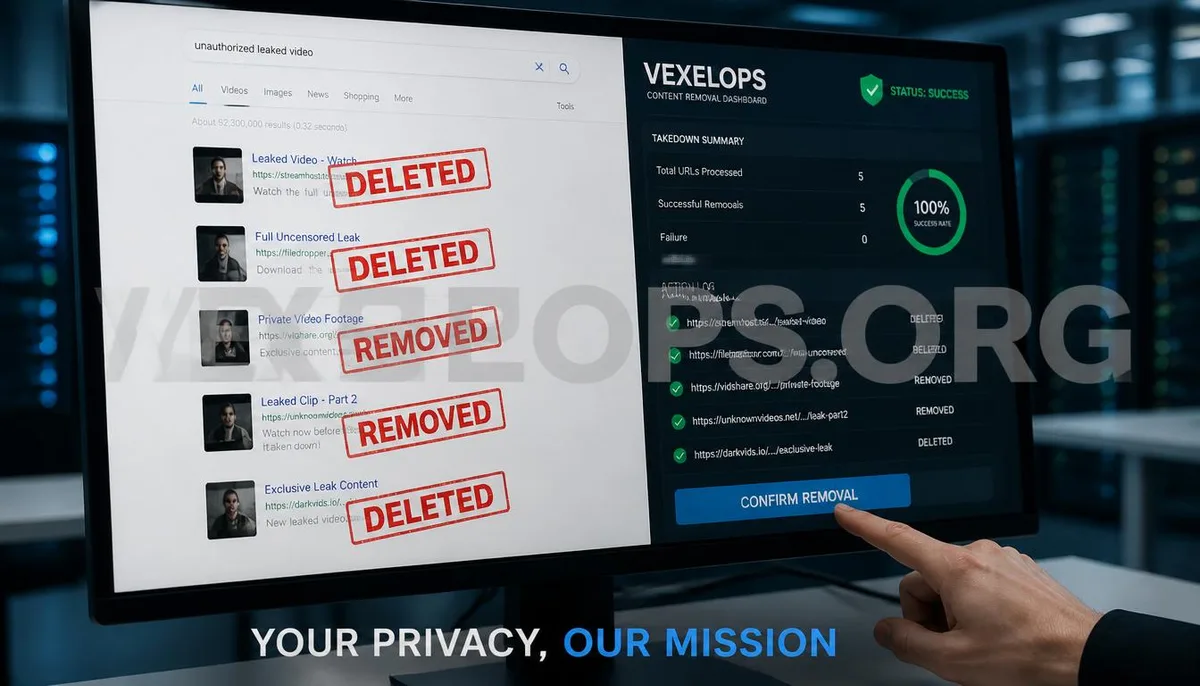
Facing such complex digital crises, VexelOps provides professional privacy tracking and removal collaboration services, assisting victims in globally monitoring the flow of abnormal images and providing legally effective technical appraisal reports.
Identifying Criminal Behavior: Distinguishing Fraud Groups from Technical Experts
In dealing with the leak of graphic videos, it is crucial to clearly differentiate between different actors. Those who steal, distribute images, and extort money are fraud groups engaged in illegal profit-making. They exploit the victims' fear for profit, and their behavior is essentially criminal. On the other hand, those who assist victims with technical analysis, path tracing, and content removal are technical experts with professional ethics. It is critical to remain calm and refuse to engage in any financial transactions with fraud groups. Criminal organizations often do not delete videos after receiving money and instead view the victims as long-term harvest targets. The correct approach is to immediately block the other party and seek professional technical support for damage control.
Frequently Asked Questions About Graphic Video Removal and Privacy Protection
Why can I still see the video in search engines even though I have deleted it from the original site?
This is because the search engine's crawler has cached the webpage. Even if the document no longer exists on the original server, the search engine's database still retains the thumbnail and title information of that webpage. This requires secondary processing through the outdated content removal tools provided by the search engines. Moreover, some illegal mirror sites automatically backup content from mainstream platforms, which necessitates technical blocking for different domain names one by one. VexelOps advises victims to continuously monitor search results for relevant keywords after deleting the original content to ensure the integrity of privacy restoration.
What should I do if a fraud group threatens to send the video to my family and friends?
This is a typical social engineering extortion tactic. Fraud groups usually do not have the capability to actually reach all your social connections; they merely threaten using the contact information you've publicly shared on social media. First, you should immediately set your social accounts to private and change the permissions for all contact methods. Secondly, do not show excessive fear to the fraud group, as this will increase their motivation to extort. Finally, seek a professional team's threat assessment to determine whether the other party indeed possesses your contact data and take appropriate technical blocking measures.
Can video removal services online really guarantee 100% removal?
In the digital world, 100% removal is a challenging goal, as it is impossible to completely eliminate the possibility of someone downloading offline. However, through professional technical intervention, removal of over 99% visibility can be achieved. This means that the general public will no longer find related content through search engines or mainstream platforms, which is crucial for restoring the normal lives of victims. The VexelOps technical team provides long-term monitoring of digital footprints, and once signs of content resurgence are discovered, a secondary cleaning process will be initiated immediately to provide lasting protection for your privacy.
One Key Takeaway: The core of graphic video removal lies in platform removal, search blocking, and fingerprint interception. By taking the correct technical measures, refusing to compromise with fraud groups, and effectively utilizing professional privacy protection services, you can effectively curb the spread of privacy invasions and safeguard your digital dignity.