
Discrepancies Between the Perception of Telegram's Encryption and Its Actual Operation
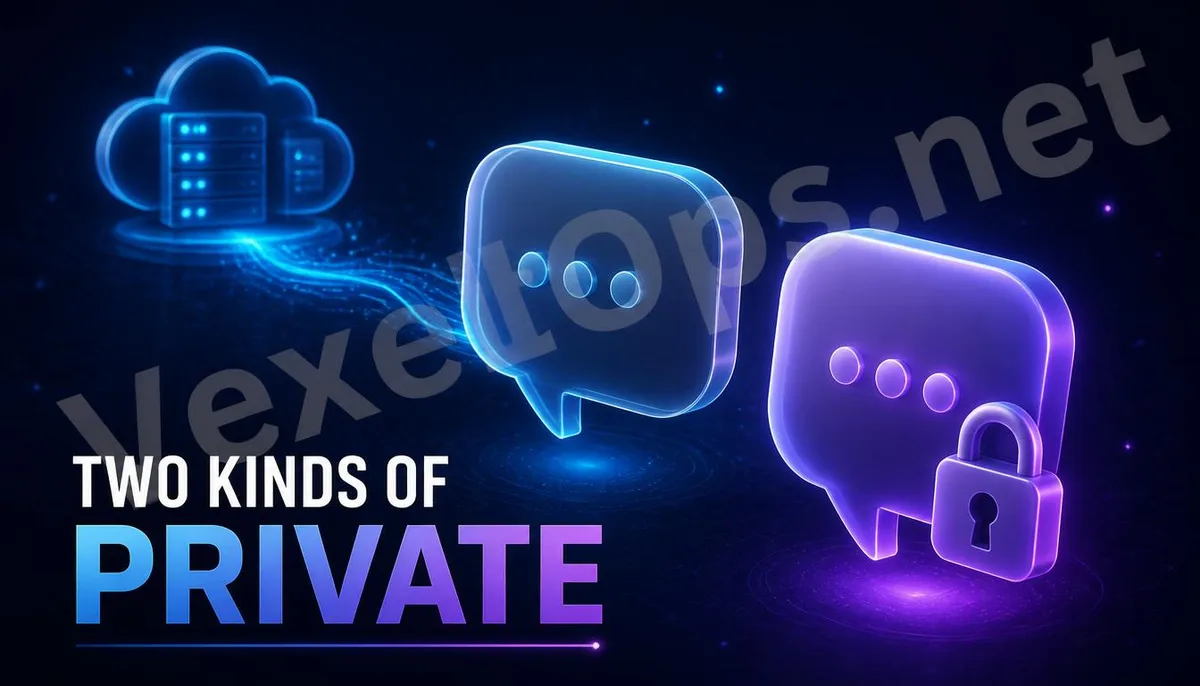
For a long time, many users have thought of Telegram as a messaging app focused on privacy and encryption. This impression partly stems from its early branding as a secure platform and the fact that it offers a rare secret chat feature in the industry. However, this creates the misconception that as soon as you open Telegram and start chatting, all content is automatically protected by the highest level of encryption, making it unreadable even by the platform itself. In reality, this is not the case. Telegram has two distinct modes of conversation, each with fundamental differences in encryption methods and data storage locations. The default mode used by most users is not the end-to-end encryption that is often assumed. Understanding this distinction is crucial for users who regularly share sensitive content on Telegram.
Encryption Methods and Data Storage Locations for Regular Chats
When you start a default conversation with any contact on Telegram, this is considered a regular chat, officially termed a Cloud Chat. In this mode, messages are indeed encrypted during transmission; however, it utilizes encryption from the client to the server, rather than direct point-to-point encryption between sender and receiver. Specifically, when you send a message, the content is first encrypted and then sent to Telegram’s servers. The server decrypts the message and then re-encrypts it before forwarding it to the recipient. This means that the content of the message theoretically exists in a readable form within Telegram's system for a brief period. This is also why regular chats support multiple device synchronization; messages are stored on cloud servers, allowing you to access the complete chat history when logging in with the same account on your phone, computer, or tablet.
End-to-End Encryption Mechanism for Secret Chats
Secret Chats employ a completely different technical architecture, namely end-to-end encryption. In this mode, messages are only stored in an encrypted form on the sender's and receiver's devices, meaning Telegram's servers do not possess the decryption key and, theoretically, cannot read the conversation nor will they keep a readable copy stored on the server. To activate a secret chat, users must manually set it up by selecting the option to start a secret chat on the contact’s profile page. This feature comes with several clear limitations compared to regular chats, including that it can only be used between two devices and does not synchronize across other logged-in devices. Additionally, it supports the setting of message self-destruction timers, allowing content to be automatically deleted from both devices after a specified time.

What This Technical Difference Implies for Actual Use
If you are merely engaged in casual chatting, sending stickers, or arranging times, the encryption level of regular chats is usually sufficient for most situations. However, if sensitive information such as ID cards, financial data, work secrets, or any content that could cause significant harm if leaked is involved, opting for a secret chat would be a more prudent choice, especially since the content of secret chats will generally remain unaffected in the event of any form of data access incident on Telegram's server in the future. It's important to understand that the automatic self-destruction feature of secret chats only addresses the issue of messages remaining on devices. If the recipient takes a screenshot or photographs the screen with another device before the message self-destructs, this intentional action by the user is something that no level of encryption can prevent. Technical protections address security at the transmission and storage levels, but cannot cover the situation of the recipient actively recording the content.
Common Questions About Telegram's Encryption Methods
Are Regular Chats Totally Insecure?
No, they are not completely insecure. Regular chats still provide encryption protection during transmission, but the scope of this protection is between the client and server, falling under a server-side decryptable architecture instead of point-to-point encryption. For most everyday chat content, this level of protection is usually adequate for general social interactions, but it is not suitable for sending particularly sensitive content that requires a higher degree of confidentiality, such as photos of ID cards, bank account information, or screenshots of legally binding documents. If you are unsure whether the content you are transmitting is sensitive, you can use a simple judgment standard: if the information's leakage would cause you real distress, then you should consider switching to secret chats.
Can Group Chats be Set as Secret Chats?
No, the secret chat feature currently only supports one-on-one private conversations and cannot be applied to group chats or channels. This is a design limitation in Telegram's functionality, and there are no publicly announced plans to extend end-to-end encryption to group settings in the near future. If there are sensitive topics that need discussion within a group, there are currently no group encryption options that match the level of secret chats. In such cases, it is recommended to carefully evaluate the range of content to be shared in the group and to avoid posting identity information, financial details, or similar sensitive content directly in group conversations. If necessary, opt for one-on-one secret chats to communicate with the relevant individuals privately.
Is Enabling Two-Step Verification the Same as Using Secret Chats?
No, they are not the same. The protection they offer is fundamentally different. Two-step verification safeguards the login security of the account itself, functioning to prevent unauthorized individuals from logging into your Telegram account without your permission by obtaining verification codes or scanning QR codes. This mechanism can be found within the privacy and security settings in the app. Secret chats, on the other hand, address the encryption level and storage method of specific conversation content, ensuring that the dialogue will not be accessible to the server or synchronized across devices. The former deals with account-level access control, while the latter focuses on message-level encryption mechanisms, managing entirely different risks. It is advisable to enable and actively use both features to achieve a more comprehensive level of protection.
One Key Takeaway: The encryption level of regular conversations on Telegram is different from that of secret conversations; regular conversation messages are decrypted and forwarded by the server, while only secret conversations provide true end-to-end encryption. Before sending sensitive content, make sure to check which conversation mode you are currently using.