
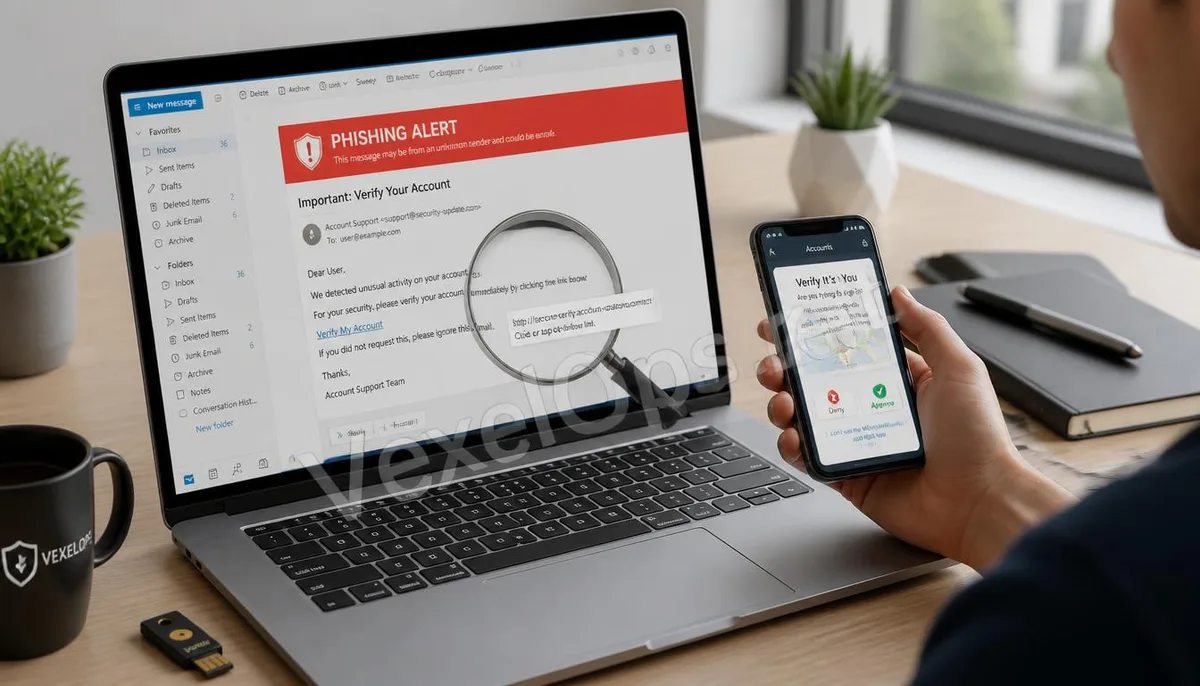
In-Depth Analysis: The Psychological Game and Technical Camouflage of Phishing
Phishing is not merely a technical invasion, but a well-planned psychological game. Scammers exploit human nature, such as fear, urgency, or obedience to authority, to lead users to make poor judgments. They typically forge notifications from banks, social platforms, or government agencies, claiming that your account has unusual activity or needs immediate verification, thus forcing you to click on malicious links out of anxiety. The subtlety of this technical camouflage lies in the fact that it does not require hacking complex encryption systems, but directly attacks the most vulnerable aspect of digital security: the user sitting in front of the screen. To enhance the success rate of their deceptions, scammers invest substantial resources in optimizing the details of counterfeit pages. Every visual element, from corporate branding colors and typography to the placement of official logos, is meticulously calculated. On a technical level, they may use spellings that are extremely similar to the official domain or employ URL encoding techniques to hide the real target address. When users input their account passwords on these counterfeit pages, that sensitive data is instantly
Key Techniques: Critical Indicators for Identifying Malicious Links
In the face of suspicious digital communications, the ability to quickly identify malicious links is crucial. While scammers are adept at disguising themselves, they often leave behind undeniable traces in technical details. Here are three of the most effective identification methods:
- Review the sender's domain: Check if the email address is identical to the official domain.
- Hover over the link target: Before clicking, check the true redirect address in the bottom left corner of your browser.
- Observe the website's security certificate: Ensure the site has a valid encryption certificate and correct name.
These visual actions can help users assess risk within seconds. Scammers often use subdomains or typographical errors to confuse the visual perception, such as substituting the letter 'o' in the official domain with the number '0'. In addition, they may employ URL shortening services to obscure the real redirect path. By remaining vigilant about any requests for credentials and routinely performing these basic checks, the likelihood of falling victim to phishing attacks can be significantly reduced.
Practical Strategies: Strengthening Solutions to Prevent Personal Data Breaches
Beyond passive identification, users also need to actively adopt technical measures to strengthen the defenses of their personal data. This includes managing permissions for digital identities and continuously monitoring communication environments.
- Implement hardware two-factor authentication: Use physical keys to block all unauthorized remote logins.
- Enable email security filtering: Utilize advanced filtering mechanisms to automatically identify and tag phishing attempts.
- Conduct professional cybersecurity audits: Use deep monitoring to identify hidden malicious script links in systems.
In these strengthening solutions, VexelOps’s technical team can provide comprehensive security assessments for your digital environment. Experts will analyze whether your account exhibits abnormal connection requests and check if your emails and social platforms have communicated with known malicious domains. Through professional threat intelligence comparison, we can assist victims in identifying any personal information that has already been leaked and provide targeted remediation recommendations to prevent scammers from exploiting this data for subsequent asset harvesting.
Future Trends: Combating the Increasing Sophistication of Phishing Attacks
With the advancement of artificial intelligence technology, phishing attacks are becoming increasingly personalized and automated. Scammers are starting to leverage big data to analyze users' social habits, generating highly targeted phishing content; this method, known as spear phishing, boasts an extremely high success rate. Future defense strategies will need to transition from singular technical checks to comprehensive digital resilience building. This includes implementing zero trust principles for all connection requests and employing multi-layered encryption for personal sensitive data. By establishing long-term security monitoring mechanisms and collaborating with professional technical teams for regular check-ups, we can effectively respond to the evolving digital threats. Maintaining calm judgment and scientific technical defenses is the ultimate safeguard for our personal data and digital assets in a complex online environment.
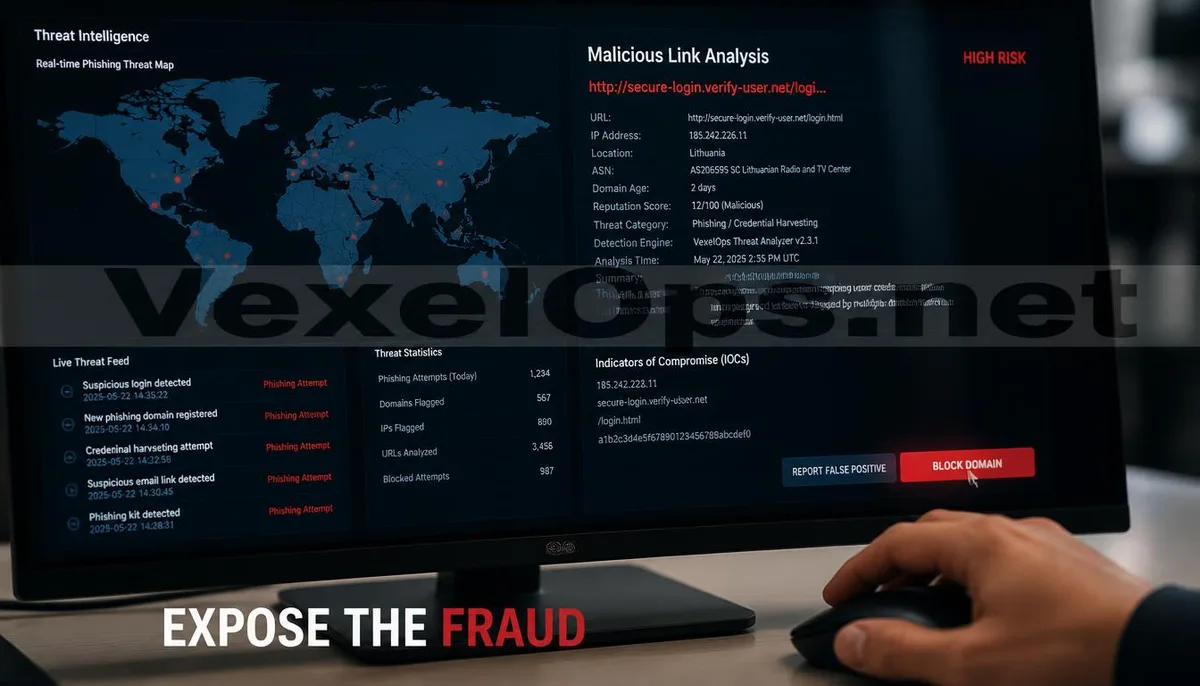
Common Questions About Phishing Scams and Recognition Prevention
Why did I check the URL and it looked correct, but it was still a phishing site?
This could be because scammers used a homograph attack. In this type of attack, hackers employ letters that appear extremely similar from different language character sets to register domain names. For example, some Cyrillic letters visually resemble Latin letters but are entirely different URLs for computer systems. Additionally, scammers may exploit URL redirection vulnerabilities. They might first guide you to a legitimate but vulnerable website and then automatically redirect you to a forged phishing page. This is why mere visual checks of the URL are no longer safe; users are advised to manually enter official URLs or use verified browser bookmarks before inputting sensitive information, ensuring absolute authenticity of the connection.
If I accidentally click a phishing link but don't enter a password, am I still at risk?
Clicking the link itself carries some risk, even if you entered no information. Certain malicious links may trigger known vulnerabilities in the browser or plugins, automatically downloading and executing malicious scripts in your system; this attack is called a Drive-by Download. This could lead to your browser cookies being stolen or a remote monitoring Trojan being implanted in the background. Additionally, the act of clicking itself confirms to the scammer that your email or phone number is active, which could lead to you receiving more targeted phishing messages in the future. If you accidentally click a suspicious link, it's advisable to clear your browser cache and cookies immediately and perform a comprehensive antivirus scan. If conditions allow, check the system's startup items and network connection records to ensure no abnormal background processes are running.
How can VexelOps assist me in determining whether a link poses a threat?
Our technical team possesses a vast global threat intelligence database that can instantly compare and identify the latest phishing domains and malicious redirect paths. When you submit a suspicious link, we dynamically analyze it in a sandbox environment to observe its behavioral characteristics during execution, not just checking the URL spelling. We analyze whether the webpage contains hidden forms, malicious script injections, or attempts to download unknown files. Furthermore, VexelOps can help monitor whether your personal information has been circulating on illegal trading platforms on the dark web. Through in-depth data tracking and risk assessments, victims can clearly understand their level of threat. Based on the assessment results, we provide targeted defense strategies, including revoking affected session tokens and strengthening digital identity permissions, ensuring your personal data is well-protected in future digital interactions.
One Key Takeaway: The core of phishing lies in psychological manipulation and forgery. By consistently hovering over links, enabling hardware authentication, and utilizing professional cybersecurity services, you can effectively identify malicious links to protect personal data and account security.