

The most helpless part of cryptocurrency fraud often comes not when you realize you’ve been scammed, but when you find out that the perpetrator is likely in another country, and the funds have already been transferred to different wallets or exchanges, leaving you unsure of what to do next. Many people might first think, since the money has been transferred, and blockchain transactions cannot be canceled like credit card payments, does that mean there’s nothing left to do? Actually, this is not the right understanding. Blockchain transactions typically leave publicly accessible records, including wallet addresses, transaction times, amounts, and hashes. The FBI’s Internet Crime Complaint Center has also clearly stated that this transaction information is crucial for investigating cryptocurrency fraud, and even if the victim does not have complete transaction data, they can still file a report.
Why Can International Cryptocurrency Scams Still Be Traced?
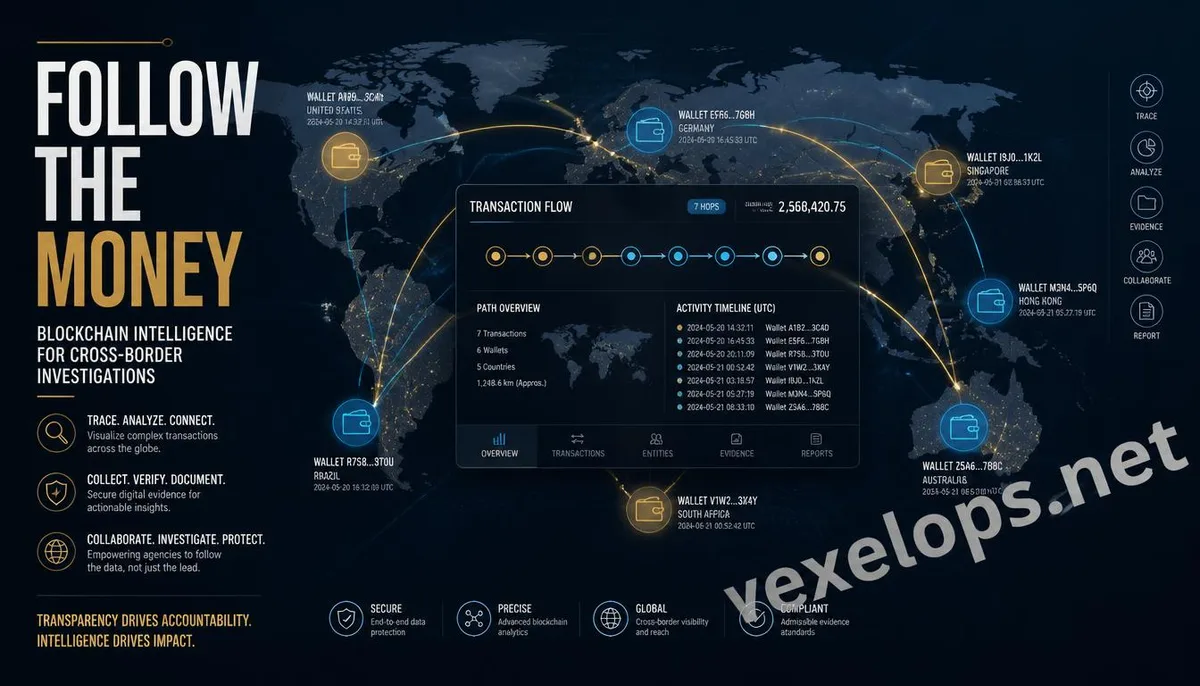
Cryptocurrencies are characterized by their speedy international transfers, where funds can quickly be moved from one wallet to another and subsequently enter exchanges or other services. This adds complexity to traditional cross-border investigations, especially when funds enter different jurisdictions, requiring local law enforcement to act according to local laws and cooperation protocols. The FBI has also pointed out that foreign exchanges and different jurisdictions indeed complicate tracking funds. But another important characteristic of blockchain is that many transactions on public blockchains are public and persistent. Investigators can start from known wallet addresses and transaction hashes to piece together the flow of funds, and then determine whether funds enter exchanges or other services that can be linked to real identities. This does not guarantee that every single fund can be recovered, but it also means that after being victimized, there are still potential leads to investigate.
Which Agencies Can You Turn to After an International Scam?
First, you can report the incident to your local law enforcement. If the case involves cybercrime, foreign platforms, or cryptocurrency transactions, it's best not to simply describe how much money you lost but to provide a comprehensive timeline and transaction data as much as possible. If the victim is located in the United States, they can submit a report on cybercrime to the FBI’s Internet Crime Complaint Center, known as IC3. IC3 is an important entry point for the FBI to handle reports related to internet crimes, and the submitted information may also be analyzed or forwarded to federal, state, local, or international law enforcement and cooperation agencies. If the case involves activities that may fall under the regulation of the Commodity Futures Trading Commission (CFTC), consider submitting a tip or complaint to the CFTC. The CFTC provides channels for tips, complaints, and enforcement reporting, and reminds users that if they encounter fraud related to digital assets, they can report it to the CFTC or the FBI. Additionally, if the funds have entered a well-known cryptocurrency exchange, you should also contact the official customer service or compliance department
Organize This Data Before Reporting
One advantage of cryptocurrency cases is that many key data can be preserved through transaction records. Instead of just saving a screenshot showing a successful payment, it's better to organize the complete flow of funds, conversations, and information about the other party together.
- Transaction hash or Transaction ID
- Receiving wallet address
- Sending wallet address
- Type and amount of cryptocurrency
- Date and time of the transaction
- Name of the exchange used
- Website, email, phone number, or social media account used by the other party
- Chat records and payment requests with the other party
Among these, transaction hashes, wallet addresses, transaction times, and amounts are particularly important. The FBI’s guidelines for victims of cryptocurrency fraud specifically require such transaction data, and suggest providing information about how you interacted with the scammer, the platforms used, and related domains. If you do not have complete data yet, don’t give up on reporting just because of that. The FBI clearly states that even without complete transaction information, you can still file a report and provide whatever information you have.
Why Is It Not Enough to Rely on Blockchain Tracking for Fund Recovery?
Blockchain tracking and actually recovering funds are two different matters. Even if you can confirm that a fund has been transferred from your wallet to a certain address, that does not mean investigators can immediately identify who is behind that address, nor does it mean that any private company has the right to freeze or seize those assets directly. Opportunities to link funds to real identities, account information, or legal procedures typically arise only after the funds enter exchanges or other regulated services. International cases are even more complex. Different countries have different laws, regulatory systems, and enforcement procedures, and whether overseas platforms can cooperate with investigations also depends on the specifics of the case and the applicable legal processes. The FBI has also noted that cross-border transfers and different jurisdictions present additional challenges for tracking funds. Thus, a more realistic expectation is not to believe that someone can guarantee the recovery of all funds, but to preserve traceable leads as soon as possible and pass them on to agencies with appropriate authority to handle them. Even if the final outcome may not
Beware of Second Scams Most of All
Many people think that after falling victim initially, the most dangerous stage has passed, but in reality, victims may quickly become targets for a second scam. A common scenario is that someone contacts the victim, claiming to be a blockchain tracking company, lawyer, government agency, or exchange investigator, stating that they have located the stolen funds, but need an upfront fee, deposit, tax, or verification fee to assist in the recovery. The FBI has repeatedly warned about such cryptocurrency recovery scams. Scammers may pose as law firms, recovery service companies, or even government agencies, taking advantage of victims' eagerness to recover their funds to obtain money or personal information once again. Therefore, if someone assures you of a 100% recovery of funds and asks for upfront payment, or requests more sensitive information like wallet private keys, seed phrases, exchange passwords, etc., you should immediately raise your guard. Genuine investigations and fund handling require adherence to specific laws and platform procedures, and should not be replaced by a simple payment promise. If you have fallen victim to an international cryptocurrency scam,
Common Questions About International Cryptocurrency Scams
If Funds Are Already Transferred to an Overseas Wallet, Is There No Chance at All?
It cannot be judged directly like that. Cross-border transactions certainly increase investigation difficulty, especially when funds enter exchanges or services in different countries, which may require cooperation between different jurisdictions. But cryptocurrency transactions usually leave on-chain records, where wallet addresses, transaction times, amounts, and transaction hashes can become critical leads for subsequent investigations. What really needs to be avoided is assuming that once you see an overseas wallet, the matter is over. Victims can still preserve transaction data, report to local law enforcement, provide case information to relevant exchanges, and seek assistance from financial regulatory bodies depending on the situation. Whether the funds can be recovered and how long it takes will depend on the current location of the funds, whether they have entered identifiable services, and whether the relevant agencies can take legal or platform measures. Thus, rather than judging the hope yourself, it is more crucial to retain all the data that can be preserved. The earlier you organize it, the less likely you are to miss important information.
If Someone Claims They Can Help Me Recover Cryptocurrency, Do I Need to Pay Upfront?
You should be very cautious of such requests. The FBI has warned against several fraudulent recovery services targeting victims of cryptocurrency scams, where some people impersonate lawyers, government officials, or professional tracking companies, initially asking victims to pay fees and then perhaps continuing to demand more funds. Particularly, promises of 100% recovery, guarantees of immediate unlocking, or claims that payment of taxes would enable withdrawal should not be taken at face value. Do not provide seed phrases, private keys, exchange passwords, or other information that allows control over assets to unknown recovery services, and do not assume that just because the other party knows the details of your case, they are certainly an official agency. If they claim to be in collaboration with the FBI, IC3, or other government entities, you should verify through the official channels of those agencies. The FBI has also specifically reminded that IC3 does not cooperate with private cryptocurrency recovery services and will not directly contact victims requesting payment.
I Don’t Have Complete Transaction Data; Can I Still Report Now?
Yes. Complete data will certainly make the case easier to organize, but not having all the data does not mean you cannot report. The FBI's guidelines for victims of cryptocurrency fraud clearly state that if you lack complete transaction information, you can still file a report with IC3 and provide whatever information you currently have. You can start by organizing what you know, such as the name or nickname used by the other party, email, phone number, social media account, website, exchange, payment time, type of cryptocurrency, amount, and any chat screenshots or payment records. Even if some of this information seems incomplete, it may still hold value when combined with other leads. If you later find new transaction hashes, wallet addresses, or other evidence, you can continue to organize and preserve that as well. Don’t think there is no room for supplements just because the information provided in the initial submission was incomplete.
One Key Takeaway: International cryptocurrency scams do not mean there are no clues; preserving transaction data and seeking formal assistance early still allows for the potential of further investigation.