
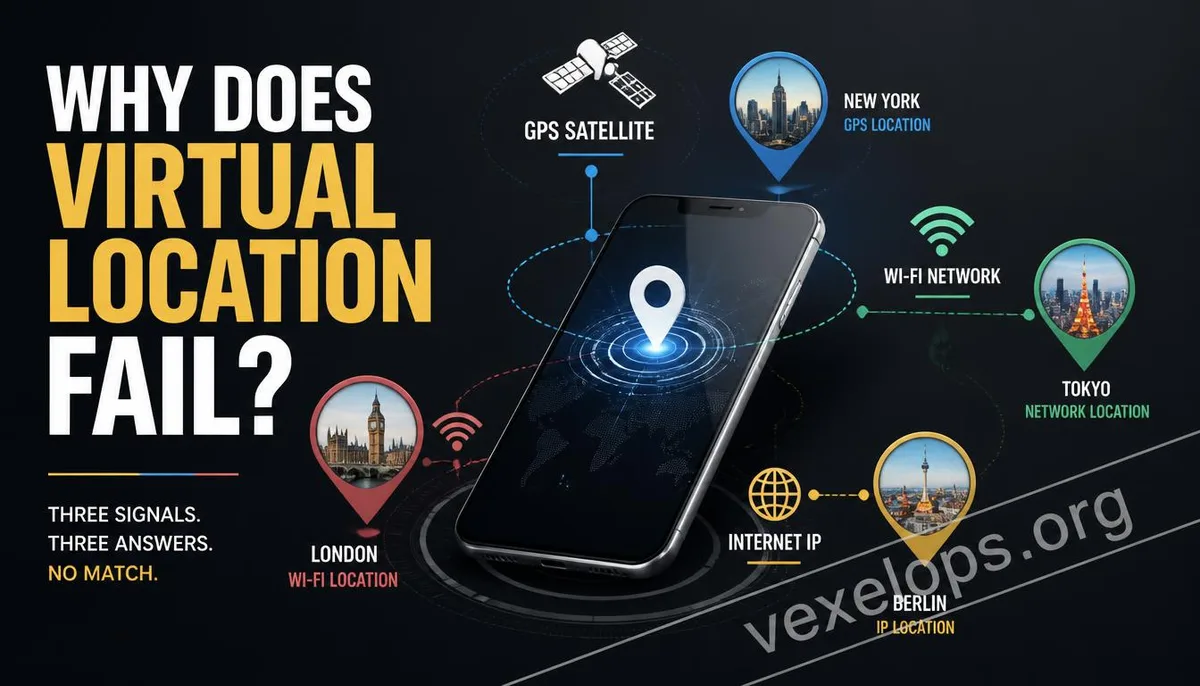
The previous two articles introduced the basic concepts of virtual location and how Android and iPhone can simulate positioning. However, in practical use, many people quickly encounter another issue: If the position on the map has clearly changed, why do some apps still know where you originally were? This is actually related to a commonly overlooked concept. The phone's location is not determined solely by GPS but can derive from multiple sources simultaneously. Virtual location typically only affects part of this, so different apps, websites, or even different services on the same phone may yield different location results.
What Are the Differences Between GPS, Wi-Fi, Mobile Networks, and IP?
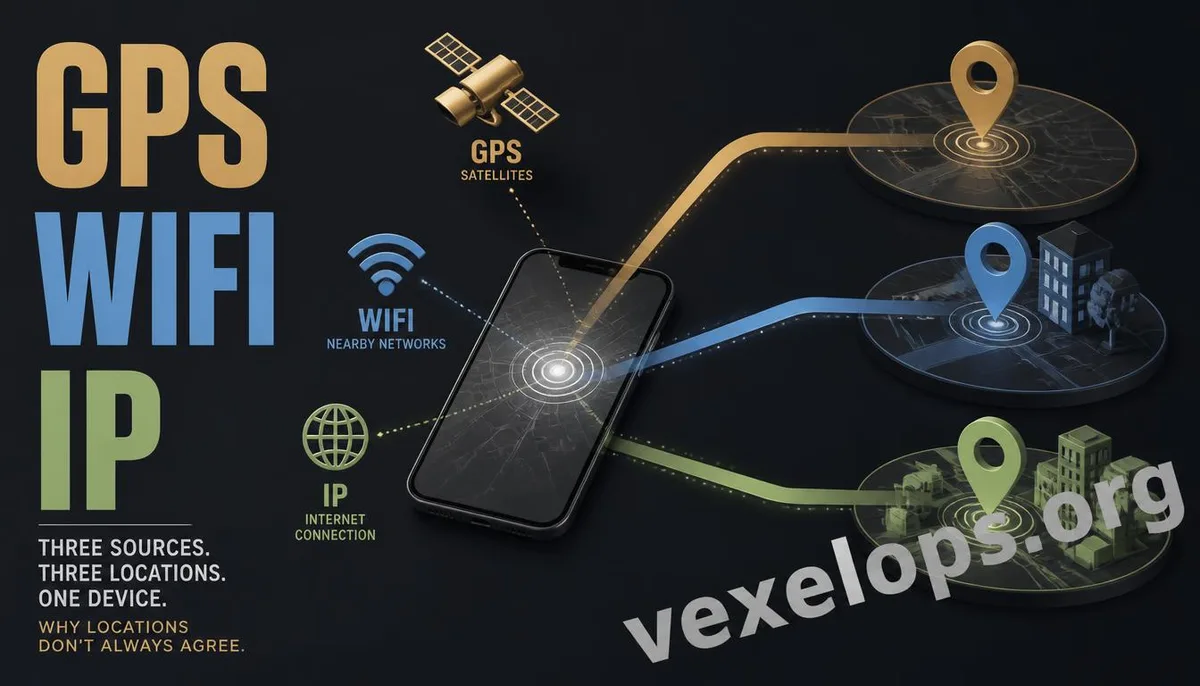
GPS is the most familiar method of positioning. Phones can calculate relatively accurate latitude and longitude through satellite signals, allowing map apps to determine current locations. When using virtual location, many people first think of altering GPS coordinates, but that is just one part of the entire location system. Wi-Fi and mobile networks provide additional clues. The nearby Wi-Fi networks and the mobile network base station the phone connects to may assist in estimating the device's approximate area. This information may not necessarily align perfectly with GPS, but it helps the phone obtain a location more quickly when GPS signals are weak. An IP address conveys another concept. Websites typically see your public IP used for connection and infer approximate country, city, or internet service provider through an IP geolocation database. Its accuracy generally cannot compete with GPS, but it’s still a very easily obtainable location clue for websites. Thus, the same phone may have several different answers simultaneously: GPS shows Tokyo, IP shows Taiwan, and the surrounding Wi-Fi and mobile networks provide another set of location information. When these results
Why After Modifying GPS, Can Some Apps Still See the Original Location?
One reason is that apps do not necessarily use GPS exclusively. Different apps have completely different needs for location data; some may only require a coordinate to display a map, while others may need more comprehensive location information for nearby services, transport information, or other functionalities. If an app primarily relies on the system-provided location coordinates, then virtual location might be quickly accepted. However, if services also reference IP, network environments, account data, or other device information, they may notice that the current location is inconsistent with other data. Additionally, some platforms may have extra judgments regarding simulated locations. For instance, Android offers Mock Location mechanisms, enabling apps to judge whether the current position provided by the system belongs to a simulated source. Therefore, just because virtual location successfully displays a coordinate doesn’t mean that all apps will regard it as a normal actual location. This is why virtual location should not be understood as a complete switch that changes your phone's location. It is more akin to altering one type of location data while other sources
What Situations Most Easily Cause Inconsistent Virtual Locations?
When there are significant discrepancies between different location sources, the limitations of virtual location become most evident. For example, when GPS indicates a location in Japan but the IP still originates from the United States, or when the mobile network that the phone connects to does not match the set position, certain services may consider the current location information abnormal. Moreover, the app's own location needs can influence the results. Map apps may only require coordinates, making them appear more straightforward; apps needing geographical area judgments, nearby services, or other security checks may use a variety of information.
- GPS shows a location different from the IP's country.
- Wi-Fi and mobile networks provide inconsistent location clues.
- Apps can obtain or determine simulated locations.
- Different location sources have varying update speeds.
These situations can lead to locations appearing inconsistent over time. Especially when a user suddenly switches from one city to another at a great distance, if other data does not change synchronously, services are more likely to present different results. Thus, virtual location is not simply a matter of success or failure; it involves differences between various location sources. An app might accept the change, while another app may not, which doesn’t necessarily indicate that the tool itself has completely failed.
If You Just Want to Understand Your Location Information, Which Source Should You Refer To?
No single location source can represent all situations. GPS is typically more suitable for determining a device's actual location; Wi-Fi and mobile networks can assist the system in positioning, while IP addresses are more commonly used by websites to infer the network's geographical area. So, to know what location the phone currently displays, first check the positioning results in your map app; to understand the general location that a website sees, pay attention to the current IP being used; and if you want to know why the phone can still locate indoors, Wi-Fi and mobile networks are worth noting. What truly deserves attention is not to conflate these pieces of information. The VexelOps Blog will continue to organize content related to phone positioning, virtual location, and digital privacy, allowing readers to comprehend, from various angles, where their location data may be inferred from during daily phone usage. If your goal is privacy protection, modifying the location isn’t always necessary. Often, checking app location permissions, disabling unnecessary precise location services, or understanding what sources websites may use to infer locations, can be a more direct
Common Questions About Virtual Location
Why Has GPS Changed, Yet the IP Location Remains the Same?
Because GPS and IP are completely different location sources. GPS reflects the geographical coordinates obtained by the device through positioning systems, while IP reflects the exit location of the current network connection. There is no direct synchronization mechanism between the two, so modifying GPS does not automatically change the IP. For example, the map on your phone may show you are in Tokyo, but if the Internet connection is still using the original regional network, then the website may still see the original country's or city's IP location. This is why simply modifying GPS may still lead some websites to display content from the original region.
Does Wi-Fi Affect Virtual Location?
It can. Wi-Fi can serve as a form of auxiliary information for the phone to determine its location, especially in indoor environments or where GPS signals are weak. The phone can estimate the region based on the nearby wireless network environment, so it is not completely independent of GPS. If there's a significant discrepancy between the GPS position and the geographical clues provided by Wi-Fi, certain services may receive inconsistent results. However, the actual situation still depends on the phone system, how the app determines location, and what data it uses. So, when observing inconsistent virtual location effects, one should not only check GPS; Wi-Fi, mobile networks, and IP can all be reasons for the differing results.
Does Virtual Location Failure Mean the Phone Did Not Successfully Modify Its Position?
Not necessarily. What is termed a failure can arise from many different situations. For instance, the map may already display a new coordinate, but another app still shows the original location; this is more indicative of different services using different location sources rather than virtual location being entirely ineffective. It could also be the case that the app itself can judge simulated locations, or it might reference other data like IP, Wi-Fi, or mobile networks concurrently, rather than relying solely on the modified GPS coordinates. Therefore, when assessing whether virtual location is effective, it’s best to verify which app or type of location information has not changed. Different services have different positioning mechanisms, so one app's results cannot represent the position states of the entire phone.
One Key Takeaway: Virtual location only changes a portion of the location information, while GPS, Wi-Fi, and IP can still provide differing clues about the location.