
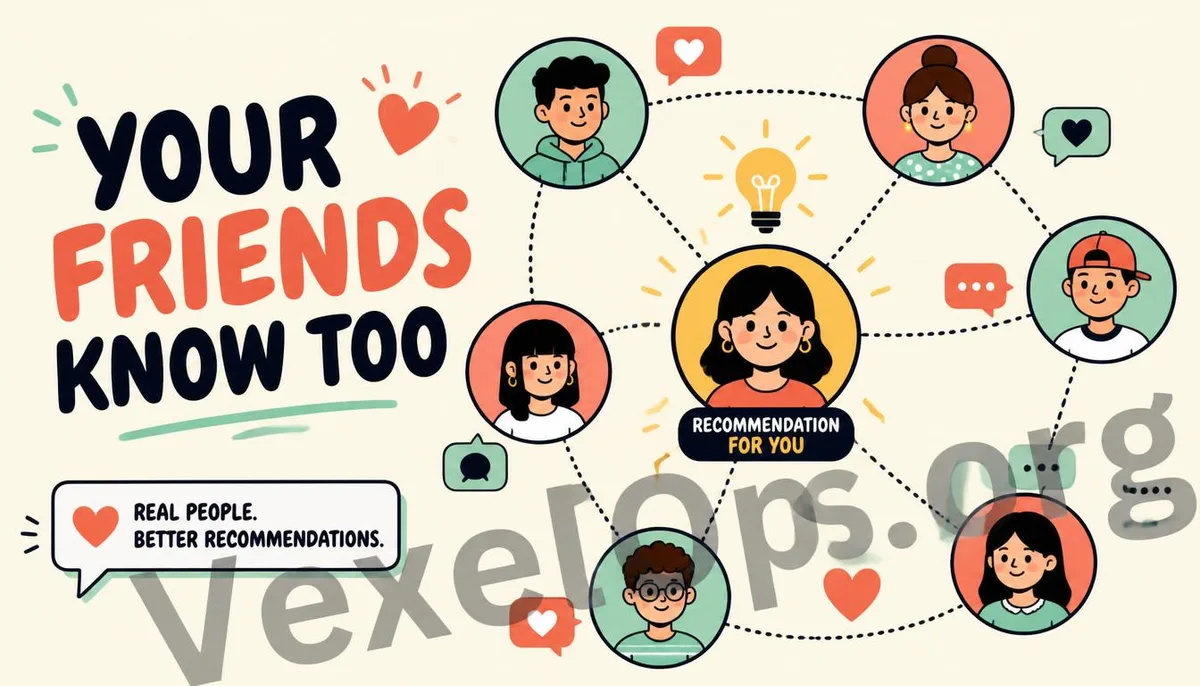
Another Eerie Coincidence
In previous articles, we discussed how ad identifiers track individual behavior across apps. This article addresses another phenomenon often mistaken for eavesdropping. When you chat with friends about a specific topic without searching or clicking any related links, yet see similar content recommended on your social media platform, it’s usually not the ad identifiers at work, but a different logic called social network analysis.
What Exactly Does Social Network Analysis Analyze?
Social network analysis refers to the interpersonal relationship networks recorded by platforms, including who is friends with whom, who interacts frequently, and whose geographic locations often appear within close ranges. The operational logic of this system does not analyze what you say, but rather what people close to you do. For instance, if your friend recently searched for a brand of coffee machine or liked related posts, the platform’s recommendation system will assess the high-frequency interaction between you and this friend to conclude that you might share similar interests, subsequently pushing similar content to you. This entire process does not require access to the specifics of your conversations; merely relying on the digital footprints left by one party is sufficient for the recommendation system to make such associations.
How Does the Platform Gather This Relationship Information?
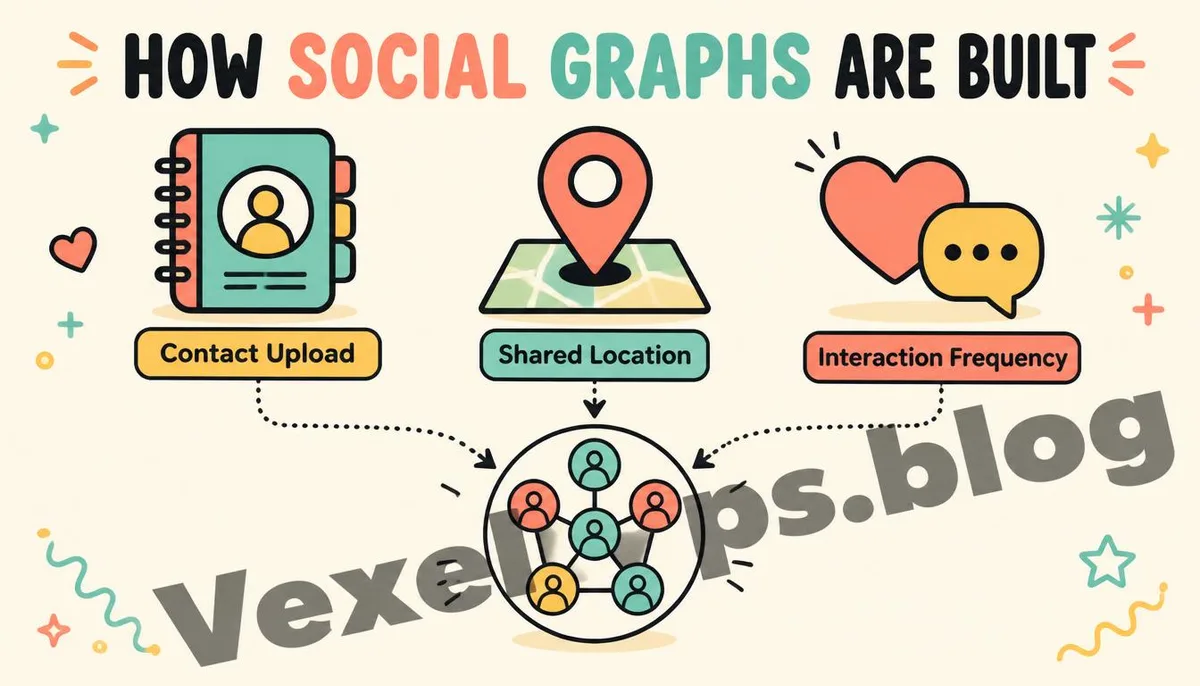
The creation of a social network is quite complex and stems from various sources, far beyond just a simple friend list. 1 Uploading contact permissions is one source; many social apps request access to your contacts during initial setup to help find friends. Once permission is granted, the contact information stored on your phone might be matched against other accounts on the platform. Even if the other person hasn’t added you as a friend, the platform’s system could still establish background links between you. 2 Geographical proximity is also significant; if two accounts are frequently detected in close time and location (for example, through location services or Wi-Fi connection records), the platform can deduce that these account owners are likely commonly together. 3 Interaction behaviors are analyzed as well, including tagging, commenting, and sharing each other’s posts, with the frequency and density of these actions used to measure the closeness of the relationship between two accounts.
What Settings Can You Adjust in Response to This Mechanism?
Social network analysis largely relies on the data you and your nearby friends authorize to be shared. If you want to reduce exposure in this area, there are several directions you can explore.
- Check and limit app access to your contacts, especially for apps that typically don’t require friend-finding features.
- Regularly review activity logs and data usage settings on social platforms; some platforms offer options to turn off friend recommendations based on contacts.
- Reduce the frequency of tagging specific geographical locations on social media to decrease the system's reliance on shared locations for relationship deductions.
Common Questions Users Ask About Social Network Analysis
If I've Never Authorized Contact Access, Am I Still Included in Others' Social Networks?
Possibly. Even if you’ve never actively authorized any app to access your contacts, if friends or family upload their contacts and yours happen to be included, the platform might still establish linkage records about you through the data uploaded by them. This situation is referred to as a shadow file, meaning the platform indirectly knows information about you without your registration or provision of details. Completely avoiding this scenario is quite challenging, as it involves the privacy settings of your friends and family, which cannot be solely managed by your own adjustments.
Can I Avoid Association Through Shared Locations by Turning Off Location Access?
Turning off location access can reduce one source of data, but social network analysis considers multiple sources. Simply disabling location doesn’t entirely prevent the system from inferring interpersonal relationships, because interaction behaviors, contact comparisons, and common friend counts can still operate independently. To minimize associations, multiple aspects of your privacy settings need to be reviewed, not just location.
Is This Analysis Method Related to Data Breaches?
Social network analysis falls within the normal operation of the platform and uses data as authorized by user agreements, differing from unauthorized data breach incidents. However, it doesn’t mean there are no risks; if a platform experiences a data breach, accumulated social network information, including interpersonal networks and interaction frequencies, could also leak along with other personal data. This is why regularly reviewing the data you’ve authorized across platforms is a worthwhile long-term habit.
One Key Takeaway: Social graph analysis infers interests based on the behavior and relationship networks of your friends, not by eavesdropping or solely relying on your personal behavior data. Checking your contact list permissions and location tagging habits can help reduce the scope of excessive relational analysis by this system.