
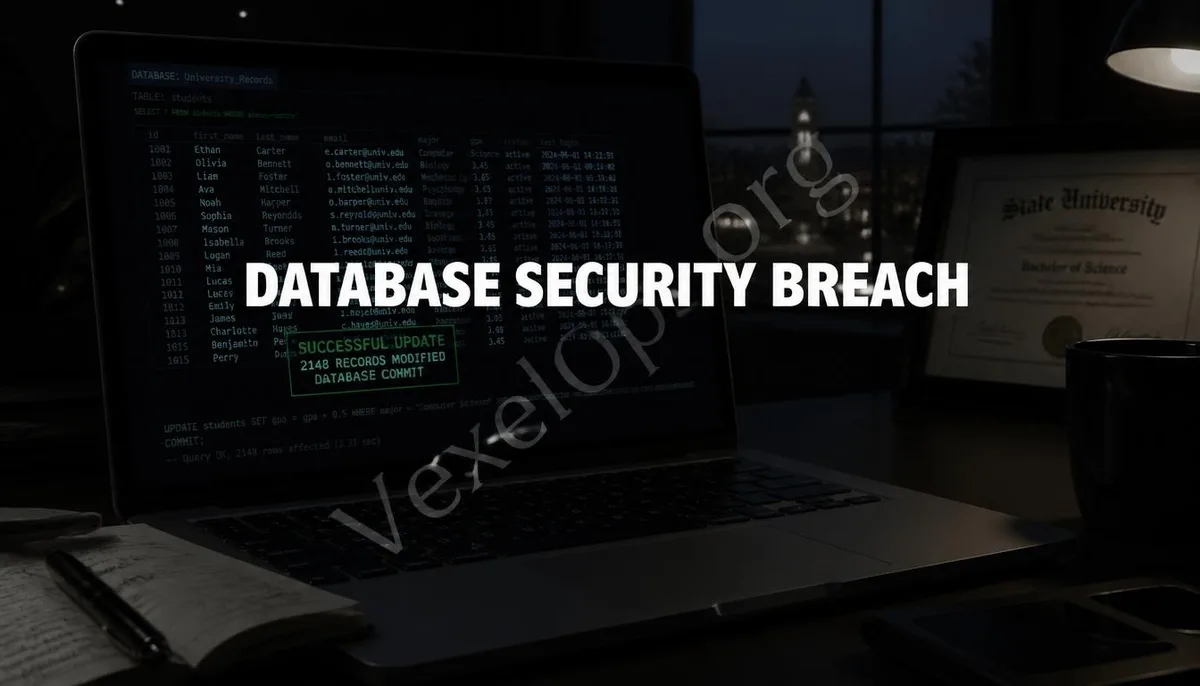
The Digital Security Crisis Hidden in the Ivory Tower of Academia
Management systems serve as the core of university operations, storing grades, enrollment data, and personal privacy information for thousands of students. However, many campus networks lag behind the evolution of modern hacking techniques. In the shadows of digitization, the login interfaces of academic systems may be enduring thousands of automated penetration tests. Hackers are not searching for the keys to the front door, but for logical vulnerabilities hidden within outdated code. When an insufficiently filtered search box appears on a webpage, it might become a secret passage to the core database. This type of technical penetration often begins with subtle detection. Attackers leverage automated scripts to analyze the system's response time and error feedback, thereby deducing the structure and version of the backend database. For systems lacking professional maintenance, this silent probing marks the beginning of a disaster. Once defenses are breached, what was once considered absolutely secure academic data may be illicitly modified or stolen within seconds.
- SQL Injection Path: Exploit input box vulnerabilities to send illegal commands directly to the backend database, bypassing authentication.
- Session Hijacking: Gain administrative privileges without a password by stealing the administrator's session token.
- Weak Passwords and Brute Force: Conduct large-scale credential stuffing attacks on academic accounts lacking multi-factor authentication.
Underlying Vulnerabilities and Database Penetration of Management Systems
At a technical level, the security of management systems hinges on their access control logic for databases. The most common method employed by hackers is SQL injection, an attack technique targeting insufficient input validation in web applications. By inputting specific SQL syntax in query fields, attackers can force the system to execute unintended operations, such as listing all admin accounts or even directly modifying specific students' grade fields. This sort of attack is highly covert, appearing as a normal web request. When simple injections fail to achieve their target, attackers turn to more complex privilege escalation techniques. This involves exploiting overflow vulnerabilities or misconfigurations in system services to elevate ordinary low-privileged accounts to system administrator levels. VexelOps can assist institutions or related organizations with comprehensive system vulnerability assessments and penetration testing, identifying hidden security risks and providing targeted code remediation advice to ensure the absolute integrity of academic data.
Covert Paths for Privilege Escalation and Direct Database Modification
Once hackers gain write permissions to the database, grade modification becomes effortless. They can directly pinpoint the tables holding grades, utilizing the UPDATE command to accurately adjust values. To cover their tracks, sophisticated attackers may concurrently alter operation logs, erasing their access records. This destruction of audit trails makes post-event technical investigations exceptionally difficult. However, changes to data often leave subtle logical inconsistencies in backup systems or related financial systems. Maintaining real-time monitoring of database access logs is key to preventing such threats. Modern cybersecurity defense systems emphasize immediate blocking of abnormal write behaviors. If the system detects large-scale grade field changes outside of office hours, an automated isolation mechanism should be triggered immediately. This shift from passive defense to proactive monitoring is essential for safeguarding academic integrity in the digital age.

Building an Impenetrable Security Fortress for Management Systems
Protecting academic security requires a multi-dimensional approach. First, multi-factor authentication (MFA) should be enforced for all accounts involved in sensitive data operations, which can block the majority of credential theft-based attacks. Second, the database should be encrypted to ensure that even if data is illegally exported, attackers cannot read the actual contents without a key.
- Implement parameterized queries: Completely eliminate the probabilities of SQL injection from the code level.
- Establish offline audit backups: Ensure log records are synchronized to a third-party secure storage that cannot be easily modified.
- Regularly conduct stress and security tests: Identify system vulnerabilities by simulating attacks before actual threats arise.
Through these professional techniques and continuous security investments, we can establish a solid digital defense net for academic data. While technological advancements bring challenges, they also provide us with tools to safeguard justice. As long as we stay alert and use them wisely, the sanctity and purity of academia will remain intact.
Common Questions about Management Systems Security and Grade Modification
Why does the system still show unusual logins even after I've changed the password?
This suggests that your device might be infected with a keylogger or your browser session has been hijacked. In this situation, hackers do not need to know your new password; they can continue monitoring your account through the access they have already obtained. It is advised to immediately conduct a comprehensive cybersecurity scan on the computer you are using, and force logout from all connected sessions on another secure device.
Is it true that grades modified after a breach of the management system cannot be detected?
Although advanced hackers may attempt to delete logs, modern management systems typically have multiple backups and logical verification mechanisms. Changes in grades often conflict with course selection records, performance data, and paper archives. In addition, professional cybersecurity audits can analyze database transaction logs to recover the original data paths that were deleted or modified. VexelOps offers professional technical support and evidence preservation services in handling such data recovery and path tracing cases.
How can I determine if the management system I’m using has SQL injection vulnerabilities?
Determining system vulnerabilities requires professional tools and knowledge. The simplest test is to input specific special characters in an input box and observe whether the system returns a database error message. However, this can only discover the most superficial vulnerabilities. For universities, the most responsible approach is to commission a professional cybersecurity team to conduct both black-box and white-box testing, comprehensively assessing the system's defensive capabilities from different dimensions and completing repairs before vulnerabilities are exploited.
One Key Takeaway: The core of management system security lies in parameterized queries and multi-factor authentication. By strictly controlling database access permissions and regularly conducting professional cybersecurity audits, you can effectively block illegal grade alterations and protect the authenticity and security of academic data.