
What is Token Approval? Why Do Wallets Request Authorization?
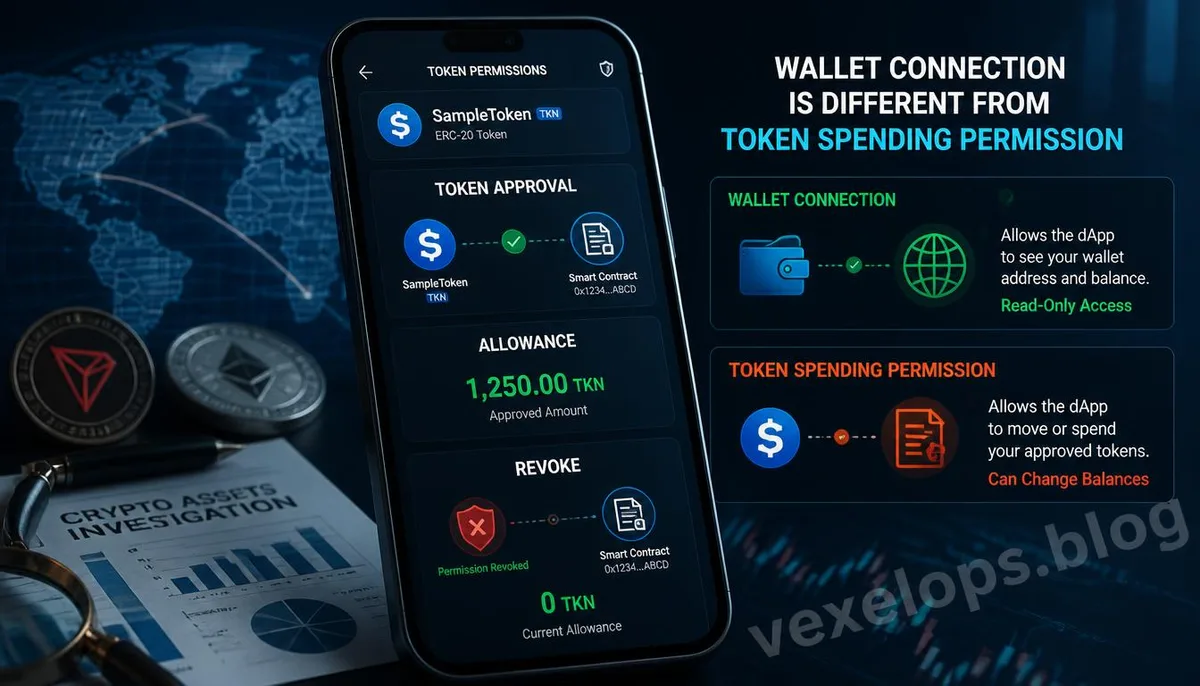
When users first utilize DeFi, NFT trading platforms, or token swapping services, their wallet may prompt them to permit a specific smart contract to use tokens. Many users directly confirm the transaction without carefully checking the authorized tokens, limits, contract addresses, and the currently used blockchain network, just because they recognize the platform name or wallet interface. Token Approval does not necessarily mean that assets have been transferred, but it may establish a lasting permission for token use. In the common ERC20 mechanism, approve is used for setting authorization, allowance represents the amount of tokens that a spender can still use on behalf of the user, and transferFrom may be used by the smart contract to perform subsequent token operations. OpenZeppelin's ERC20 documentation also lists these interfaces as crucial components of the token authorization mechanism. This differs from merely connecting a wallet to a website. Connecting a wallet mainly establishes interaction between the website and the wallet, while Token Approval involves spending permissions for specific tokens. The TRC20 token also has a similar authorization concept on the TRON
What are the Risks of Unlimited Approvals?
Some platforms request unlimited or infinite approval to reduce the number of times users need to confirm and pay network fees in the future. This design can make operations more convenient but also means that the authorized amount will not just stay at the tokens required for this transaction. If users stop using the platform afterward, the authorization may not automatically disappear. Risks can come from counterfeit websites, malicious smart contracts, domain takeovers, or users inadvertently signing incomprehensible transactions. As long as the contract retains the permission to use specific tokens, the permission may still exist even if users have left the platform or transferred the tokens back to their wallets. The official Ethereum guidelines also remind users that disconnecting a wallet from the platform does not mean removing token authorization, and smart contract permissions usually do not have a fixed automatic expiration time. If the following situations occur, it is advisable to cease operations and reconfirm:
- The authorization screen displays unlimited, infinite, or extremely large token amounts.
- The authorized entity is a platform that the user has not actively used before.
- The website link comes from a strange airdrop, private message, comment, or unverified advertisement.
- The wallet network does not match the original platform used.
- The transaction screen does not clearly display the token, contract address, or authorization amount.
These phenomena do not imply that every platform is malicious, but they are sufficient to remind users not to rely solely on brand logos or familiar interfaces when making decisions. Hackers can be technicians researching systems and assisting in fixing vulnerabilities; those who induce users to sign dangerous authorizations through fake websites, airdrops, or customer service should be termed as scammers.
How to Revoke Cryptocurrency Authorizations? What is the Role of Revoke?
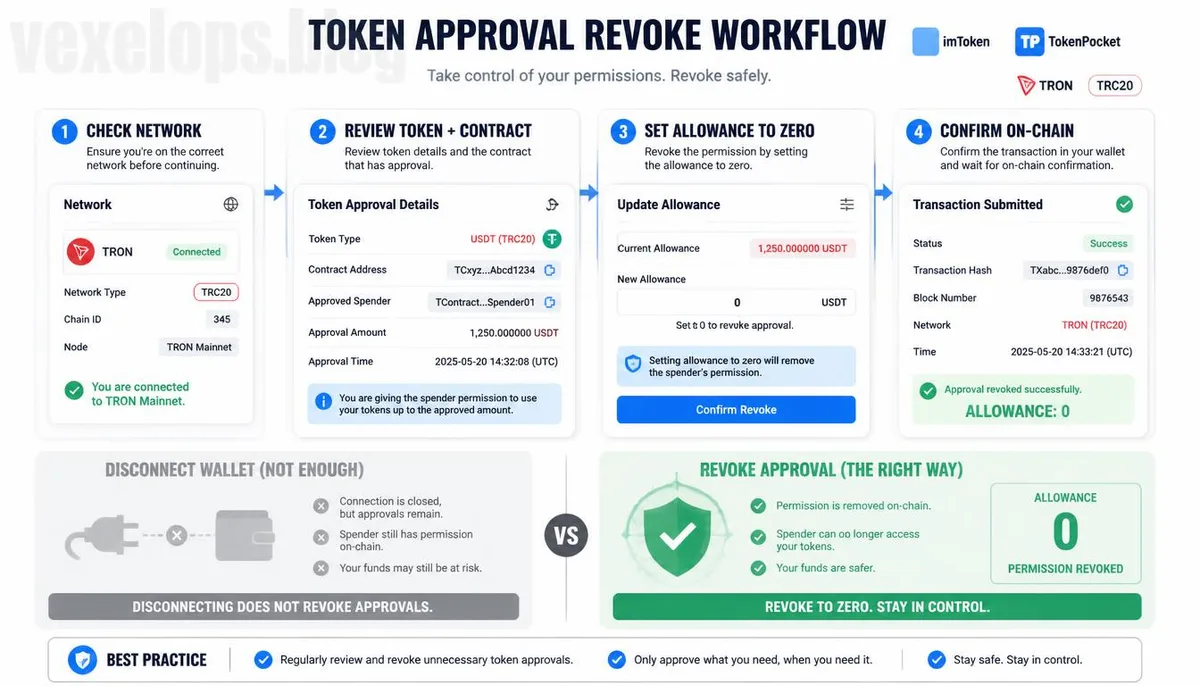
Revoking authorization is commonly referred to as Revoke, and its core principle is to set the usable amount of specific tokens for a specific smart contract to zero. It does not delete the wallet, transfer tokens to another address, nor withdraw already completed transfers on the blockchain. Its role is to stop the contract from continuing to use this token authorization in the future. When checking, follow this recommended order to reduce the chances of errors:
- Confirm the wallet address and the currently selected blockchain network.
- Access only from official wallet features, trustworthy blockchain explorers, or reliable authorization tools.
- Check the tokens, contract address, authorization amount, authorization time, and transaction records.
- Prioritize checking platforms that are no longer in use or whose sources cannot be confirmed.
- Read the revoke authorization transaction pop-up from the wallet to ensure it is not a new token transfer operation.
- Wait for on-chain confirmation and then refresh the authorization list.
Revoking authorization usually still counts as an on-chain transaction, so the corresponding network fees must be paid. The official Ethereum documentation states that the checking tools and wallets must use the same network, and it is best to reconnect after completion to confirm the status. Authorizations on different networks need to be checked separately; just because there are no records on Ethereum does not imply that there is no authorization risk on TRC20 or other networks.
Key Points for Authorization Checks in imToken and TokenPocket TP
Different wallets may have different feature names and entrances. Users should not just remember the position of one button but should look for Approval, Allowance, authorization management, or similar functions. When using imToken, users can first confirm the current wallet and network, and then view information related to token authorization and interactions with smart contracts; if the interface cannot clearly display transaction details, do not supplement operations through unfamiliar websites. TokenPocket, often referred to as TP, offers an Approval Detection feature. According to TokenPocket's explanations, users can view authorized contract addresses, authorization amounts, authorization times, and transaction hashes, then choose Revoke Approval. The basic principle is to set the authorized amount back to zero again, and after signing, users may need to refresh the page to ensure that authorization data has been updated. Whether using imToken, TokenPocket, or other wallets, four things should be confirmed: whether the authorization was initiated by the user, whether it is still needed, whether the contract address can be verified in trustworthy on-chain data, and whether
Common Questions About Token Approval and Cryptocurrency Wallet Authorization
Does Token Approval Directly Allow Others to Take All Assets in the Wallet?
Not necessarily. Token Approval generally pertains to specific tokens with specific smart contracts and does not mean that all assets within the wallet grant the same permissions. The actual risk depends on the type of authorized tokens, the limits, the functions of the contracts, and the content of transactions the user signs afterward. If it is an unlimited approval or the authorized entity comes from a counterfeit website, the risks may be higher than if only the amount needed for this use is authorized. The risks of authorization and wallet private key leaks are different issues. If the recovery phrase or private key has been obtained by others, simply canceling one Token Approval may be insufficient to protect the wallet. In suspicious situations, users should first stop connecting to unknown websites and signing new transactions, save wallet notifications, transaction hashes, and related URLs, and then seek reputable security assistance.
Will Cryptocurrency Disappear After Revoking Token Authorization?
Normal revocation operations reduce a certain contract's usable token amount to zero; it does not delete tokens or transfer assets out of the wallet. Revoking authorization usually does not directly affect already completed staked, borrowed, or liquidity positions, though different platforms' contract designs may vary, so users should understand transaction contents first and be cautious not to rush confirmations when in doubt. Revoking authorization typically requires paying network fees and waiting for blockchain confirmation. It also cannot recover assets that have already been transferred away. If someone claims that paying additional fees can restore all stolen tokens or asks for recovery phrases, private keys, or full verification codes, it may be a second round of scam attempts, and contact should be stopped immediately.
If I No Longer Use a DeFi or NFT Platform, Do I Still Need to Revoke Authorization?
Not using a platform does not mean that previously granted token permissions will automatically become invalid. Smart contract permissions usually do not have fixed expiration times, so authorizations that have not been used for a long time still deserve regular checks. If it is confirmed that a particular authorization is no longer necessary, reliable tools can be used to view contracts and limits before deciding whether to revoke. When revoking authorizations, new risks should also be avoided. Do not enter tools from links provided in strange private messages or fake customer service; do not hastily sign transactions just because the screen displays urgent warnings; and do not mistake disconnecting a website for completing a Revoke. If unsure about the true purpose of a transaction, it's safer to stop operations than to rush to process it.
One Key Takeaway: Regularly check authorizations; do not mistake disconnection for cancellation.