
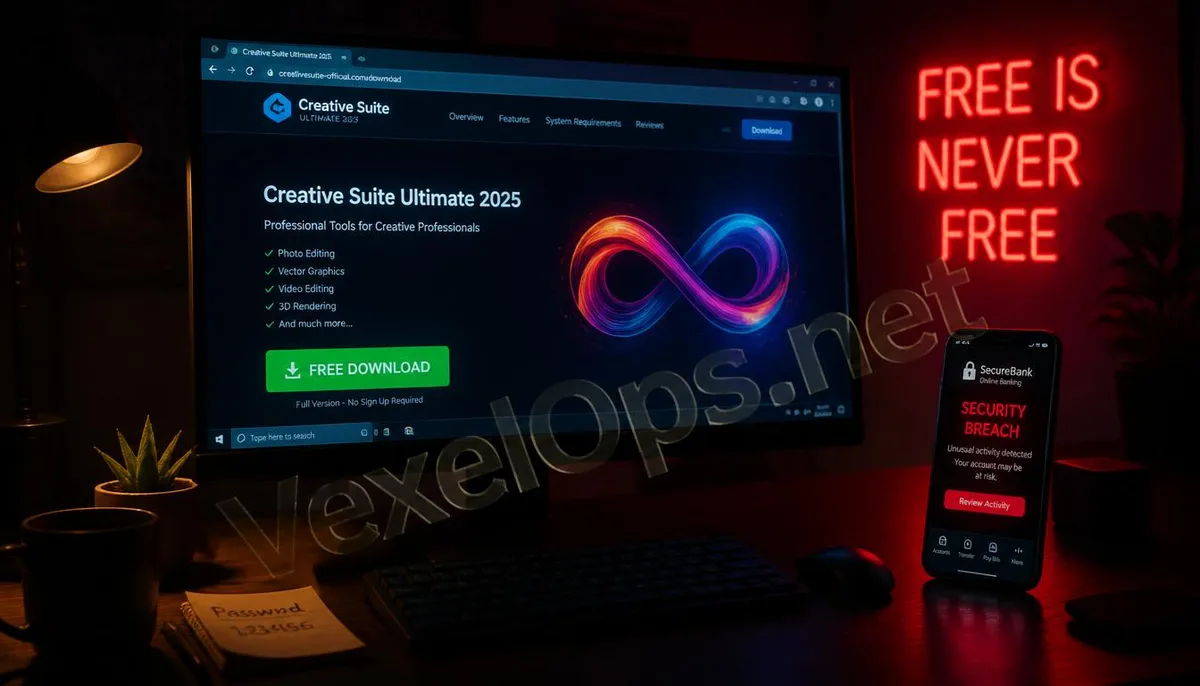
The Cost of Free: Digital Risks Behind Cracked Software
Among the vast resources of the internet, cracked software has served as bait for free access to expensive tools, attracting a large number of individual users and professionals. However, this seemingly cost-saving behavior often hides extremely high cybersecurity costs. Scammers and illegal technology developers are well aware of the demand for such software, so they encapsulate carefully designed malicious code within crack patches, keygens, or replacement dynamic link library (DLL) files. When users manually disable their antivirus software or firewall to run the software, their device's defense system collapses instantly. Cybersecurity experts point out that modern cracked software threats have evolved into persistent invisible surveillance. Scammers are no longer satisfied with mere system destruction; they seek to establish a long-term presence within user devices. These modified software may function completely normally, but in the background, they secretly open remote control channels or implant keyloggers. This high level of concealment means users may remain unaware for months or even years that their digital lives are under the surveillance of criminal organizations.
Technical Paths and Harvesting Methods Used by Scammers to Embed Trojans
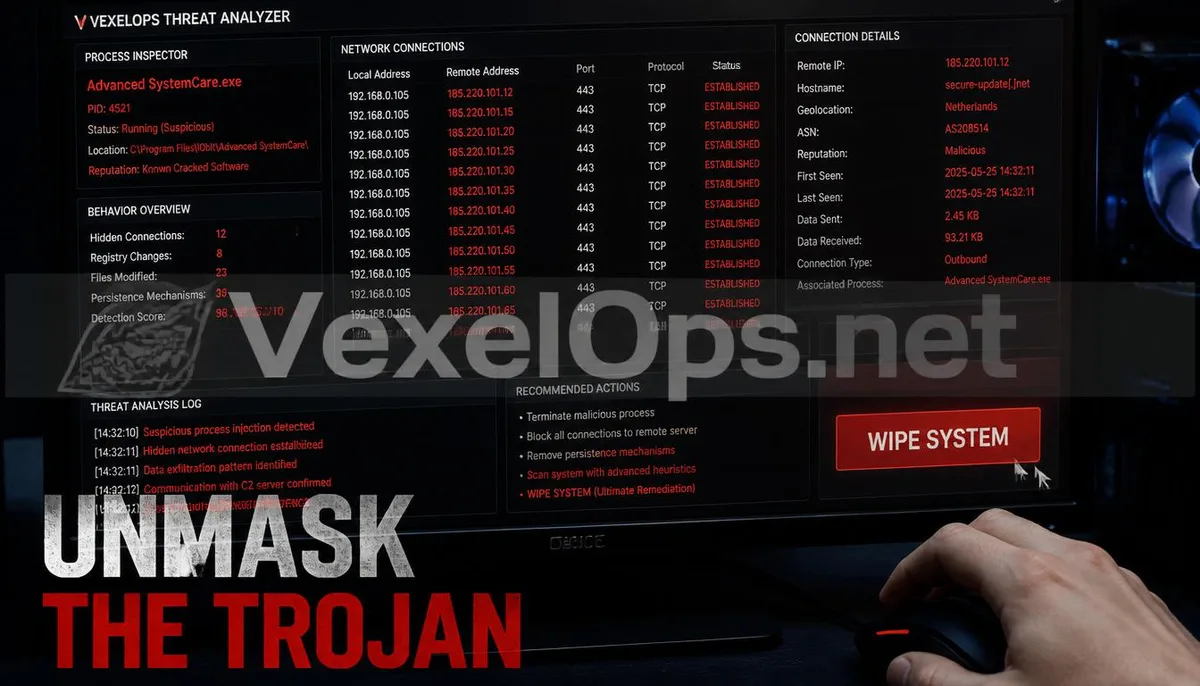
Encapsulating malicious payloads in installation programs: Scammers repack the trojan alongside legitimate software installation packages. When users execute the installation, the malicious code is released to the system's critical directory before the software runs and is automatically set to start at boot, ensuring it continues to operate in the background. Hijacking system permissions and bypassing detection: Crack patches often require users to run them with administrative privileges, giving the trojan the opportunity to modify the system registry and disable security services. Criminal organizations can thus bypass static scans from antivirus software, rendering malicious activities completely transparent at the system level. Implementing remote monitoring and data exfiltration: Once a connection is established, scammers can instantly obtain users' screenshots, browser-stored passwords, and all file directories. This sensitive information is encrypted and sent to offshore command servers as core material for subsequent extortion or asset transfers.
Establishing Safe Software Usage Habits: Practical Measures Against Backdoors
Persist in obtaining software from official channels: Prioritize downloading from developers’ official websites or certified application stores. This ensures the integrity of the software signatures, preventing tampering during transmission or storage and effectively eliminating the possibility of trojans entering the system from the root. Make good use of virtual environments for testing: If you must run tools from unknown sources, execute them in an isolated virtual machine (VM) or sandbox environment. This effectively blocks malicious programs from penetrating the real system, ensuring that even if the software contains trojans, they cannot access your core assets. Initiate professional system security audits: If you have installed cracked software and noticed unusual system behavior, VexelOps's technical team can assist you with in-depth malware scanning and backdoor detection. We can identify hidden abnormal connections and illegal processes in the system, helping victims thoroughly clean their infected digital environments.
Response Measures After System Compromise: Damage Control and Environment Restoration
Immediately disconnect abnormal network connections: When you suspect your system is compromised, you should first disconnect all network connections to prevent the trojan from continuing to transmit data to the scammers’ servers. This can effectively limit the affected scope and allow precious time for subsequent repairs. Perform a complete reset of accounts and credentials: After confirming the environment is safe, immediately change all passwords for accounts that have ever been logged into on this device. Additionally, all active sessions must be terminated to prevent criminal organizations from using the stolen Session Cookies to maintain access to your accounts. Execute a complete system reinstallation: For devices that have suffered deep infection, simple antivirus measures often cannot guarantee thorough cleaning. Performing a format and reinstalling a clean operating system is the most robust approach to ensure all hidden backdoors are completely removed, restoring your digital devices to their original secure state.
Common Questions About Cracked Software and Trojan Threats
Why does my antivirus alert me about cracked software, but forums say it's a false positive?
This is precisely the social engineering trap most commonly used by scammers. They exploit the fact that cracked software requires modifications to system files, misleading users into believing that all security alerts are false positives. Although some legitimate crack patches may indeed trigger heuristic scans, this provides the perfect cover for trojans. Criminal organizations utilize users’ desire for free resources to induce them to manually whitelist malicious files. VexelOps advises users that unless you possess the technical ability to analyze binary code, you should never easily dismiss any security alerts. In cybersecurity, it’s better to mistakenly block a useful tool than to let a trojan that could destroy your digital life slip through.
If I have already deleted the cracked software, is my system safe?
The answer is not necessarily. Many modern trojans will replicate themselves into deep system directories during their initial execution, such as startup items, driver folders, or even at the firmware level. Simply deleting the software's installation folder often removes only superficial files and cannot address malicious processes that may still be running in the background. Additionally, some advanced trojans modify the system’s DNS settings or hosts file, continuously redirecting your traffic to the scammers’ servers. Therefore, deleting the software is just the first step; it is equally important to conduct a comprehensive system integrity check to ensure no residual malicious scripts are still running in the background.
After discovering my computer has been compromised by a trojan, how can I protect my bank account?
First, you should immediately change all your banking and payment platform passwords on another secure device (like a clean phone). Then, contact your bank's customer service to explain the situation and request a temporary halt on large transfers or initiate stricter transaction review mechanisms. Lastly, seek professional cybersecurity teams to conduct a technical evaluation. Experts can assist you in tracking whether the trojan has accessed your financial data and provide a detailed intrusion analysis report. Through professional digital environment restoration, victims can ensure that all transactional behaviors occur in a controlled and secure environment once they reconnect, preventing scammers from utilizing residual information for secondary harvesting.
One Key Takeaway: The core of cracked software lies in permission granting and trojan embedding. By adhering to official channels, utilizing virtualization isolation, and making use of professional cybersecurity auditing services, you can effectively identify digital traps in free resources and protect system integrity and account security.