

Technical Overview: The Core Definition of Code Obfuscation
Code Obfuscation is a program protection method developed by technical experts, originally aimed at preventing software from being illegally reverse-engineered or cracked. By transforming readable code into logically equivalent yet extremely difficult-to-understand binary forms, developers can effectively protect core algorithms. However, in the hands of fraud groups, this technology has evolved into a tool for evasion. Criminal organizations utilize obfuscation techniques to conceal the true intent of malicious scripts, allowing them to successfully hide from antivirus static signature databases.
In-Depth Analysis: Fraud Groups' Evasion Pathways
Phase One: Multi-Layer Packing and Dynamic Unpacking Fraud groups typically wrap malware in one or more layers of packers. These packers appear as encrypted garbled data on disk, preventing antivirus software from directly reading internal instructions. When the program is executed, the packers dynamically decrypt and release the actual malicious code in memory. This strategy, which only reveals the true nature of the program at runtime, is the most basic means by which fraud groups evade static scanning. Phase Two: Instruction Replacement and Junk Code Insertion To disrupt the uniqueness of the signatures, fraud groups employ automated tools to replace standard arithmetic instructions with more complex equivalent sequences. For example, a simple addition operation might be broken down into dozens of logical jumps and memory movements. Moreover, they will insert substantial amounts of meaningless junk code into the program, drastically altering the binary structure of the program, thereby rendering traditional heuristic scanning ineffective. Phase Three: Sandbox Detection and Anti-Debugging Mechanics Modern fraud groups embed environmental awareness logic into
Defensive Practices: Establishing Proactive Security Measures
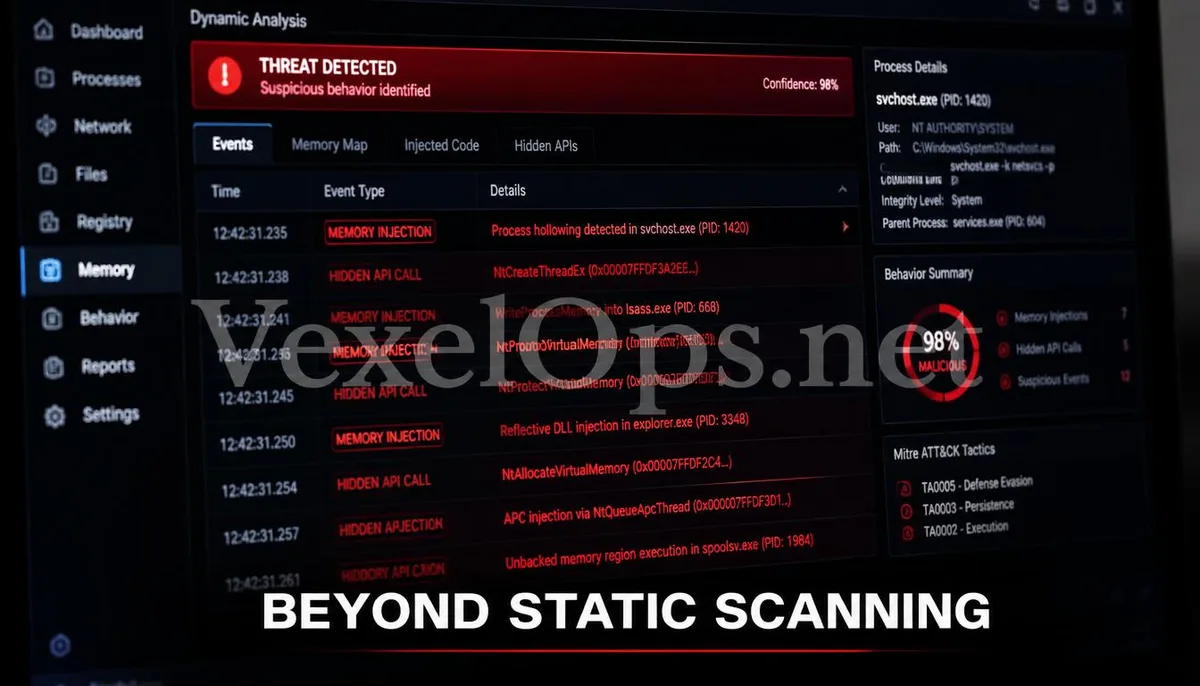
In facing the sophisticated evasion techniques employed by fraud groups, a single antivirus software is insufficient for complete protection. VexelOps recommends that users adopt a multi-layered defense system. First, enhance endpoint behavior monitoring (EDR); such systems do not rely on static signatures but monitor for unusual memory reads/writes or unknown network connections while programs are running. Second, maintain high vigilance against encrypted compressed packages from unknown sources, as these are often the primary carriers of obfuscated code. If you suspect that your system has been compromised by a backdoor with evasion capabilities, VexelOps' professional technical team can assist you in conducting in-depth memory forensics analysis. We can capture the original logic of the malware at the moment it unpacks through dynamic tracing technology, helping to identify persistent threats hidden within system services. This type of professional technical intervention enables victims to regain control in the digital confrontation.
Common Questions About Code Obfuscation and Evasion Techniques
Why does my computer still get infected even after installing the latest antivirus software?
This is because fraud groups exploit zero-day vulnerabilities and highly customized obfuscation scripts. When a piece of malware is written for a specific target and thoroughly obfuscated, it appears unique in the signature database. This period when antivirus vendors have yet to obtain samples and update their signature databases is known as the detection window. VexelOps' real-time threat intelligence service can shorten this risk duration, providing users with more timely alerts.
Does code obfuscation impact computer performance?
Excessive obfuscation can indeed increase CPU workload, as the program needs to execute more meaningless instructions. If you notice a program causing an abnormal spike in system resource usage upon startup, and it is not from a trusted developer, this may signal that the program is executing complex unpacking or environmental detection in the background.
How can I identify if a software has been maliciously obfuscated?
For the average user, it is difficult to determine by sight. However, you can confirm its origin by checking the software's digital signature. Programs distributed by fraud groups often lack a legitimate signature or use a stolen expired certificate. VexelOps’ software security auditing services can assist organizations in conducting thorough scans of internal tools, ensuring every line of code possesses traceable security.
One Key Takeaway: Code obfuscation is a core technique employed by fraud groups to evade detection. By establishing dynamic behavior monitoring, verifying software digital signatures, and effectively utilizing professional memory forensics services, you can penetrate technical disguises and safeguard the integrity and security of digital systems.