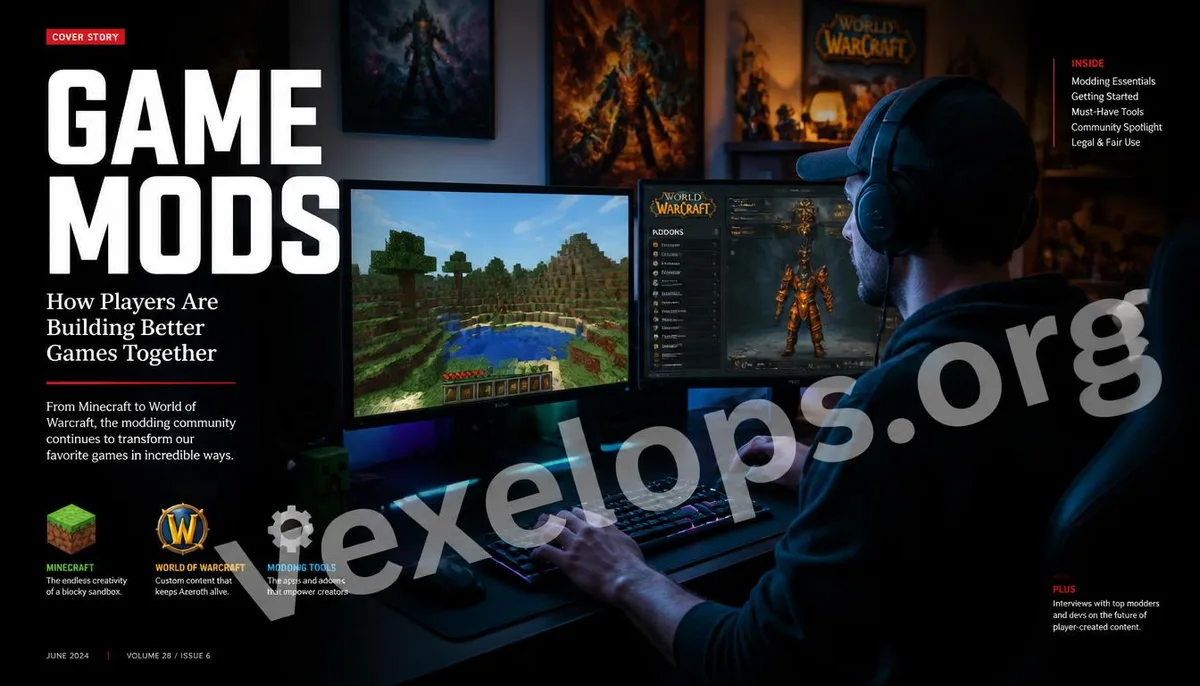
If you frequently play PC games, you may have encountered terms like Mod, Plugin, Addon, or Modpack. For an average player, these might seem like different labels used across websites, but in reality, the interactions these contents have with the game can differ significantly. Today’s gaming mod community has formed a comprehensive ecosystem. Games like Minecraft, The Sims 4, and World of Warcraft have abundant user-generated content, while Nexus Mods and CurseForge have become essential platforms for players to find and share mods. Currently, Nexus Mods covers over 2,500 games, and CurseForge offers a plethora of mods, Modpacks, and addons.
What are the Differences Between Mods, Plugins, and Addons?
The simplest way to understand this is to view mods as a means of modifying and expanding game content or mechanics. They can introduce new items, characters, maps, and features, or even alter certain original game rules, so the scope of mods is quite broad. Plugins typically emphasize adding functionality through interfaces or frameworks provided by the game, rather than directly modifying the core game content. Addons often appear in games that offer official expansion mechanisms, such as UI and functionality expansions in World of Warcraft. Different games do not use these terms consistently, so one cannot solely rely on the name to judge how third-party content operates. For players, it is crucial to know what environment is required. A specific mod might need a particular mod loader, while another plugin might require the game server to support its corresponding plugin API. If the environments do not match, even if the files themselves are fine, they may not function correctly.
Why is the Mod Ecosystem of Minecraft so Vast?
Minecraft serves as an excellent example for understanding game mod development. Players can introduce new items, blocks, entities, game mechanisms, and other content through various mod loaders and development frameworks, allowing for everything from simple features to comprehensive modpacks. Fabric is a very typical mod development toolchain for Minecraft. The official documentation defines Fabric as a lightweight modding toolchain for Minecraft Java Edition, which includes components like Fabric Loader, Fabric API, and Fabric Loom. Developers can use these tools to set up mod projects and then write and test them using Java and related development environments. Minecraft Forge is another familiar mod development ecosystem for players. This also highlights an important concept: different mod development frameworks can exist for the same game, and mods from different frameworks may not be directly compatible with one another.
Why Have Nexus Mods and CurseForge Become Commonly Used Platforms for Players?
For average players, starting from scratch to find mods, verify versions, install dependencies, and manage updates can be more troublesome than expected. Therefore, the value of mod platforms lies not just in providing downloads but also in connecting players with creators. Nexus Mods has long focused on game mods, providing a variety of works from simple adjustments to major content overhauls, and it also offers tools like Vortex Mod Manager. CurseForge covers multiple games, including Minecraft, World of Warcraft, and The Sims 4, providing mods, addons, modpacks, and management tools. These platforms allow mod developers to avoid creating a complete publishing system themselves. For instance, creators can publish content and manage updates via CurseForge, while players can find and manage mods through the platform. This division of labor has allowed user-generated content to evolve from mere player interests into a mature creative ecosystem.
Mod Development is Also a Form of Game Programming
Many players may think that simply downloading a file and placing it in the game folder is all there is to modding. However, from a developer's perspective, modding involves various concepts, including programming languages, APIs, game data structures, event systems, version compatibility, and build tools. Taking Fabric as an example, the official development documentation provides a complete process from setting up a project, configuring an IDE, adding items and blocks, to finally creating shareable mod JAR files. Today’s Fabric development environment can use IntelliJ IDEA or Visual Studio Code, with Java being a critical base. This is also why game mods are great for learning programming concepts. Players can start with a very small feature, such as adding a new item, and gradually understand events, APIs, and internal game systems. Once they become familiar with the development process, they can explore more complex content.
What Should You Learn to Start Making Mods?
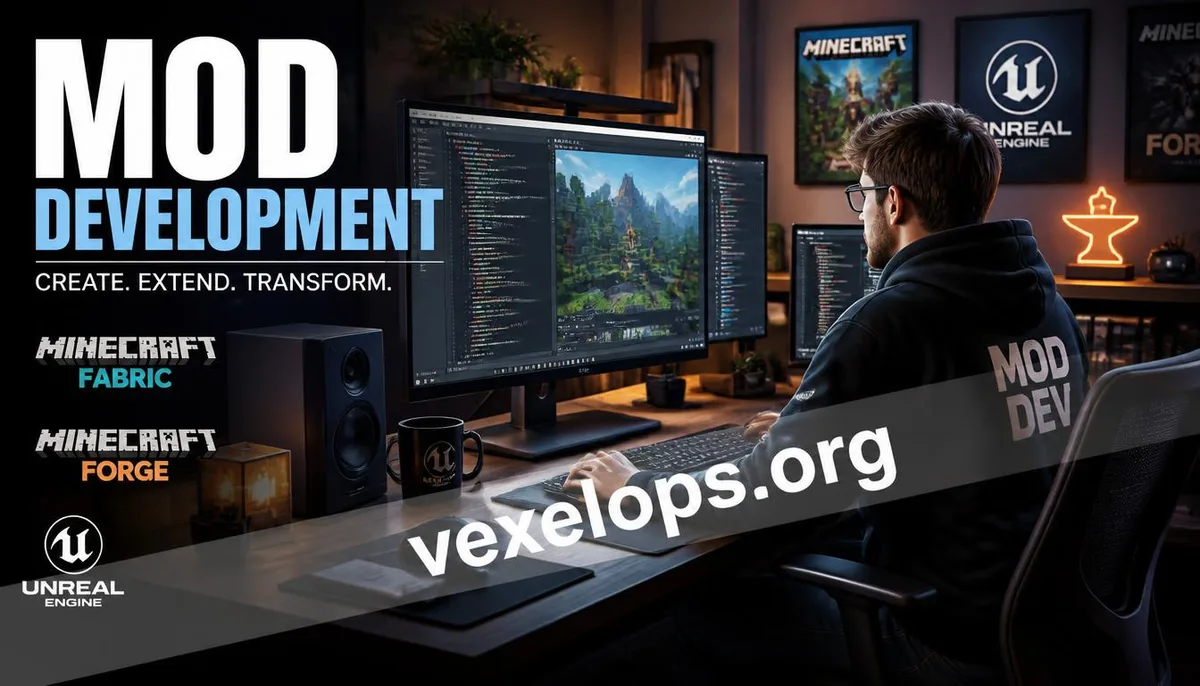
If you only want to be a mod player, you don't need to learn programming; however, if you want to create your own mods, you need to choose the appropriate development tools and languages based on the target game. For example, in Minecraft Java Edition, you can start with basic Java, then learn about IntelliJ IDEA, Visual Studio Code, Gradle, Fabric, or Forge. Fabric's official documentation also recommends that developers have a basic understanding of Java and object-oriented programming before starting their mod projects.
- Choose a game: Different games use different engines, APIs, and mod frameworks.
- Understand the mod ecosystem for the game: Confirm if the game has an official SDK, mod loader, or plugin API.
- Learn the corresponding programming language: For instance, mod development for Minecraft Java Edition typically involves Java.
- Set up development environment: Install the appropriate JDK, IDE, and build tools.
- Start with small features: Avoid attempting to create large mods at the beginning; completing a simple feature helps understand the whole process more easily.
- Pay attention to version compatibility: After game updates, mod loaders, APIs, and other dependencies may need to be adjusted.
If you simply want to experience mods, you do not need to handle all the technical details yourself. Platforms like CurseForge provide mod management tools that help players find, install, and update content; Fabric's official documentation also states that completed mods can be used for testing or released on mod platforms like CurseForge or Modrinth.
Common Questions About Game Mods, Plugins, and Development Introduction
Can Mods and Plugins Be Used Interchangeably?
Generally, no. The game environment, interfaces, and loading methods that mods and plugins depend on can differ entirely, and even if they both appear to add functionalities to the game, it does not mean the same files or installation methods can be used. For example, there may be compatibility differences between various mod loaders in Minecraft, while certain game plugins rely on specific APIs provided by servers. Therefore, it is best to confirm the game version, loader, and necessary dependencies before installing third-party content.
What Are the Differences Between Nexus Mods and CurseForge?
Both are significant mod platforms for games, but their ecosystems cover different games and content. Nexus Mods encompasses a vast array of PC games, ranging from small tweaks to large-scale overhauls; CurseForge is very active in the mod, addon, and modpack ecosystems for games like Minecraft, World of Warcraft, and The Sims 4. Thus, players don’t necessarily need to choose between the two platforms but can look for their respective mod communities based on the games they play. However, when downloading third-party content, it is still important to verify the source, game version, and author information.
Can You Start Making Game Mods Without Programming Experience?
Yes, but it is best to start with very small goals. The development difficulty varies greatly among different games, and if you start by trying to create large mods, you might quickly encounter issues with programming languages, game APIs, build tools, and version compatibility. A more reasonable approach is to choose a game with a mature mod ecosystem and establish a development environment according to official documentation. For example, Fabric's official documentation offers a full learning path from creating a project to building a mod, allowing beginners to first complete a simple function before gradually increasing complexity.
One Key Takeaway: Both Mods and Plugins can expand games, but the development processes behind them differ. Understanding game platforms, APIs, and mod frameworks is essential to truly begin learning game development.